New algorithmic tool enables to scientists to see cells “talk” to one another
The tool could make it easier to identify defective cells underlying disease
6:00 AM
Author |
People communicate with each other, sometimes face to face, sometimes with a text message or phone call. Cells also communicate with each other, sometimes by touching and sometimes by sending signals across space and time. But while texts and phone calls can be traced to figure out who is talking to whom, determining which cell is talking to which is exceedingly difficult—until now.
A new U-M study, featured in Nature Genetics, details a technique to infer cell-cell communication using spatial transcriptomics: basically, a map that shows where genes are expressed in the body’s tissue.
The research team, led by Joshua Welch, Ph.D., associate professor of Computational Medicine and Bioinformatics, focused on embryonic development in mice as a model, a period during which it is critical for cells to communicate properly to determine a cell’s fate and coordinate proper growth.
“We developed an algorithm that could take spatial transcriptomic data of where the genes are expressed in the embryo, then from that information figure out which cells are signaling to which other cells,” said Welch.
This marks an advancement over earlier methods which can look for interactions between groups of cells, or at just a single point in time.
Their method, dubbed CytoSignal, can look at changes in ligand signaling over time at the cellular level. Ligand signaling is how many cells receive information and can be thought of as a key finding its lock when the ligand binds to a receptor on the cell surface.
What’s more, CytoSignal can tell the difference between contact-dependent (where the cells must touch to communicate) and diffusion signaling mechanisms (where a cell sends out a protein as a messenger).
“Before these algorithms, most scientists would pick a single ligand-receptor pair they thought was important for cellular interaction and study it. What’s really powerful about our approach is you don’t have to go into an experiment knowing which ligand is involved—you can look at all of the genes and then determine from the data which are most important,” said Welch.
They demonstrated that the tool worked using embryonic mouse tissue. CytoSignal predicted from data that specific ligand and receptor proteins will bind to each other at a particular point in a tissue. They then introduced antibodies that would light up where the ligand and receptor proteins were bound. “That gave us a picture that we could overlay on our prediction to see the truth.”
The new method, beyond aiding researchers in the analysis of more spatial transcriptomic datasets, has numerous potential applications, noted the team.
For example, CytoSignal can provide insights into disease mechanisms by comparing healthy and disease states and looking at which ligand and receptor signaling interactions are defective. Importantly, many existing drugs target receptors, so there are direct routes to new treatments if the appropriate receptor target can be identified.
“The technique can be used to understand how genetic mutations or disease states disrupt normal signaling. Down the line, you could even use CytoSignal to develop cell therapies by turning off defective signaling,” said Welch.
Additional authors: Jialin Liu, Hiroaki Manabe, Weizhou Qian, Shion Orikasa, Javid Ghaemmaghami, Yichen Wang, Yichen Gu, Angel Ka Yan Chu, Gaurav Gadhvi, Yuxuan Song, Patrick McClinden, Vibha N. Lama, Noriaki Ono
Funding/disclosures: Chan-Zuckerberg Initiative grant DI2-0000000090 to J.L. and J.D.W., a University of Michigan Rackham Fellowship to J.L., NIH grants R01DE030630 and R01HG010883 to J.D.W. and N.O., and NIH grant UM1MH130966 to J.D.W.
Paper cited: “CytoSignal Detects Locations and Dynamics of Ligand-Receptor Signaling at Cellular Resolution from Spatial Transcriptomic Data”, Nature Genetics, DOI: 10.1038/s41588-026-02624-9

Health Lab
Explore thousands of health news & research stories by visiting the Health Lab homepage for more.
In This Story
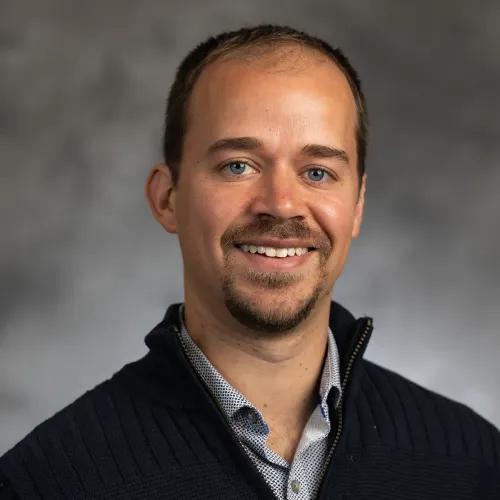
Joshua Welch, PhD
Associate Professor
Related
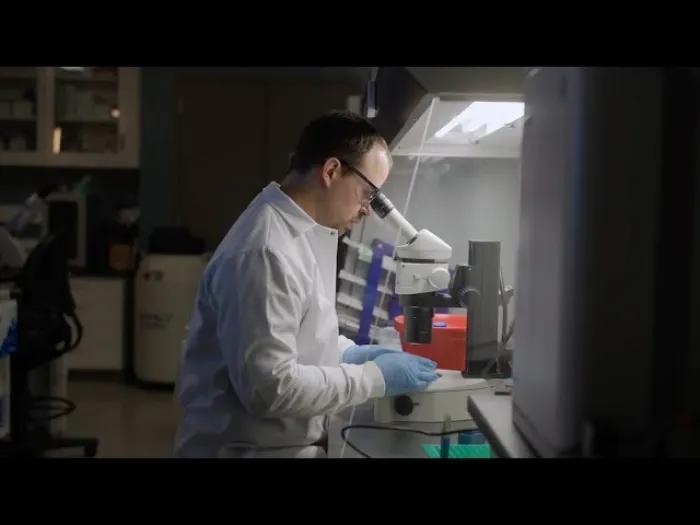
Research Scout Scholar: Joshua Welch, PhD
Featured News & Stories
Bigger data reveals the second, third and fourth switches controlling a gene
Study outlines a new framework for direct cell reprogramming
Is the United States Lagging Behind Europe in Memory Improvement?
AI, Well-Being and the Human Connection
Caregiver Resources: Reduce the Risk of Burnout