Mutations attracted to the X chromosome amplify disease risk
The inactive X chromosome is a hotspot for ‘jumping gene’ insertions
Author |
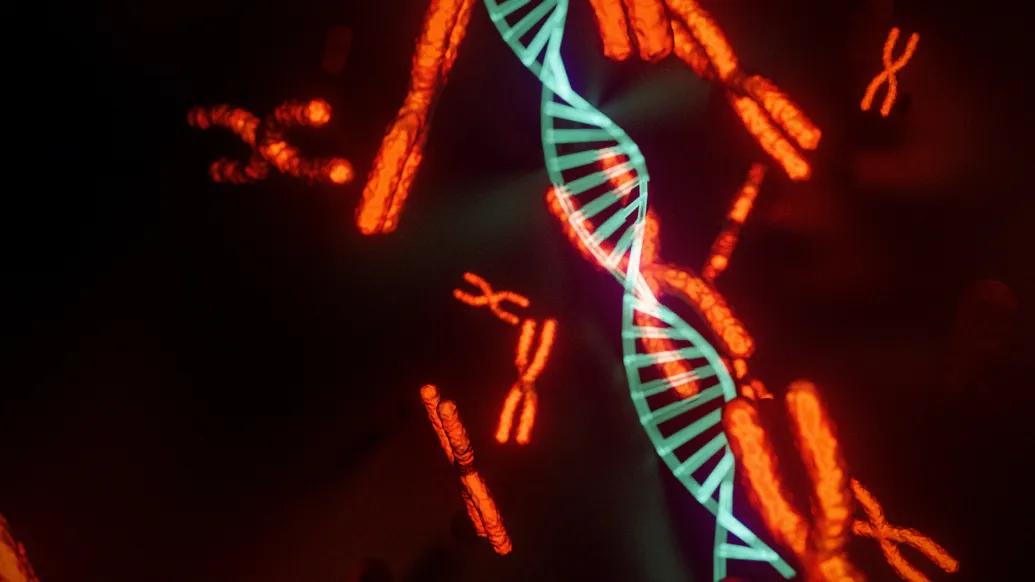
Researchers have discovered that the human X chromosome attracts an unusual kind of DNA mutation, potentially doubling the associated risk of certain genetic disorders, including haemophilia and muscular dystrophy. The study is published in the journal Science.
The study shows that the process of X-chromosome inactivation (XCI) – the natural mechanism that ensures genes are expressed equally in XX and XY individuals – makes the X chromosome a target for L1 retrotransposons, a type of ‘jumping gene’.
Led by John V. Moran, Ph.D., the Gilbert S Omenn Legacy Professor of Human Genetics at the University of Michigan Medical School and Professor Geoffrey J. Faulkner from Mater Research and the University of Queensland, the team’s findings also resolve a longstanding mystery as to why L1 retrotransposons are particularly abundant on the human X chromosome.
“It has been thought for nearly 30 years that our X chromosome is exceptionally rich in L1 retrotransposons because these genetic elements help XCI and, for this reason, are preserved by evolution,” Faulkner said.
“However, our results suggest the opposite relationship is true; XCI attracts L1 retrotransposon insertions to the X chromosome.”
“This finding is important because L1 mutations can destroy genes, meaning that XCI in XX individuals greatly increases the rate of X chromosome-linked genetic disorders, such as haemophilia A, haemophilia B, and Duchenne muscular dystrophy, in their XY descendants.”
Using old and new technologies to re-examine L1 insertion preferences
Beginning in the 1990s, Moran pioneered experimental systems where L1 retrotransposons are engineered to carry antibiotic resistance or fluorescent marker genes, allowing new L1 mutations to be traced to the chromosome upon which they landed. They since used that system to elucidate the mechanism by which L1s move and how their insertion sculpts the structure, function, and evolution of the human genome.
“By combining engineered L1s tagged with a reporter gene and targeted long-read DNA sequencing, we previously characterized nearly 30,000 L1 mutations in a cultured human PA-1 embryonic cancer cell line. We noticed that far more L1s inserted on the X chromosome that expected by chance but at that time we could not explain how this occurred,” said Moran.
“Once we could distinguish the active and inactive X chromosomes using long-read DNA sequencing, we could go back and count how many L1 insertions were present on each X chromosome in the PA-1 cells, which allowed us to conclude that the inactive X chromosome was an obvious hotspot for L1 mutations.”
A unique cell type to study X-chromosome inactivation
During human development, XCI is established around the time an XX embryo implants in the uterine lining. However, when stem cells obtained from embryos are grown in a laboratory, XCI quickly erodes, making it difficult to accurately model XCI. In their Science paper, the team discovered that PA-1 cells support near-perfect XCI.
“We were pleasantly surprised to find that XCI was exceptionally stable and virtually identical amongst PA-1 cells, making them a unique model to study human XCI," Faulkner said.
Using state-of-the-art long-read DNA sequencing developed by Oxford Nanopore Technologies, the researchers were able to distinguish the active and inactive X chromosomes in PA-1 cells and then count how many L1 mutations each chromosome acquired over time.
“Our results flipped the previous script and reinforce the idea that L1 is a selfish element – preferentially inserting on the inactive X chromosome may benefit L1 by allowing it to evade host defense processes,” Moran said.
The team, which included 19 researchers from Australia, Spain, and the United States, is now further investigating the mechanism by which L1 mutations are more abundant on the inactive X chromosome, including the possibility that it is a ‘safe haven’ where L1 retrotransposons can continue to jump from in future generations.
Additional authors: Jose de los Rios Barreda, Maria E. Ferreiro, Natasha Jansz, Charles C. Bell, Juan M. Botto, Trung V. Nguyen, Barun Pradhan, Minchun Chen, Ana Colomer-Boronat, Darwin J. Da Costa Guevara, Diane A. Flasch, Sabrina Gericke, Thomas E. Wilson, Adam D. Ewing, Sara R. Heras, Francisco J. Sanchez-Luque, Ryan Lister.
The research was supported by funding from: National Institutes of Health, Australian National Health and Medical Research Council, Australian Research Council, China Scholarship Council, Spanish National Research Agency, and Mater Foundation.
Paper cited: "X-chromosome inactivation draws L1 mutagenesis to the human X chromosome," Science. DOI: 10.1126/science.adz8081
Release from The University of Queensland-Australia

Health Lab
Explore thousands of health news & research stories by visiting the Health Lab homepage for more.
In This Story

John V Moran, PhD
Professor
Featured News & Stories

The AI is listening: Implications of machine generated clinical notes on health care
Gene editing is coming for common diseases. Are we ready?

$3.9 million NIH grant to fuel U-M effort to develop first targeted therapy for fatal childhood brain disorder

15 years of data will help uncover how flu spreads—and how to reduce its impact
Bigger data reveals the second, third and fourth switches controlling a gene