More clues reveal how gut bacteria works
The findings could identify ways to better target infections
5:00 AM
Author |
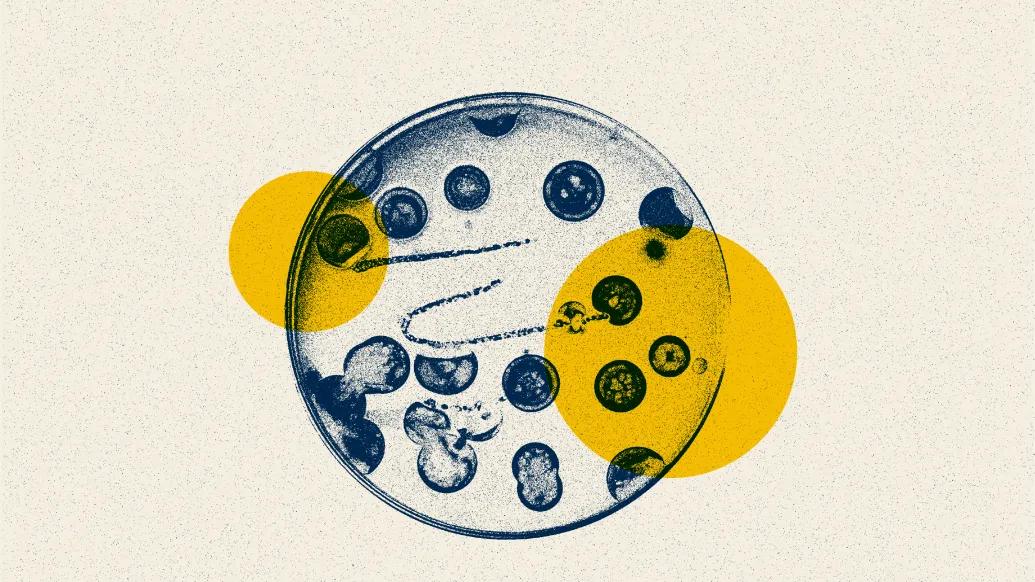
As you enjoy your various holiday meals this season, don’t forget to thank your resident bacteria.
Amazingly, many of the carbohydrates that you eat, from veggies to wheat bread, aren’t broken down by your own cells but by certain microbes that live in the gut.
Now research from the University of Michigan uncovers a unique way the bacteria Bacteroides, which make up nearly half of the gut microbiome, synthesize the proteins needed to degrade carbohydrates.
"Bacteroides are super important for processing those carbohydrates, and when they do that, they don't actually release the sugars back into the intestine, but take all those sugars, ferment them, and then release short-chain fatty acids, which have all sorts of different physiological effects,” said Nicole Koropatkin, Ph.D., associate professor in the Department of Microbiology and Immunology.
Short-chain fatty acids, like propionate and butyrate, are linked to overall gut health and can reduce inflammation.
To make short-chain fatty acids, bacteria first decorate their cell membranes with proteins called lipoproteins, with the lipid tethering the protein to the cell like the string on a balloon.
This technique is well documented in E. coli bacteria, which uses an enzyme called lipoprotein N-acyltransferase.
However, this process in Bacteroides wasn’t yet described.
Krista Armbruster, Ph.D., a bacterial geneticist working with Koropatkin, used the notorious E. coli to compare their lipoprotein synthesis techniques.
By genetically removing the lipoprotein machinery in E. coli and replacing it with pieces of the Bacteriodes genome, they discovered that the latter used an entirely different enzyme, aptly dubbed lipoprotein N-acyltransferase in Bacteroides, also referred to as Lnb, to do the same thing.
Their work was recently published in PNAS.
Additionally, they demonstrated that deleting Lnb interfered with cell growth and processing of carbohydrates, a fact that could be exploited in the development with new antibiotics.
“While Bacteroides are considered good bacteria, they can act as pathogens outside of the gut,” said Koropatkin.
“Discovering differences in physiology of this bacteria could provide us with something that can be specifically targeted to stop infection.”
Additional authors: Jiawen Jiang, Mariana G. Sartorio, Nichollas E. Scott, Jenna M. Peterson, Jonathan Z. Sexton and Mario F. Feldman.
Paper cited: “Identification and characterization of the lipoprotein N-acyltransferase in Bacteroides” PNAS. DOI: 10.1073/pnas.2410909121
Sign up for Health Lab newsletters today. Get medical tips from top experts and learn about new scientific discoveries every week.
Sign up for the Health Lab Podcast. Add us wherever you listen to your favorite shows.

Health Lab
Explore thousands of health news & research stories by visiting the Health Lab homepage for more.
Media Contact

Public Relations
Department of Communication at Michigan Medicine
In This Story

Nicole M Koropatkin, PhD
Associate Professor
Stay Informed
Want top health & research news weekly? Sign up for Health Lab’s newsletters today!
Featured News & Stories
Uncovering cellular stress signal triggered by Salmonella
New drug combination may help treat advanced prostate cancer

How a common virus's hijack of cell repair processes may promote cancer
Study overturns 100-year-old assumption about common bacteria in the lungs
Scientists discover that bacteria use an understudied polymer found in all life to protect cell functions during stress