Medicare pays for message-based e-visits. Are older adults using them?
Study shows primary care providers account for half of all message-based e-visits billed to traditional Medicare, but few patients had an interaction that resulted in a bill
4:00 PM
Author |
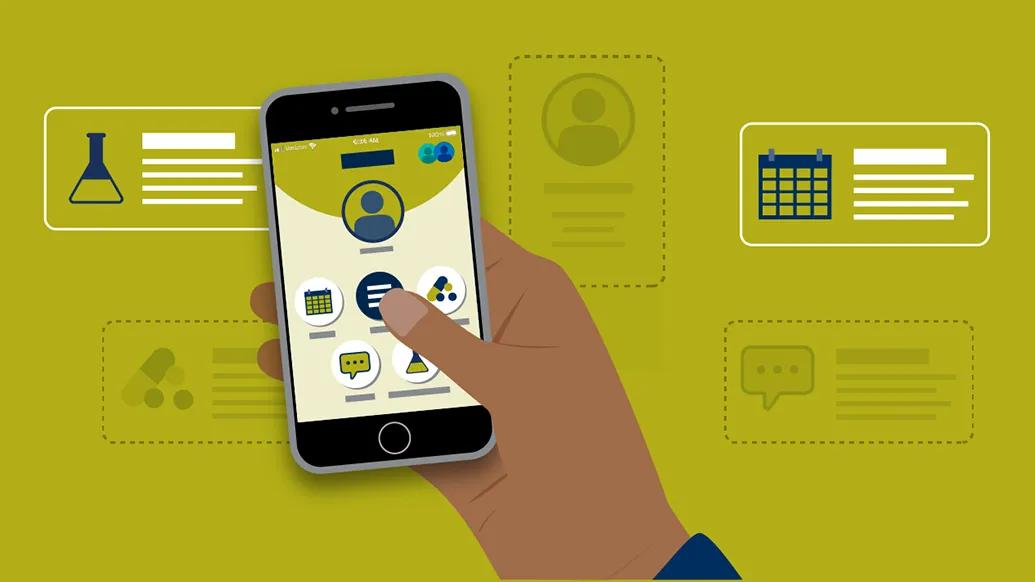
In the early days of the pandemic, Medicare announced it would start paying doctors and other health care providers for the time it took to handle their patients’ digital messages – or at least, the ones that required at least five minutes of medical decision making.
Those “e-visits”, using messages typed into secure patient portals, have gotten far less attention than video and phone telehealth visits.
But a new study suggests that e-visits have become a regular part of everyday health care for some of the 30 million older Americans who have traditional Medicare.
About 1% of them have used asynchronous patient portal messaging in a way that prompted their doctor or other health care provider to bill Medicare for their time.
Even so, e-visits that resulted in a bill to Medicare only account for only a tiny percentage (0.05%) of all visits to evaluate or manage health conditions in this population, according to the new study led by researchers from the University of Michigan.
About half of the billed e-visits were with primary care providers, according to the study published in Health Affairs Scholar. Most involved helping patients with high blood pressure or diabetes manage their condition.
After a surge at the start of the pandemic, the rate of billed e-visits in traditional Medicare dropped to a level that stayed relatively constant through the end of 2022.
Of course, many more patient portal messages fly back and forth on a daily basis, without generating a bill.
Those messages, such as simple requests for a prescription refill or an appointment, and updates from the patient about how they’re feeling, aren’t included in the study because without a bill, the data aren’t publicly available.
Rapid change in care delivery
Even before the pandemic, primary care clinicians like lead study author Terrence Liu, M.D., knew that the growing use of portal messaging by their patients was changing their working lives dramatically.
“We need to understand more about how this type of care can be most effectively used by both patients and providers, and what it means for clinic operations, provider burnout and patient behavior and outcomes,” said Liu, who is a National Clinician Scholar at U-M’s Institute for Healthcare Policy and Innovation and a clinical instructor in internal medicine at U-M.
“Patient portal messages are being used as a routine form of telehealth, but there is very little research to date on it. We hope these data will help inform efforts to support providers as they handle these types of visits.”
About 30% of the e-visits that led to a bill to Medicare involved the doctor or other provider spending 21 minutes or more on making decisions about the patient’s care. If a primary care provider is responsible for a panel of hundreds or thousands of patients, even a few such e-visits can add up to hours a week that may not be built into their clinical schedule.
“Patient portal messages can be a great tool for chronic disease management, which is the bread and butter of primary care,” he said.
“For example, if we’re adjusting medication doses in response to a patient’s log of their self-measured blood pressure or blood sugar trends, we don’t necessarily need an in person or virtual visit for that specific issue. Patients don’t have to wait on the phone to schedule an appointment, and then wait for the appointment. We need to match the type of question to the right modality for clinical care.”
At the clinic where he practices, a nurse care manager has been assigned to view all incoming patient portal messages and answers or triages them out to the correct responder. That triage process preserves physician and advanced practice provider time for the inquiries that need their skills most. While most primary care clinics have a similar system, there can be large variation in how staff members triage portal messages.
We need to understand more about how this type of care can be most effectively used by both patients and providers, and what it means for clinic operations, provider burnout and patient behavior and outcomes." -----Terrence Liu, M.D.
Potential for costs to patients
Doctors and clinics can use the Medicare e-visit billing codes to bill private insurance, Medicare Advantage and Medicaid too.
But Liu notes that because insurance coverage for e-visits varies, he and other primary care physicians sometimes hesitate to submit bills for exchanges with patients over patient portals, because of the potential that patients would end up paying the cost. That might lead patients to communicate less, even if they could benefit from an e-visit.
In the Michigan Medicine patient portal, for instance, patients can select an e-visit with an on-call provider for urgent inquiries, or elect to send messages to their regular providers. But in both cases, the portal notes that they may receive a bill, depending on their insurance and the nature of the e-visit.
The data source used in the new study doesn’t include information about any amount patients might have paid.
But since most people with traditional Medicare also have Medigap policies that pay for their copays and deductibles, the patients in the current study may not end up paying much or anything out of their own pockets when their doctor or other provider answers an in depth patient portal message.
Past and future research
The senior author of the new study is Chad Ellimoottil, M.D., M.S., medical director of virtual care at Michigan Medicine, U-M’s academic medical center, and a member of IHPI.
Ellimoottil’s past research has shown that Medicare coverage for video and phone telehealth visits hasn’t led to a sharp rise in the total number of visits for evaluation and management of health conditions, as some had feared. Liu says he hopes to study how e-visits have fit into the overall total number of visits too.
The National Poll on Healthy Aging, based at IHPI and funded by Michigan Medicine and AARP, found in 2023 that 78% of adults age 50 to 80 reported having at least one patient portal account, and just over half said they had used it in the past month.
SEE ALSO: A critical source of health help for older loved ones
The new study’s authors also include A. Jay Holmgren, Ph.D., from the University of California, San Francisco’s Center for Clinical Informatics and Improvement Research. He and his team have published some of the only other research available on this topic, by looking at e-visit use by patients with all forms of insurance.
Liu also hopes to study data from Michigan Medicine more fully, including the number of e-visits that require substantial clinician time but go unbilled or uncompensated by insurance. He also hopes to study the content of e-visit messages – without patient identifiers included – to see how patients and providers are using this option and for what kinds of questions, particularly for chronic disease management.
He also notes that it’s important to study whether patient portal e-visits make health care disparities worse – for instance, if patients who might have more access and experience in using communications technology are shown to adopt them in higher percentages.
Additional authors: The study’s authors also include Ziwei Zhu, M.S., of the U-M Department of Urology.
Funding: In addition to Liu’s support from the National Clinician Scholars Program, the study was funded by the Agency for Healthcare Research and Quality (HS028397)
Citation: National Trends in Billing Patient Portal Messages as E-Visit Services in Traditional Medicare, Health Affairs Scholar, doi:10.1093/haschl/qxae040, https://academic.oup.com/healthaffairsscholar/advance-article/doi/10.1093/haschl/qxae040/7639493
Sign up for Health Lab newsletters today. Get medical tips from top experts and learn about new scientific discoveries every week by subscribing to Health Lab’s two newsletters, Health & Wellness and Research & Innovation.
Sign up for the Health Lab Podcast: Add us on Spotify, Apple Podcasts or wherever you get you listen to your favorite shows.

Health Lab
Explore a variety of health care news & stories by visiting the Health Lab home page for more articles.
Media Contact

Public Relations
Department of Communication at Michigan Medicine
Related

More older adults are using patient portals, but access and attitudes vary widely
Stay Informed
Want top health & research news weekly? Sign up for Health Lab’s newsletters today!
Featured News & Stories

Michigan’s aging brains need more protection, poll shows
Gifts advance colon cancer prevention and early detection

The Power of Mattering

New Findings on a Decade of Medicaid Expansion in Michigan

5 hot weather tips that could save an older adult’s life