A critical source of health help for older loved ones
For people over 50, supporting everything from health care needs and personal care to home repairs and finances brings both challenges and rewards.
8:00 AM
Author |

More than half of people over 50 say they've helped at least one person over 65 take care of their health, personal hygiene, home or finances in the past two years, a University of Michigan poll finds.
And more than 70% of this group provided such help to someone they don't live with – whether it's a parent, another relative or a neighbor.
This kind of caregiving and other help – almost all of it unpaid – doesn't just affect the older adult receiving it, according to data from the National Poll on Healthy Aging. It also impacts the people over 50 who are doing the helping.
Nearly all say they get something positive out of the experience. But many say it's more difficult than they expected -- especially for those helping an older adult who has many needs, or someone with mild cognitive impairment, Alzheimer's disease or another type of dementia, the poll finds.
The poll is based at the U-M Institute for Healthcare Policy and Innovation and supported by AARP and Michigan Medicine, U-M's academic medical center.
SEE ALSO: Pandemic took a toll on older people serving as caregivers for loved ones
The new results are being presented this week at the Gerontological Society of America meeting. November is also National Family Caregivers Month.
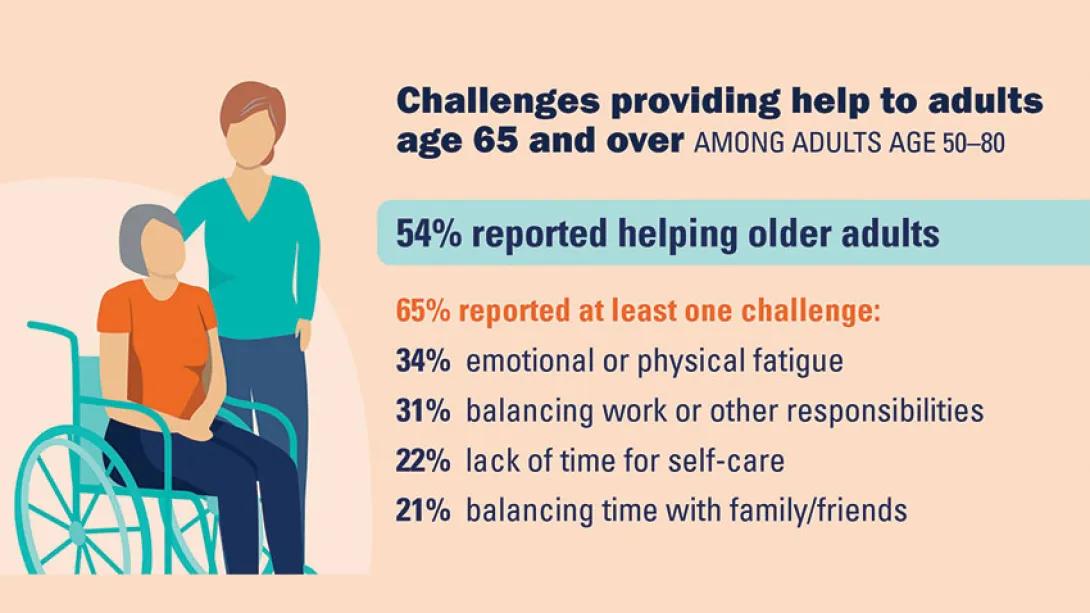
"The challenges of helping someone you know as they grow older should not be underestimated, but neither should the potential rewards," said Courtney Polenick, Ph.D., an assistant professor of psychiatry and caregiving researcher at Michigan Medicine who worked with the poll team. "These data show the importance of supporting those who help our nation's oldest adults. Not only have 54% of people over 50 done this in the past two years during the pandemic, but about two-thirds of that group are actively doing it right now."
The poll asked people between the age of 50 and 80 whether they had helped at least one person over age 65 with a variety of tasks in the past two years, ranging from food shopping and house cleaning to bathing, dressing, going to medical appointments, managing medications, helping with health insurance and financial duties, and home repairs and modifications.
"I see this routinely in my primary care practice, and I know the value that spouses, grown children and close friends can bring to the health and well-being of older adults," said poll director Jeffrey Kullgren, M.D., M.P.H., M.S., an associate professor of internal medicine at Michigan Medicine and researcher at the VA Ann Arbor Healthcare System. "But there is almost no formal mechanism for our society to recognize or compensate them for what they do."
Assistance with health needs
Often, the kind of support given by family and friends goes on for years, and a person may find themselves helping multiple older adults, the poll shows. About a third of people over 50 who have provided this kind of help say they've been doing it for five years or more. And 41% have helped more than one older person.
The type of help covers a wide range of duties. One-third of people over 50 had helped a person over 65 with health care tasks, including going to doctor's appointments with them or communicating with the person's providers on their behalf. About 15% of people over 50 have helped someone over 65 manage their medications, and the same percentage had helped someone over 65 navigate their health insurance coverage.
Such help, other research has shown, can raise the chance that an older adult will manage chronic conditions effectively or get preventive care.
The challenges of helping someone you know as they grow older should not be underestimated, but neither should the potential rewards.Courtney Polenick, Ph.D.
That's why many clinics, hospitals and health systems allow adult patients to designate another adult to access the online patient portal system on their behalf, so they can schedule appointments and see information such as medications and test results. But the poll shows that among those who are currently helping a person over 65 with health care tasks, only 12% communicated with the person's health care provider through a patient portal.
Increasing this kind of "proxy" patient portal access by spouses, adult children and other trusted helpers could enhance care, Kullgren and Polenick note.
Help beyond health
Help goes beyond health care, the poll shows. Nearly a third of people over 50 had helped a person over 65 with home maintenance, a similar percentage (31%) helped with food shopping or cooking, and a slightly lower percentage (22%) had helped a person over 65 manage their finances.
On the more personal side of life, 16% of people over 50 had helped a person over 65 dress, bathe or take care of other personal tasks – even if they don't have the same kind of training that home health aides receive for these sometimes complex tasks.
"Caregiving for an older adult is a complex experience that affects 48 million caregivers in the U.S. from an emotional, health and financial perspective," said Indira Venkat, senior vice president, AARP Research. "If you are not currently a caregiver, at some point in your life you either will be a caregiver or need a caregiver. It's important that we consider the unique needs of caregivers and ensure they have the support to care for themselves as well as their loved ones."
Positives and negatives
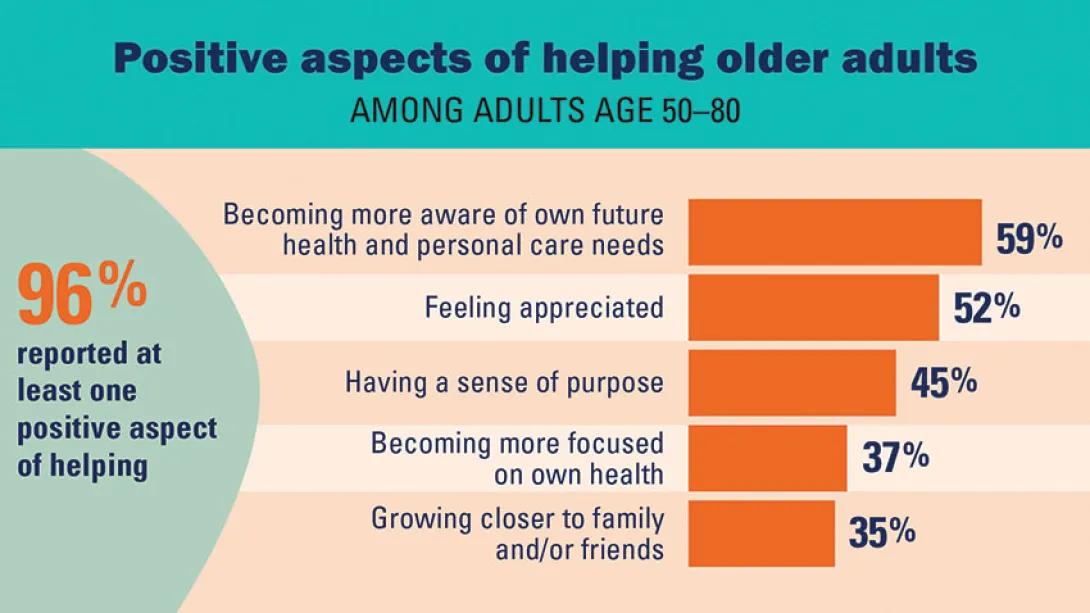
Nearly all (96%) helpers and caregivers over age 50 say there's a positive aspect to offering this kind of help, including feeling appreciated (52%), having a sense of purpose (45%) and growing closer to family or friends (35%). A majority said it made them more aware of their own future health and personal care needs, and about a third said it made them focus more on their own health or motivated them to prepare a will, trust or advanced care directive.
SEE ALSO: Wide variation seen in family caregiver availability for people with dementia
But two-thirds (65%) also reported challenges. For instance, many said that helping brought on physical or emotional fatigue (34%), challenged their work-life balance (31%) or wasn't supported by family or friends (19%). Nearly a quarter (22%) said they lacked time for their own self-care.
Nearly half (47%) of those who helped someone with five or more types of tasks said they felt it was somewhat or much more difficult than they had expected. That's compared with only 12% of those who helped with just one or two types of tasks.
Memory and cognitive issues in the people being helped also increase the challenge. In all, 45% of those helping a person with mild cognitive impairment, and 58% of those helping someone with Alzheimer's or other type of dementia, say it's more difficult than they expected. That's compared with 15% of those who help someone without either of these conditions.
AARP has tools, information, and support available for caregivers. The AARP Family Caregiving website provides an easy way to join an online community of other caregivers, learn about local services, get helpful information and connect with others who understand caregiving challenges.
The poll report is based on findings from a nationally representative survey conducted by NORC at the University of Chicago for IHPI and administered online and via phone in July 2022 among 2,163 adults aged 50 to 80. The sample was subsequently weighted to reflect the United States. population. Read past National Poll on Healthy Aging reports and about the poll methodology.

Health Lab
Explore thousands of health news & research stories by visiting the Health Lab homepage for more.
Media Contact

Public Relations
Department of Communication at Michigan Medicine
Stay Informed
Want top health & research news weekly? Sign up for Health Lab’s newsletters today!
Featured News & Stories

Going the extra 100 miles

What’s changing in Medicaid and what can you do?
Small daily activities may help ease dementia caregivers’ stress

Antipsychotic Use in Nursing Homes: Balancing Medication Safety, Policy, and Dementia Care

Top 7 tips for choosing Medicare prescription drug coverage for 2027