The Low FODMAP Diet: A 'Liberating' Route to IBS Relief
An elimination diet designed to identify trigger foods can help curb gut discomfort. A Michigan Medicine gastroenterologist explains how it works.
7:00 AM
Author |
Comfort food is rarely comforting for people with irritable bowel syndrome, a disorder in the intestines that causes belly pain, bloating, cramping, diarrhea and constipation.
A team of specialists at the University of Michigan Functional Bowel Disorders Clinic is helping IBS patients identify and abstain from culprits known to trigger that pain.
Their approach: the low FODMAP diet.
Developed a decade ago in Australia, this elimination diet removes a host of foods and gradually reintroduces them one at a time to identify a person's intolerances.
FODMAPs are short-chain carbohydrates that are poorly absorbed and highly fermentable (or gas-producing). The gut's intestinal bacteria can react to these foods — and that causes cramps and bloating.
An acronym for fermentable oligo-di-monosaccharides and polyols, FODMAPs also draw extra water into the digestive system, which can create bloating or diarrhea.
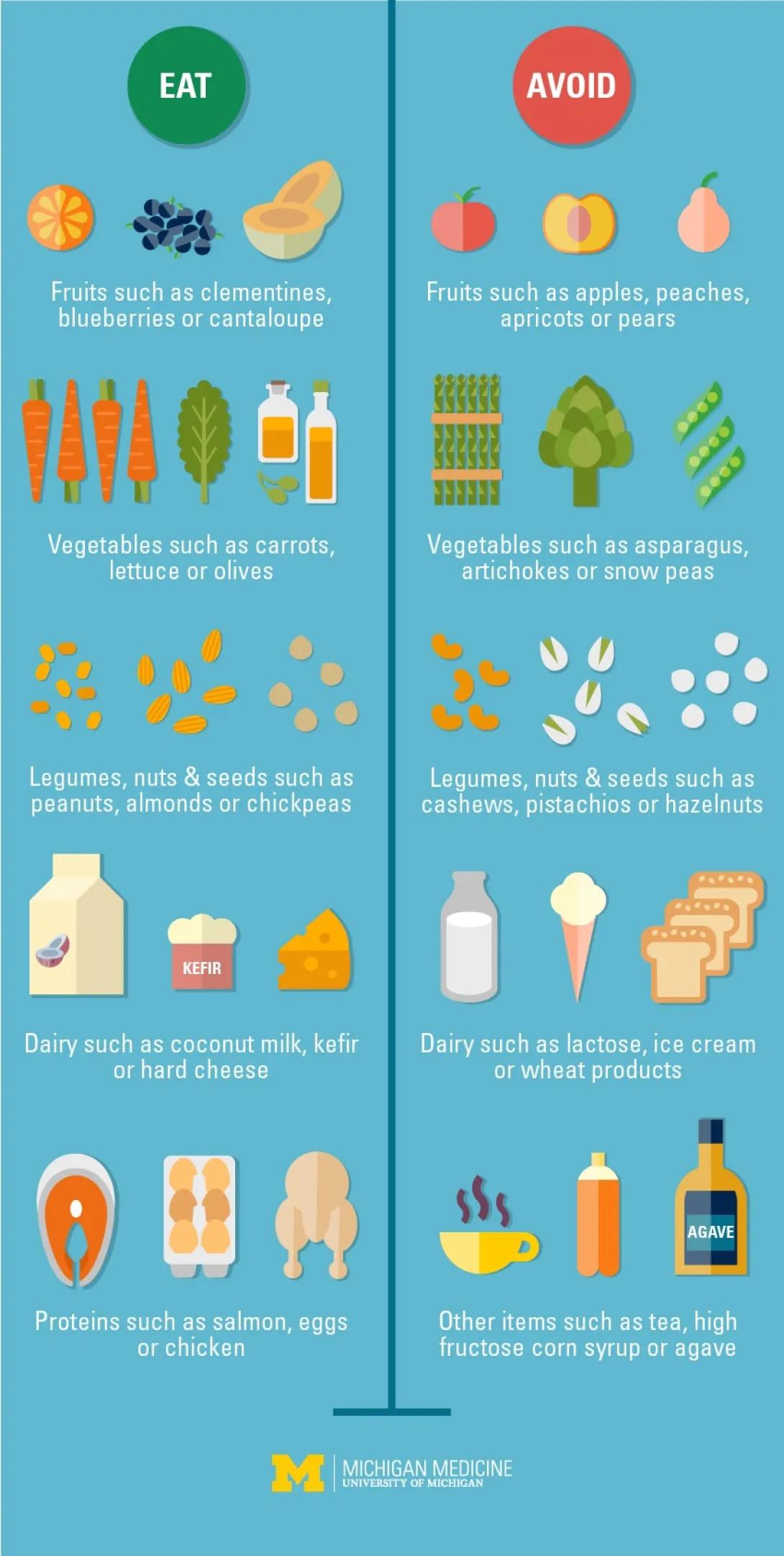
FODMAPs are found in many foods, including high-fructose corn syrup, garlic, onions, beans, wheat and stone fruits such as peaches.
Although each person tolerates FODMAPs differently, IBS patients tend to have an exaggerated reaction to them.
Still, the prospect of cutting out so many items can be a shock when grocery shopping or preparing a meal.
"At first, the diet is very restrictive," says Shanti Eswaran, M.D., a Michigan Medicine gastroenterologist, "but once patients go through the process and discover what they can and can't eat, they actually find it liberating. That's because they are then able to eat without fear of their meal causing unwanted symptoms. "
And that's why the low FODMAP diet is safest — and most likely to be successful — with guidance from a dietitian.
When less is more
The diet's protocol is to eliminate FODMAPs for about two weeks, which often stops IBS symptoms from occurring.
Then, FODMAPs are reintroduced one at a time to identify problematic foods and determine how much of them the gut can comfortably tolerate.
SEE ALSO: Can an Elimination Diet Help You Lose Weight?
For many, the method is effective: Eswaran, also an assistant professor at the University of Michigan, conducted the first study in the United States that showed most of the participants who followed a low FODMAP diet curbed their symptoms, improved their quality of life and slept better.
"Patients like this approach because they get control of their symptoms and they like that it's not a medication-based treatment," says Eswaran.
But she cautions that the elimination phase of a low FODMAP diet isn't designed for the long term.
"The elimination part of the diet is restrictive and not nutritionally complete, so they could be depriving themselves of vitamins and nutrients," Eswaran says. "Furthermore, it can change the gut flora in ways that we don't completely understand."
Michigan Medicine has created a website to help patients navigate this diet.
Eswaran, meanwhile, is preparing to launch a study on the diet's reintroduction phase. She hopes to standardize the approach to reintroduction of FODMAP groups, to help not only patients but also nutritionists around the world.
"IBS is a complex disease," she says. "There's a lot more to learn about why a diet low in FODMAPs works and how we can make it even more effective for our patients."
To schedule an appointment to discuss a low FODMAP diet or irritable bowel syndrome, call Michigan Medicine's gastroenterology division at 888-229-7408.

Health Lab
Explore thousands of health news & research stories by visiting the Health Lab homepage for more.
Media Contact

Public Relations
Department of Communication at Michigan Medicine
Stay Informed
Want top health & research news weekly? Sign up for Health Lab’s newsletters today!
Featured News & Stories
Enzyme supplement improves IBS symptoms for most in new study
Liver cancer can be preventable. Do you know the treatable risk factors?
Identifying avoidant, restrictive food intake disorder in gastroenterology patients

As probiotic use surges, microbiome-supportive food consumption stagnates

How gastroenterology nutrition therapy has evolved