Kids, teens and mental health: Parents report challenges in screening, getting care
More than 1 in 4 parents say their adolescent has seen a mental health specialist.
5:00 AM
Author |
Amid growing concerns for children's mental health during the pandemic era, more than a quarter of parents say their adolescent-aged child has seen a mental health specialist – with nearly 60% of those reporting a visit within the past year – a new national poll suggests.
But screening and navigating the mental health care system remains difficult for many parents. While almost all parents say they're confident they would recognize a possible mental health issue in their child, much fewer say their child is regularly screened for mental health by their provider or that it's easy to get the care they need once they recognize a problem.
The findings come from a nationally representative report conducted by the University of Michigan Health C.S. Mott Children's Hospital National Poll on Children's Health in collaboration with the Children's Hospital Association. The report, which comes less than six months after children's mental health was declared a national emergency in the United States, is based on responses from 1,201 parents of children ages 11-18 surveyed in October 2021.
"Even before the pandemic, mental health disorders in adolescents, such as depression and anxiety, were prevalent," said Mott Poll co-director and Mott pediatrician Gary L. Freed, M.D., M.P.H.
"The pandemic caused significant stress and social disruption for kids that likely exacerbated these problems, as we're seeing a growing number of young people face mental health concerns. This places a heavier burden on parents, health providers and other trusted adults in their lives to be aware of potential warning signs."
Screening for mental health issues in children and teens
While a third of parents say their adolescent has completed a mental health screening questionnaire at their primary care office, only four in ten say their adolescent's provider asks about mental health concerns at all well child visits. One in seven say their provider never asks about mental health concerns.
"Regular check-ups are the best time for providers to discuss potential mental health concerns," Freed said. "If parents feel their adolescent's provider is not being proactive in raising these issues, they should bring it up with them."
It's also important for adolescents themselves to feel comfortable seeking help, Freed notes.
SEE ALSO: National Poll: Pandemic Negatively Impacted Teens' Mental Health
Only a quarter of parents polled, however, thought their adolescent would definitely talk to them about a possible mental issue, and even fewer thought their adolescent would open up with their primary care provider.
Like Podcasts? Add the Michigan Medicine News Break on iTunes, Google Podcasts or anywhere you listen to podcasts.
There are some steps parents can take to help, Freed notes. He recommends having open conversations with kids that give them opportunities to discuss issues and emphasize that asking for help "isn't a sign of weakness but of strength." They can also prepare them for health visits by reinforcing the importance of sharing concerns with providers and also allow their child privacy during the visit.
"Being good listeners and initiating open, non-judgmental conversations about mental health can help reduce stigma and make kids feel more comfortable," Freed said. "It may also be helpful for parents to share any of their own experiences with mental health challenges."
"Before seeing a doctor, adolescents should understand that their doctor is there to help and that they should be as honest as possible about any physical or mental health problems."
Identifying warning signs of mental health issues
Even before the added stress and disruption of the pandemic, one in five adolescents had a diagnosable mental health disorder, including depression and anxiety. Several reports indicate that these challenges may have worsened during the pandemic.
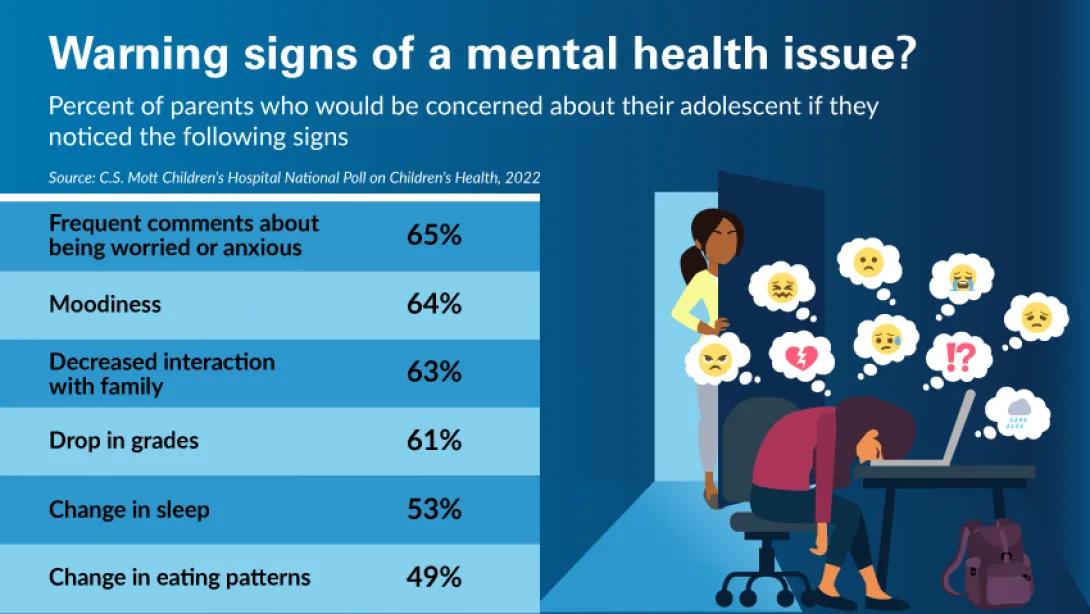
While it may be difficult for parents to tell the difference between their adolescent's normal ups and downs and mental illness, parents polled seemed to know what to look for. Among signs that would prompt their concern were frequent comments about being worried or anxious, moodiness, decreased interaction with family, a drop in grades or changes in sleep or eating patterns.
SEE ALSO: How to Talk to Children and Teens About Suicide: A Guide for Parents
If parents notice a possible mental health issue, most say their first response would be to talk with their adolescent or keep a closer eye on them. Fewer parents' first response would be to make an appointment with a healthcare provider, check in with their adolescent's teacher or get advice from family or friends.
The stigma of mental illness may make parents hesitant to seek help or delay seeking care for their adolescent as they may think the symptoms will go away on their own, Freed says. But it's important to take the next step if needed.
"Signs of struggles with mental health can look different for every child, and some may be easier to recognize than others," Freed said. "Parents should take seriously any major changes to their baseline behavior that could be a symptom of something more concerning.
"If adolescents seem overwhelmed by trying to manage challenges, parents should seek professional help."
Barriers in receiving mental health care
More than half of parents say they decided on their own to have their adolescent see a mental health specialist while less than one in five got a referral from their adolescent's primary care provider or school.
But even after recognizing a problem, some parents also have trouble navigating the health system to find a mental healthcare evaluation or treatment options for their adolescent, the poll finds.
Nearly half of parents who tried to do so, describe difficulties getting their adolescent care with a mental health specialist, including long waits for appointments, finding a provider who took their insurance or saw children. Ten percent of parents also said they simply just didn't know where to go.
Experts say parents should reach out to their adolescent's primary care giver for help in finding a mental health provider and support from their communities. Some programs, such as the MC3 program at University of Michigan, helps connect primary care providers with psychiatrists and behavioral specialists for consultation and training to help address mental health needs in local clinics.
"Difficulties finding and getting mental health care for youth reflects strains in our current mental health system and highlights the need for more ways to support parents and their children," added Amy Wimpey Knight, president of CHA.
"Parents whose children need mental health help should remember they aren't alone. But they may need to be proactive and persistent in seeking support from a provider, their school, or family or friends in caring for mental health issues."

Health Lab
Explore thousands of health news & research stories by visiting the Health Lab homepage for more.
Media Contact

Public Relations
Department of Communication at Michigan Medicine
Stay Informed
Want top health & research news weekly? Sign up for Health Lab’s newsletters today!
Featured News & Stories

Continuing the legacy of a doctor’s doctor

U-M-led consortium to receive up to $52 million in NIH funding to study why viral respiratory infections affect children differently
4 in 5 parents say having a baby is too expensive
A pediatric epilepsy fundraiser that changes lives

Better prenatal care data could help prevent maternal complications, experts say