Key Pathway for Activated T-cells Might Be Targeted to Fight GVHD
A new understanding of intracellular pathways activated as T cells start to mount an immune response offers clues against graft-versus-host disease, a serious complication of bone marrow transplantation.
9:14 AM
Author |
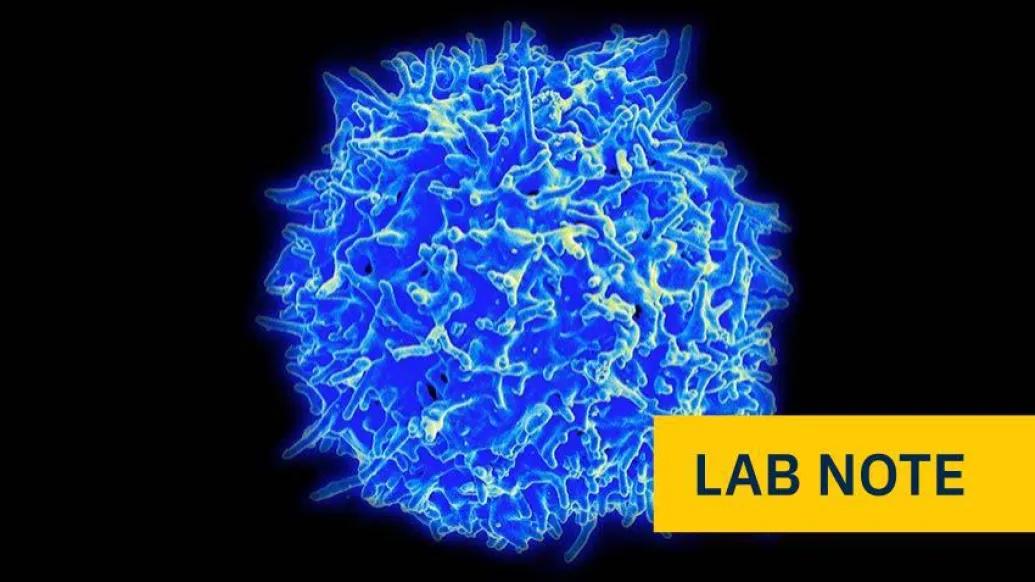
When they are activated to mount an immune response, T cells produce secretory proteins that helps to manage their growth and other functions. But the intracellular pathways involved and molecular components that regulate this key process aren't well understood.
New research from a team of scientists at the University of Michigan sheds light on this important area of immune response, and points toward a new potential therapeutic target for decreasing the severity of graft-versus-host-disease (GVHD), a potentially fatal complication of bone marrow transplantation. Bone marrow transplants are used to treat blood cancers like leukemia and lymphoma, along with other diseases that affect the bone marrow.
The study, which appears in in the Journal of Clinical Investigation, demonstrates that T cell activation increases intracellular trafficking via the endoplasmic-reticulum-to-Golgi pathway, and that a protein known as SEC23B — a subunit of the COPII complex — regulates T cells' production of these important secretory proteins after activation.
"This research, which included mouse models and patient-derived cells, suggests the possibility of targeting SEC23 in COPII as a novel strategy for limiting diseases involving T cell response, such as GVHD," says study first author Stephanie Kim, Ph.D., an M.D./Ph.D. student in the lab of senior study author Pavan Reddy, M.D., deputy director of the U-M Rogel Cancer Center and division chief of hematology/oncology at Michigan Medicine.
The work was a collaboration between the Reddy lab and the labs of Rami Khoriaty, M.D., an assistant professor of hematology/oncology, and David Ginsburg, M.D., a professor at the U-M Life Sciences Institute and Michigan Medicine.
The research also examined functional overlaps between SEC23B and its paralog — or near twin — SEC23A in regulating T cell immunity in both mice and humans. Problems occurring in each of the two proteins are associated with different human diseases.
Paper cited: "ER-to-Golgi transport and SEC23-dependent COPII vesicles regulate T cell alloimmunity," Journal of Clinical Investigation. DOI: 10.1172/JCI136574

Health Lab
Explore thousands of health news & research stories by visiting the Health Lab homepage for more.
Media Contact

Public Relations
Department of Communication at Michigan Medicine
Stay Informed
Want top health & research news weekly? Sign up for Health Lab’s newsletters today!
Featured News & Stories
Researchers find promising new approach to stop intestinal problems caused by immune cells

Intuition pushed mom to keep checking for breast cancer

Online resources and coaching helped people seek genetic testing for cancer

Liver cancer can be preventable. Do you know the treatable risk factors?
Prostate cancer and hereditary risk: A doctor explains the connection