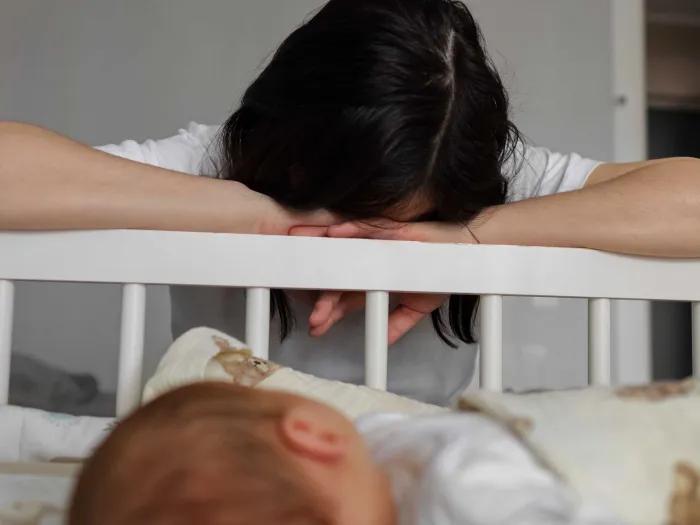
‘It’s being part of a group no one wants to be a part of’
The path to recovery after experiencing every parents’ worst nightmare: stillbirth
9:43 AM
Author |

Lilly Pritula, who was 38 weeks pregnant, was concerned when she noticed she wasn't feeling her baby's usual movement. She saw the doctor right away.
"Unfortunately, I experienced a stillbirth with my son due to a cord knot," Pritula said. "I felt so lost and wondered who understands how this feels? How do I carry this experience for the rest of my life now?"
Pritula and her wife, Rachel, met with an inpatient social worker who told them about a newborn loss support group nearby and an event celebrating National Pregnancy & Infant Loss Awareness Month.
The first thing Pritula and her wife did was attend the event, A Walk to Remember and Tree-Planting Memorial, where members plant a tree to "acknowledge the significance of perinatal loss and remember loved pregnancies and precious babies who are not physically with us."
In November 2018, they attended their first group meeting with the Michigan Medicine Pregnancy and Newborn Loss Support Group.
"We needed the space to wrap our minds around everything that happened and our grief journey," Pritula said. "It was a meaningful space for us, and we kept coming back every month and got to know other patients in our shoes — especially after we experienced a second loss from a first trimester miscarriage in 2019."
Pritula said the group was instrumental in the couple's healing process and they attended regularly up until the COVID-19 pandemic began.
"Over the summer of 2020, I just started thinking how this space is desperately needed for families," she said. "I could only imagine what people were going through in pandemic times."
Due to how impactful the support group was to Pritula, she believed it was important to continue it, even though it may be in a virtual setting. So, she spoke to the bereavement manager at the time and together they were able to have the group reinstated virtually in September 2020.
"Grief following a loss of pregnancy or early infant loss can feel very isolating," said LaTresa Wiley, LMSW, children and women's bereavement program manager at C.S. Mott Children's Hospital and Von Voigtlander Women's Hospital and the overseer of the support group. "While one can have informal support from family and friends, there is something really powerful about coming together, sharing experiences and drawing strength from others who've had similar loss experiences."
Many infant loss support groups, such as the one Pritula attends, are open to mothers, fathers, relatives and anyone affected by a miscarriage, stillbirth, early infant death, medical termination or other loss.
"The first part of the group entails providing psychoeducation about grief and loss by facilitators and later opens up for participants to share whatever they feel comfortable sharing in the group," Wiley said. "There are common themes we discuss, such as preserving the memory of one's baby or child, the challenges of returning to work after a loss, coping with unintentional unhelpful comments from family and friends, and how to cope with the holidays, approaching the expected due date or anniversary of the loss."
In the spring of 2021, Pritula was asked if she would be interested in going through formal peer mentor training to help support her fellow group members in sessions.
"I didn't really think much of it because attending the group to me was something I was so used to," she said. "But I was happy to help in a more formal capacity and have ever since."
Pritula noted that the majority of the group's discussion comes out of people's introductions and shared experiences with loss.
"There is a lot of guilt and a lot of grief," she said. "Two overarching themes are validation that their feelings are normal, and that this event is life-changing for parents and their families. It's being a part of a group no one wants to be a part of, but having a safe space can be really validating."
Pritula and Wiley both said that a loss is a loss, and all losses are welcome no matter how the loss occurred. In addition, they noted that there aren't many support groups for this population and making attendees feel welcome and supported is imperative.
"The success of the group is a result of dedicated and committed facilitators, a peer mentor and administrative staff, but most importantly, individuals who courageously show up each month to glean from and offer support around circumstances they wished they had never faced," Wiley said.
Pritula agreed: "I think I connect with the group participants and help them understand their loss because I was in their shoes. I couldn't imagine what my grief would look like in three years, but seeing others continue forward helped me. I hope our group attendees think 'She made it three years in her grief journey and if she can do it, I can, too.'"
Learn more about the Pregnancy and Newborn Loss Support Group and other bereavement services offered to families.
Allison Mi was an additional editor on this piece.

Health Lab
Explore thousands of health news & research stories by visiting the Health Lab homepage for more.
Media Contact

Public Relations
Department of Communication at Michigan Medicine
Stay Informed
Want top health & research news weekly? Sign up for Health Lab’s newsletters today!
Featured News & Stories

Have an MCAS diagnosis? Well, maybe not
Who’s at risk for painful periods?
C.S. Mott Children’s Hospital named No.1 children’s hospital in Michigan by U.S. News & World Report
Talent show brings joy to kids at children’s hospital

Foundation gift inspires additional gifts to strengthen youth mental health care