How the Timing of Light Exposure Could Be Affecting Your Health
Increased light exposure can have positive and negative effects on your health — depending on the time of day.
5:00 AM
Author |
Editor's note: Information on the COVID-19 crisis is constantly changing. For the latest numbers and updates, keep checking the CDC's website. For the most up-to-date information from Michigan Medicine, visit the hospital's Coronavirus (COVID-19) webpage.
Interested in a COVID-19 clinical trial? Health research is critical to ending the COVID-19 pandemic. Our researchers are hard at work to find vaccines and other ways to potentially prevent and treat the disease and need your help. Sign up to be considered for a clinical trial at Michigan Medicine.
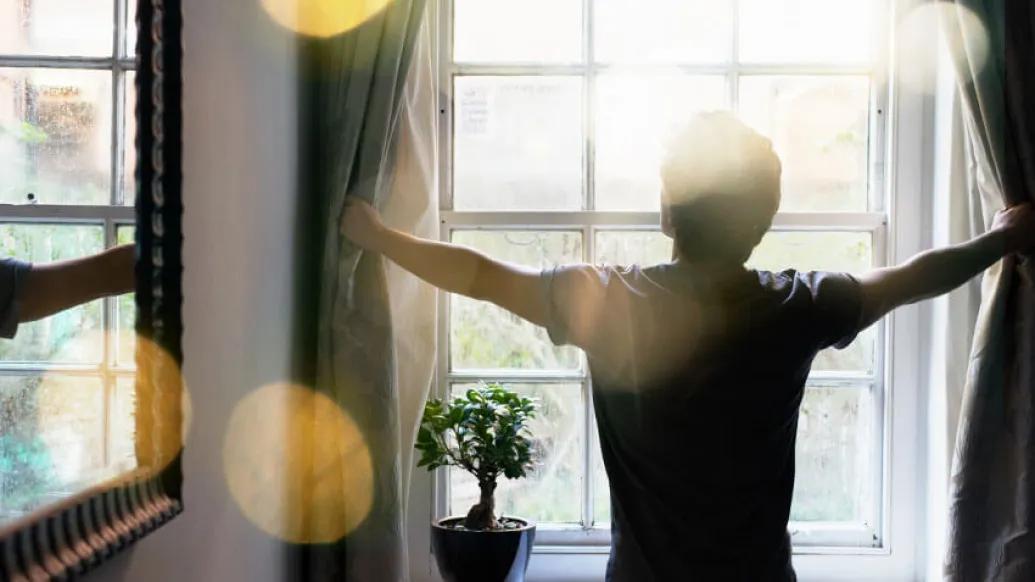
In the age of working from home due to COVID-19, many of us may be spending significantly more time inside looking at bright screens. As we attend online meetings and scroll through social media, we are exposed to more artificial light than our bodies are accustomed to. Doctors have been investigating the relationship between light and human health, and our growing artificial light exposure may only be making the impact stronger.
In a recent presentation, Helen Burgess, Ph.D., professor of psychiatry and co-director of the Sleep and Circadian Research Laboratory at Michigan Medicine, shared context about the relationship between light exposure and human health, along with recent research on light treatment.
Burgess is an expert on the circadian effects light has on the human body, with years of research experience on sleep and its relation to light. She discusses how it affects our body's central circadian clock and the natural 'circadian rhythm' process that follows a daily cycle and typically responds to environmental light.
LISTEN UP: Add the new Michigan Medicine News Break to your Alexa-enabled device, or subscribe to our daily updates on iTunes, Google Play and Stitcher.
"We know, on average, in humans, that the endogenous period, or the time it takes for the central clock to complete one cycle, is slightly greater than 24 hours," Burgess explains.
As a result of this additional time, studies have shown that people's internal clocks often have the tendency to drift later in the day if they aren't exposed to normal cues to tell them what time it is. To correct this, Burgess says we need to "phase advance," or wake up earlier than our bodies might do naturally without any outside cues, in order to stay in sync with the Earth's 24-hour day.
This is where light, the circadian clock's strongest environmental cue, plays a role. Burgess says that for majority of people, morning light has a strong effect.
"We have reduced sensitivity to light in the middle of the day… and we're much more sensitive to light around the time of our usual sleep," Burgess explains. "For many of us that need to shift earlier, morning light is actually the most important light that we are receiving during the day. On the other hand, evening light, the light before bed and during the sleep episode, will phase delay you. This is going to exacerbate that natural tendency to shift later that many of us have."
This evening light can be extremely prevalent in the age of COVID-19, as many people may tend to stay home in the evenings and consume entertainment through brightly lit screens.
Although tempting to work on your computer or watch television, it may be best to cut back on screen time, since studies have shown that evening light from electronic devices is linked to lower sleep quality and diminished health.
Evening light has been found to suppress melatonin, which Burgess says may become a health issue over time. "We know that lower levels of melatonin at baseline are predictive of developing various diseases over several years," she explains, which may include breast cancer, hypertension and type 2 diabetes.
We have reduced sensitivity to light in the middle of the day… and we're much more sensitive to light around the time of our usual sleep.Helen Burgess, Ph.D.
On the other hand, morning light treatment can do wonders for depression, mood and overall health, Burgess says.
"We're finding that morning light treatment is an effective antidepressant— as effective as a pharmaceutical antidepressant," she explains. This form of treatment typically has less side effects than medications and may be tied to increased levels of serotonin in the brain, which can have the effect of regulating mood and happiness.
MORE FROM MICHIGAN: Sign up for our weekly newsletter
Morning light therapy has also been tested to strategically reduce symptoms of chronic pain. Burgess says morning light improves sleep patterns and quality, ultimately helping with pain and physical function.
With this new information related to the crucial timing of light, Burgess has advice for people looking to counteract increased artificial evening light and maintain wellness in the age of COVID-19 and beyond.
"We encourage people to try to maintain a regular set sleep schedule, not just using a wake time alarm but setting an alarm for half an hour before you should go to bed in order to ensure you're receiving at least seven to eight hours of sleep," she says.
She also recommends getting more natural light during the day and minimizing artificial light exposure after sunset. Implementing these suggestions may help to improve wellbeing, not only during the pandemic, but in the long term as well.
Watch Dr. Burgess speak in a webinar on behalf of the National Center for Complementary and Integrative Health, part of the National Institutes of Health.

Health Lab
Explore thousands of health news & research stories by visiting the Health Lab homepage for more.
Media Contact

Public Relations
Department of Communication at Michigan Medicine
Stay Informed
Want top health & research news weekly? Sign up for Health Lab’s newsletters today!
Featured News & Stories
Small Pauses, Bigger Impact: Mindfulness in Action
Major Changes to Medicaid

Sports gambling on the rise among college students
Exploring the mind’s mysteries: 130 years of mental health care & innovation at U-M

How U-M helped bring depression out of the darkness