
How disparities in kidney care happen, and what to do about it
Lack of access to care can be dangerous, and have grave consequences
5:00 AM
Author |

The risks of not getting the proper kidney care when it’s needed are high – and unfortunately, not everyone can access the care they need.
It’s a well-known fact that African Americans are almost three times more likely to suffer from kidney failure, and the risk is also high for other minorities, including Hispanic populations, American Indian and Alaskan Natives, Native Hawaiians, and other Pacific Islanders.
Kidney transplants are also more difficult for patients of color to obtain.
“Initially the greater predilection to kidney disease for certain populations was mainly thought to be due to biological differences, but it is increasingly becoming clear that structural racism is the primary driver of disparities related to social determinants of health that represent the underlying root cause for many of these differences," said Rajiv Saran, M.D., M.B.B.S., M.S., Florence E Bingham Research Professor of Nephrology.
There are many risks involved for patients who don’t get the care they need. Saran says kidney disease is often silently progressive, and can be linked to diabetes, hypertension, obesity, cardiovascular disease, and other acute or chronic conditions. It can also progress faster when care is not well-coordinated, or if the condition is recognized too late.
Why aren’t people receiving proper kidney care?
Saran says insurance is one issue – patients who don't have health insurance are not visible to the healthcare system.
But even people who do have insurance can suffer, especially depending on where they live.
Key social determinants of health can be poverty, food availability, housing insecurity, lack of green spaces and recreational opportunities, and unsafe neighborhoods. These factors determine how people are able to take care of themselves, or even know when they may require medical attention or what their risks might be for conditions such as kidney disease.
“It's a vicious circle. The earlier we can catch people upstream, the better we can prevent downstream consequences of insidiously developing diseases.”
Awareness and early detection are key to ensuring more equitable treatment for kidney disease and other chronic conditions, Saran says.
Good treatments are currently available and if the condition is diagnosed early on, they can be most effective in slowing the progression of the disease, and its many complications.
"If you don't detect early, a lot of people will escape the net,” Saran said. “It's very important for the primary care community in health care systems to make every effort to detect this condition early.”
Saran says that while much needed formal guidelines for early screening are on the way, the literature strongly suggests that primary care providers can add simple tests (urine albumin to creatinine ratio-UACR and a blood test – serum creatinine) to their clinical evaluation so patients have a better idea of when they may need to see a specialist.
Providers should also pay special attention to communities of color and patients who have higher risk factors - that includes patients with diabetes, prediabetes, hypertension, obesity, cardiovascular disease, and a family history of kidney disease.
“It's a vicious circle. The earlier we can catch people upstream, the better we can prevent downstream consequences of insidiously developing diseases,” Saran said.

Health Lab
Explore thousands of health news & research stories by visiting the Health Lab homepage for more.
Media Contact

Public Relations
Department of Communication at Michigan Medicine
Stay Informed
Want top health & research news weekly? Sign up for Health Lab’s newsletters today!
Featured News & Stories

Kidney transplant recipient celebrates 10 year anniversary at Transplant Games
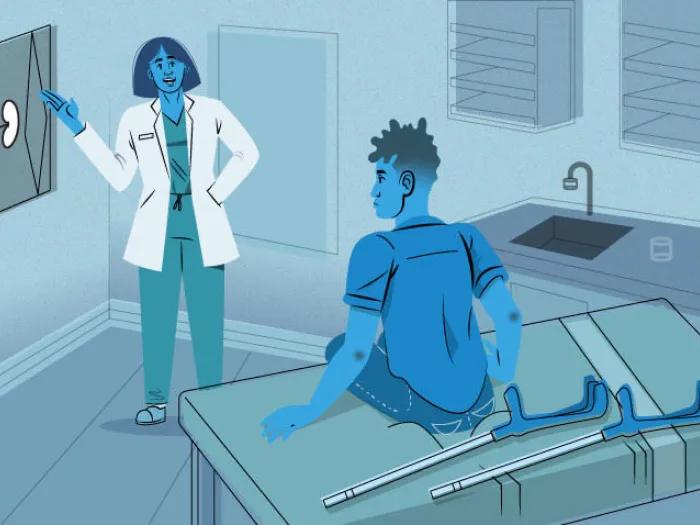
Kidney disease is a problem for cerebral palsy patients. Why are doctors missing it?

The Kidney Warning Signs You’re Missing— And Why Waiting is Dangerous

The quiet warning signs your kidneys may be signaling
Medicare's New GLP-1 Bridge Program
