How to become a standardized patient
Critical for training future doctors, the program's director and an actual standardized patient discuss the benefits of the job.
11:30 AM
Author |
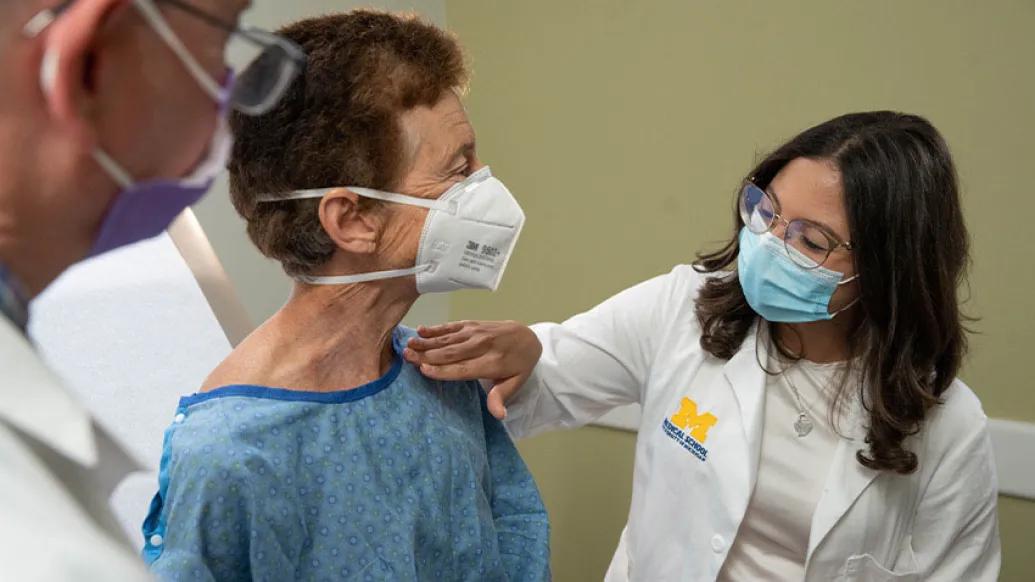
It isn't uncommon to envision actual hospital rounds when you think of how medical students interface with patients during their training.
But another mode of experiential education often slides under the radar.
Standardized patients, or SPs, are paid employees who are trained to accurately portray specific patient roles, assess clinical skills and provide constructive verbal feedback about the performance of medical students.
At the University of Michigan Medical School, SPs participate in both the teaching and assessment of medical students, while providing them with an opportunity to develop, practice and enhance their skills.
MORE FROM MICHIGAN: Sign up for our weekly newsletter
"Both our standardized patients and patient educators really believe in the vision of our work. Our program focuses on the importance of working with medical students when it comes to developing their clinical and communication skills," said Laurie Whitman, M.S.Ed., who serves as the director of the U-M Standardized Patient Program. "The experiential part of their training happens here. The students get to come in and practice these skills with a 'patient' and get feedback from faculty on how they do. We've learned that our standardized patients and educators love this aspect of their work because they are truly contributing to the skill development of our future health care providers."
Whitman adds that occasionally, some of their standardized patients are motivated by past experiences as actual patients in the medical field.
"Sometimes an individual decides to become a standardized patient because of their own experiences in health care," she said. "And the beauty of our program is that it's very curricular. We have a set checklist that highlights valuable items that students must learn as future doctors. We also try and provide tangible ways for our students to retain these items, while identifying why they are important. But it's always the patient's voice that shines through when our students are learning in this environment. That's really important."
Whitman says that if you have an interest in helping aspiring physicians hone their medical interviewing and communication skills, as well as their physical techniques, you should apply.
"We recently had open interviews, but we're really making a push to recruit even more dedicated standardized patients," Whitman said. "To qualify, you must be available between the regular business hours of 8 a.m. and 5 p.m., however weekly hours do vary. Some weeks, you might work 15 hours, and then fewer the next. This is a great opportunity for someone who is interested in bettering the lives of our medical students through a part-time position. Our SPs are considered temporary employees at U-M, and some of them have been with us for decades."
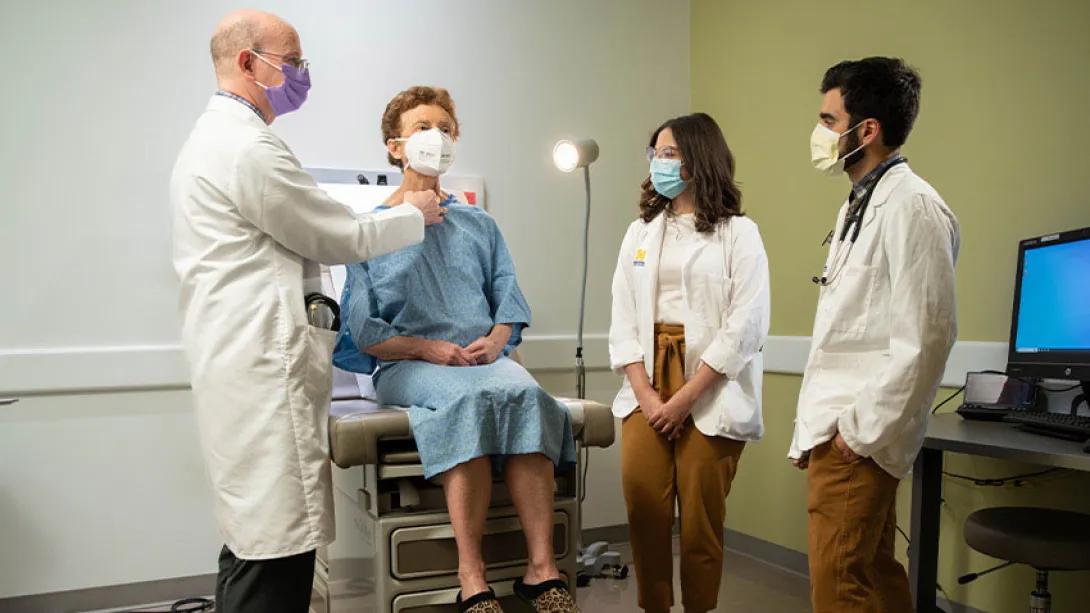
The person behind the standardized patient
Karen Gardstrom, who is a 68-year-old that lives in Ann Arbor, has worked as a standardized patient with U-M for the past 10 years. She was inspired to join the program by her daughter, who also served as a standardized patient several years ago.
"Our daughter, Christina, worked as a SP when she was an undergraduate student at U-M," said Gardstrom. "They'll often recruit younger people for cases that require them. She really enjoyed her experience with the program because she was also able to utilize her second language of Spanish for particular cases."
Gardstrom's other daughter, Erika, was a medical student at the Ohio State University at the time that she decided to join the U-M Standardized Patient Program. While there, her daughter would often talk about her encounters with standardized patients and how valuable they were.
"After thinking about how wonderful this program had been to my daughters, as well as how beneficial it is for our future health care providers, I decided to pay it forward, so to speak, and help medical students here at U-M," said Gardstrom. "And even after all this time, I still really feel like I'm doing a meaningful service for our U-M medical students in helping them become the best doctors they can be. As a standardized patient, we evaluate the students on 20 different communication skills, which range from eliciting a patient's perspective, to involving the patient in their own health care. This part of the role can be really powerful."
Gardstrom adds that as a standardized patient, she's confident that she's "very well trained," and enjoys how the program is designed, as well as how it functions.
"There are four different patient educators that spend a lot of time training us patients on individual cases," she said. "They train us on the facts related to the specific cases, and we're expected to portray patients in those situations in a standardized fashion. Each student will then receive a fair and equitable evaluation."
Gardstrom says that she only works "very part-time," which is convenient for her lifestyle.
"I appreciate the flexibility this job allows me," she said. "It's a great option for retirees, students and/or people who work more than one job. It's just a fulfilling way to help other people and it's extremely rewarding."

Becoming a standardized patient
In order to serve as a standardized patient, Whitman notes that you must meet the following requirements:
- Be available for both SP training, as well as interview and exam sessions, as needed.
- Have a willingness to undergo a physical exam, which involves wearing a hospital gown.
- Consider yourself to be reliable, punctual and dependable.
- Possess excellent communication skills and a willingness to provide students with constructive feedback regarding their performance.
- Meet specific criteria for each individual case.
Whitman says that while educational training and/or professional experience in health professions is highly preferred, it is not required. In fact, she notes that her team "loves to recruit people from various professions because their unique experiences increase diversity within the program."
In addition, she adds that "all Michigan Medicine employees are required to comply with the flu and COVID-19 vaccination policies."
To apply to be a standardized patient, visit the U-M Standardized Patient Program application here.
Live your healthiest life: Get tips from top experts weekly. Subscribe to the Michigan Health blog newsletter
Headlines from the frontlines: The power of scientific discovery harnessed and delivered to your inbox every week. Subscribe to the Michigan Health Lab blog newsletter
Like Podcasts? Add the Michigan Medicine News Break on Spotify, Apple Podcasts or anywhere you listen to podcasts.

Health Lab
Explore a variety of health care news & stories by visiting the Health Lab home page for more articles.
Media Contact

Public Relations
Department of Communication at Michigan Medicine
Stay Informed
Want top health & research news weekly? Sign up for Health Lab’s newsletters today!
Featured News & Stories

Doctors in the house: History of medical interns and residents at Michigan Medicine
How new care models, within a new building launch, are helping optimize patient care

Celebrating cardiac arrest survivors and their lifesavers
How a temporary heart pump can support high risk cardiac surgery

When should parents stop tracking their kids' location?