Hip, Knee Replacement Registry Reaches 250,000 Cases
A statewide collaborative is identifying ways to improve patient care for hip and knee replacements through quality improvement projects.
7:26 AM
Author |
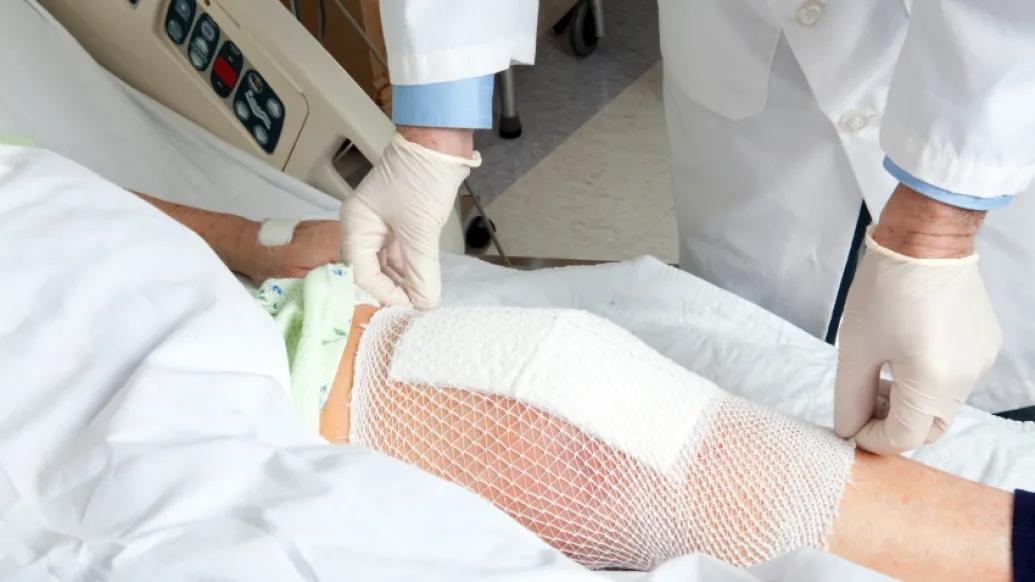
What are the best care, treatments and recovery options for hip and knee replacement patients?
That's a question the Michigan Arthroplasty Registry Collaborative Quality Initiative (MARCQI) set out to answer when it was first created in 2012.
"The collaborative uses high-quality, risk-standardized outcomes data and uses it in a variety of statewide quality improvement projects to help improve patient care," says Brian Hallstrom, M.D., an assistant professor of orthopaedic surgery at Michigan Medicine and co-director of the MARCQI initiative.
The MARCQI contains data from 66 hospitals and surgery centers and recently reached 250,000 cases in its registry. Michigan Medicine serves as the initiative's Coordinating Center and funding for the collaborative is provided by Blue Cross Blue Shield of Michigan/Blue Care Network.
"The cases are patients who have undergone hip or knee replacement in the past seven years," Hallstrom says. "By analyzing this data we are able to understand what types of recoveries patients are experiencing, what problems they are having or not having, etc."
LISTEN UP: Add the new Michigan Medicine News Break to your Alexa-enabled device, or subscribe to our daily audio updates on iTunes, Google Play and Stitcher.
In fact, Hallstrom notes, the detailed information collected about the patient experience into the registry is an essential component of MARCQI.
"If we're going to improve the quality of care for our hip and knee replacement patients, we need to understand what they are experiencing," he says. "This statewide database allows us to assess where quality improvements can be made."
The collaborative uses high-quality, risk-standardized outcomes data and uses it in a variety of statewide quality improvement projects to help improve patient care.- Brian Hallstrom, M.D.
Quality improvement initiatives
The MARCQI has had multiple main quality improvement projects since it first launched, with two additional projects added in 2018. The collaborative has focused on reducing blood transfusions, getting more patients straight home after surgery, simplifying blood clot prevention, and reducing complications like infection, early fracture and reoperation.
"After observing our data in early 2013, we realized there were large variations among our participating hospitals and surgery centers regarding the percentage of patients having blood transfusions," Hallstrom says. "This was worrisome because unnecessary transfusions present a variety of risks for patients.
"So we presented this data in our collaborative reports and at our meetings, along with the American Red Cross transfusion guidelines. By providing this education, we saw a dramatic drop in the number of transfusions happening across the state of Michigan."
MORE FROM THE LAB: Subscribe to our weekly newsletter
Another area of focus for the collaborative: infection rates.
"The collaborative recommended a Staphylococcus aureus screening for all patients undergoing hip or knee replacement surgery," Hallstrom says. "We also recommended a 10-step infection prevention protocol at all of our sites. We weren't able to see meaningful trends because infections are somewhat infrequent, but we did see our rates of 90-day infection incidence were lower than national averages for both knee and hip replacements and we are not seeing the rise in infections reported by some."
For older patients having a knee or hip replacement, the initiative found discharge to a nursing home can affect recovery.
"We found patients discharged to a nursing home had a 50 percent higher chance of readmission after knee replacement and a 30 percent higher chance of readmission after hip replacement," Hallstrom says. "We worked with our participating hospitals and surgery centers and encouraged them to begin quality improvement activities for these patient groups. We saw the overall nursing home discharge rate in these patients drop from 23 percent to 11.7 percent."
In 2018, the collaborative launched two new initiatives: reducing early revisions within one year and reducing overprescribing of opioids.
Future research
Using its patient registry data, the MARCQI has been able to conduct other meaningful research for patients.
For example, in a recent study, Hallstrom and team found that putting patients on aspirin following a knee replacement is a safe and cost-effective alternative to other anticoagulants.
"This type of study allows us to provide our fellow physicians in the collaborative with the most up-to-date recovery care suggestions for our patients," Hallstrom says. "We're saving patients money, while helping them recover after surgery."
The collaborative plans to continue to work on its newest quality initiatives and conducting research.
"We hope the MARCQI continues to grow and serves as an example for other states of how a statewide collaborative can improve patient care," Hallstrom says.
Hallstrom and MARCQI co-director, Richard Hughes, Ph.D., are both members of the Institute for Healthcare Policy and Innovation.

Health Lab
Explore thousands of health news & research stories by visiting the Health Lab homepage for more.
Media Contact

Public Relations
Department of Communication at Michigan Medicine
Stay Informed
Want top health & research news weekly? Sign up for Health Lab’s newsletters today!
Featured News & Stories

U-M Board of Regents approves construction of Nathan and Catherine Forbes Sports Medicine Institute

Why tendons heal so poorly and how researchers hope to fix them

Rethinking how clinicians learn to feel disease

Treating arthritis of the hands

Paying it forward for future Wolverines