Hiking Patagonia after spine surgery
73-year-old goes from not being able to walk to conquering seven miles a day
5:00 AM
Author |
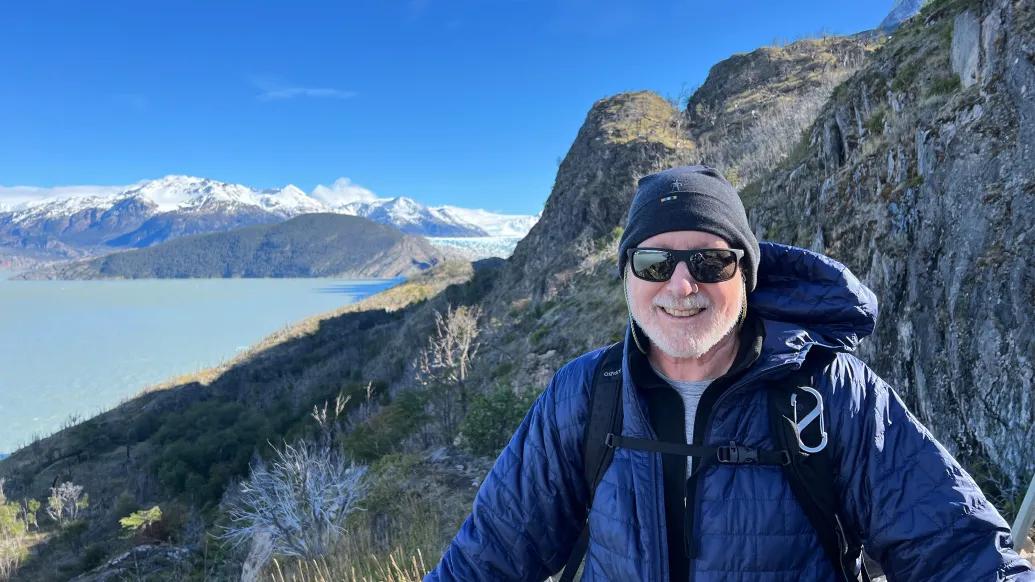
According to Chester France, he has always just had a bad back.
But eventually his bad back became unmanageable and a diagnosis of spondylolisthesis started to threaten his plans to go hiking in Patagonia.
Thanks to a common spine procedure, though, the 73-year-old was able to make the hike with ease.
Intolerable back pain
Around the spring of 2022, France’s back pain went from bad to unbearable.
He was experiencing shooting pains in his lower back and legs anytime he tried to stand up straight, was having trouble getting out of bed in the morning and doing household chores had become nearly impossible.
After a few trips to the University of Michigan Health Spine Clinic, it was determined that France’s pain was caused by compression of his spinal cord as well as instability in his spine.
France was referred to Rakesh Patel, M.D., an orthopaedic spine surgeon at the University of Michigan Health to receive more advanced treatment.
“I had plans to go hiking in Patagonia with my wife, sister-in-law and brother-in-law in March of 2023 and I was starting to give up on the idea that I would be able to go,” France said. “Walking around the house had become such a challenge, I felt that hiking for days at a time would be impossible.”
During their first meeting, France expressed to Patel his disappointment that his dream to go hiking in Patagonia no longer seemed feasible. Being a hiker himself and having hiked the trails in Patagonia, Patel understood France’s drive to complete this bucket list item.
Getting a laminectomy
In December 2022, just three months before his trip, France underwent a laminectomy to treat his spondylolisthesis.
The common procedure treats the compression of the spinal cord by removing the outer casing of the spinal canal, as well as any ligaments and bone spurs, that are compressing the spinal cord through a small incision in the back.
Since France was experiencing instability in his spine too, Patel placed a small rod that connected to the L4 and L5 vertebrae and increased fusion rates by removing the disc between the two. To ensure that everything healed properly, a bone graft and expandable cage was placed around the spine to make sure there is no motion and the spine fuses appropriately.
“The cause of this procedure is one of the most common conditions we see in clinic,” Patel said. “Most of the time, patients can’t walk before the procedure. Our goal is to get them walking and back to living their lives.”
Patients tend to have a quick recovery from the procedure, which was the case for France. Within two days of being home, he was up and walking again in small increments. He set a goal for himself to walk a little bit farther each day and eventually saw progress each week, even if it was slow.
While the procedure brought him back to his old self, France wants others to know it is not a minor surgery by any means when it comes to recovering.
“The recovery can be a difficult and painful road,” said France. “It is important to follow the recovery instructions closely to be successful.”
Patel said it’s important that patients stick to their physical therapy regimen to help see positive results after surgery. This doesn’t just mean following the post-operative exercises but doing pre-operative ones as well.
“Since spondylolisthesis results in difficulty walking, patients can spend a lot of time post-procedure gaining back muscle strength that they lost by not walking for so long pre-procedure,” said Patel. “Finding a way to walk when you can, ride your bike or do a recommended exercise that is manageable will strengthen your leg muscles before surgery making the recovery process a little smoother.”
Hiking Patagonia
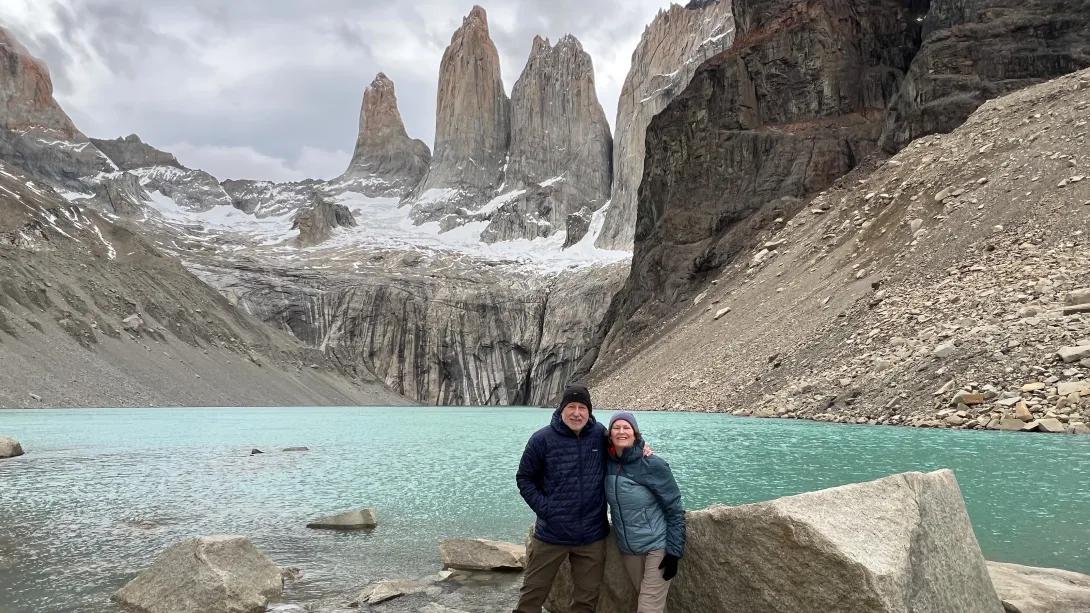
Exactly three months after his procedure, France and his family left for Patagonia. The group hiked the W circuit that leads to the Three Towers, a challenging hike for anyone in any condition according to France and Patel.
The hike lasted five days and involved around seven to nine miles of hiking per day. Reaching the summit on the last day involved about 10 to 12 miles of hiking on rock faces with no trails.
“I was able to complete the circuit and reach the summit with no complications,” said France. “It was an experience I will never forget and I’m incredibly grateful to Dr. Patel and his team for helping me get there.”
With an improved back, France is eager to continue making hiking plans for the years to come.

Health Lab
Explore a variety of health care news & stories by visiting the Health Lab home page for more articles.
Media Contact

Public Relations
Department of Communication at Michigan Medicine
Stay Informed
Want top health & research news weekly? Sign up for Health Lab’s newsletters today!
Featured News & Stories

Psychoactive substances and adverse side effects for patients with multiple sclerosis
To reduce chronic pain, a new digital program could help

What does cannabis 'rescheduling' mean for science and society?

Half of newborns with severe spina bifida have trouble breathing during sleep
How a complex, 14-hour surgery saved a woman’s ‘hopeless’ spine