A heart transplant for her birthday
The mother of 8 was hospitalized for over a month
5:00 AM
Author |
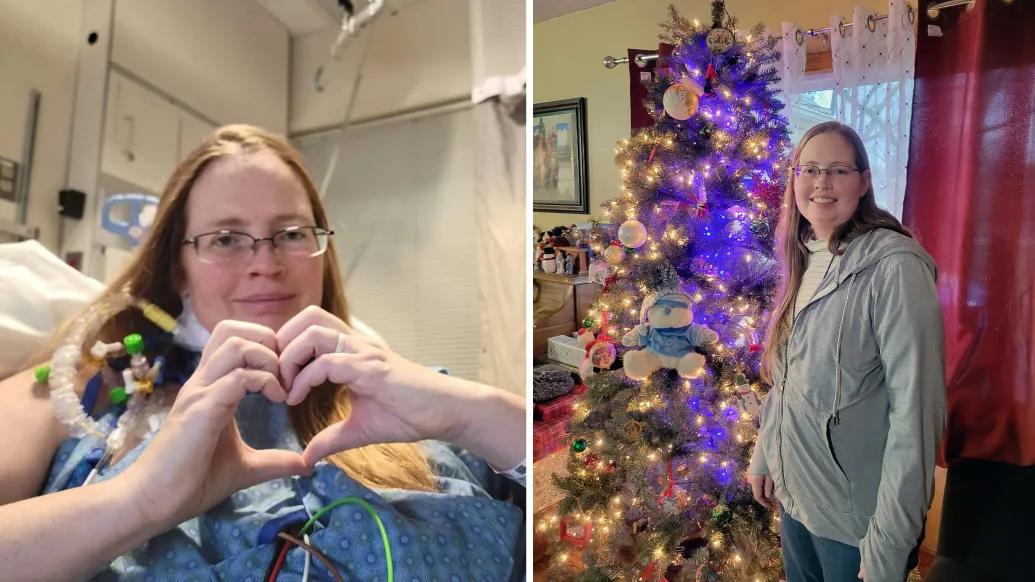
A Michigan woman is home with a new heart that she received on her birthday, following years of living with a gradually failing heart.
“It was the most amazing moment ever — pure blessing and chance,” said Rachel Lanham of Jackson, Mich.
The surgery started on the eve of her birthday and ended in the early hours of the day she turned 48. Her new heart came from a donor who had recently died, and the transplant used a process called donation after circulatory death, or DCD.
The University of Michigan Health transplanted its first DCD heart in March 2023.
The health system has since transplanted a record number of hearts, as the DCD technology increases access to this lifesaving surgery.
SEE ALSO: Heart attack at Michigan-Ohio State game ends in win for Ohio photographer
“Through a variety of innovative strategies and a multidisciplinary institutional commitment, the heart transplant program has grown substantially within the past year and we anticipate will continue in this upward trajectory,” said Jonathan Haft, M.D., surgical director of the adult heart transplant program at U-M Health.
“This will allow more timely access to lifesaving donor hearts to our patients suffering from end-stage heart failure.”
A decade with heart issues
Over 10 years ago, Lanham began feeling constant fatigue and shortness of breath.
After her uncle died suddenly, she got genetic testing that identified a congenital heart disease called non-compaction cardiomyopathy.
A genetic mutation caused her heart to enlarge, making it more difficult to pump blood.
“My doctors tried to control symptoms with medications, and I knew it was a possibility that it could result in a transplant but that it wasn’t a foregone conclusion,” Lanham said.
“My goal was to keep my heart as long as I could.”
Lanham had an implantable cardioverter-defibrillator, or ICD, placed in her chest in 2012.
Rachel’s story is a great example of how advances in temporary mechanical circulatory support and in organ preservation have changed the landscape for heart transplant candidates and heart allocation."
The device, which delivers electricity to restore the heart’s rhythm when needed, started shocking her in October 2021.
She had a procedure to treat and eliminate her atrial fibrillation, called a catheter ablation, but Lanham’s condition continued to deteriorate.
“This past October, I could no longer function with my family,” said Lanham, who has eight children, six of whom still live at home.
SEE ALSO: Her heart stopped more than 25 times. ECMO saved her life
“The right side of my heart was too weak for a [mechanical device that assists in pumping], and I was listed on the transplant list.”
ECMO to transplant
Lanham was hospitalized at U-M Health in early November.
Her heart rate shot up; her kidney numbers looked bad. She was “on the precipice” of multi-organ failure.
“At this point, pharmacologic support was not doing enough to help her heart, and we had to escalate to mechanical support,” said Ashraf Abou el ela, M.D., a cardiothoracic transplant surgeon at the U-M Health Frankel Cardiovascular Center.
The medical team started Lanham on extracorporeal membrane oxygenation, a technology developed at U-M that is more commonly known as ECMO. This pumped oxygenated blood to Lanham’s organs, bypassing the heart and lungs.
She was on ECMO for three days before her providers came with the news: they had a heart for her.
“At first, I hardly dared to call and tell people because I thought they might tell me, ‘Never mind,’” Lanham said.
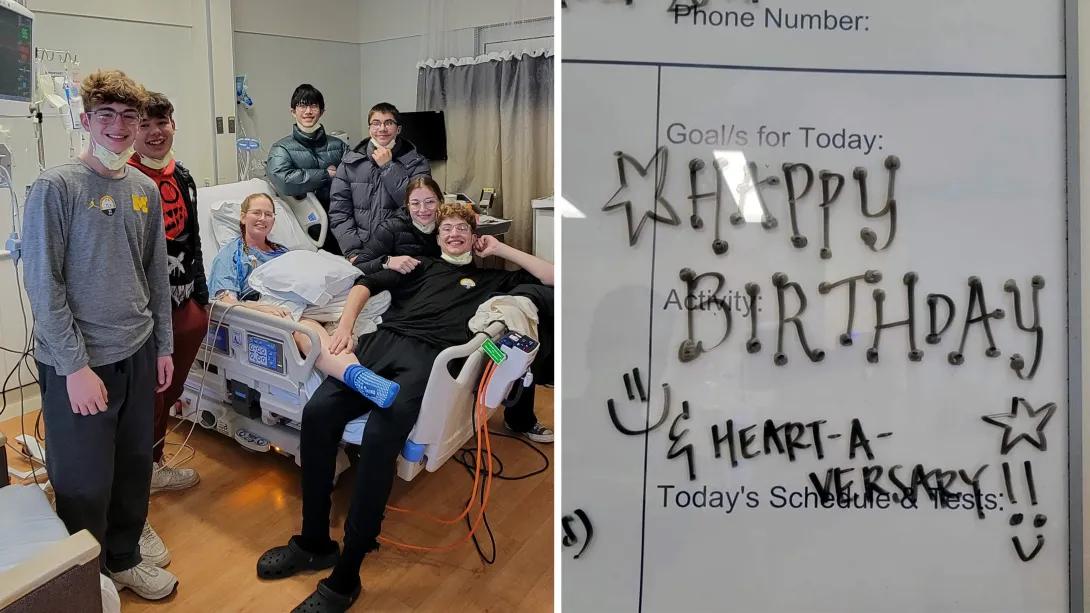
She awoke on Nov. 21 — one year older and with a healthy heart in her chest. Lanham’s husband and some of her children were waiting at her bedside.
While she couldn’t make it home for Thanksgiving, Lanham was able to call in on video to join her family meal.
Nearly three weeks later, she left the hospital to continue her recovery in Jackson.
“Rachel’s story is a great example of how advances in temporary mechanical circulatory support and in organ preservation have changed the landscape for heart transplant candidates and heart allocation,” said Monica Colvin, M.D., M.S., FAHA, medical director of the adult heart transplant program at U-M Health.
“Agreeing to a DCD donor increased her chances of expeditiously obtaining an organ which is essential since ECMO is a temporary device. All in all, this was a great outcome and a perfect birthday present for Rachel.”
With progress, Lanham hopes to return to work and spend more time taking care of her children.
“The support of my family, friends and faith have been critical for me; they got me through this whole thing,” she said.
“I take it one day at a time and try to do something new every day. I feel very blessed.”
Sign up for Health Lab newsletters today. Get medical tips from top experts and learn about new scientific discoveries every week by subscribing to Health Lab’s two newsletters, Health & Wellness and Research & Innovation.
Sign up for the Health Lab Podcast: Add us on Spotify, Apple Podcasts or wherever you get you listen to your favorite shows.

Health Lab
Explore thousands of health news & research stories by visiting the Health Lab homepage for more.
Media Contact

Public Relations
Department of Communication at Michigan Medicine
Stay Informed
Want top health & research news weekly? Sign up for Health Lab’s newsletters today!
Featured News & Stories
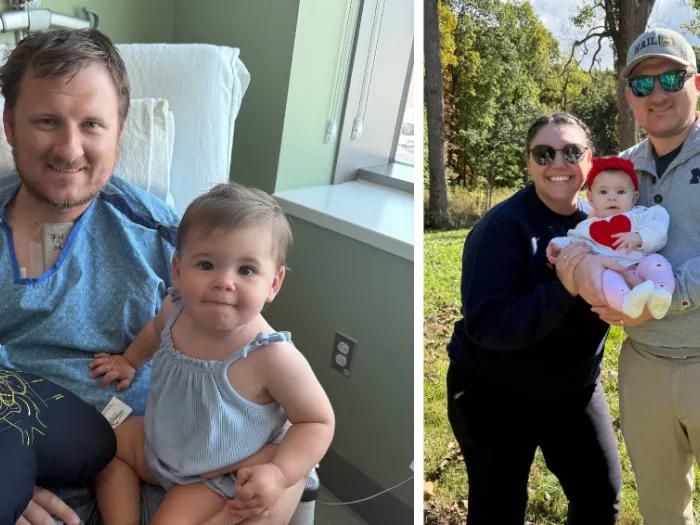
Young father survives aortic dissection after delayed diagnosis
C.S. Mott Children’s Hospital first in country to implant expandable heart valve during FDA review phase
Weighing TAVR vs. SAVR for aortic stenosis treatment
Born with half a heart, headed to college with a full life
The Questions That Shape the Future of Medicine