First-of-its-kind blood test for head and neck cancer
The MyHPVscore test is a bench-to-bedside success story
5:00 AM
Authors |
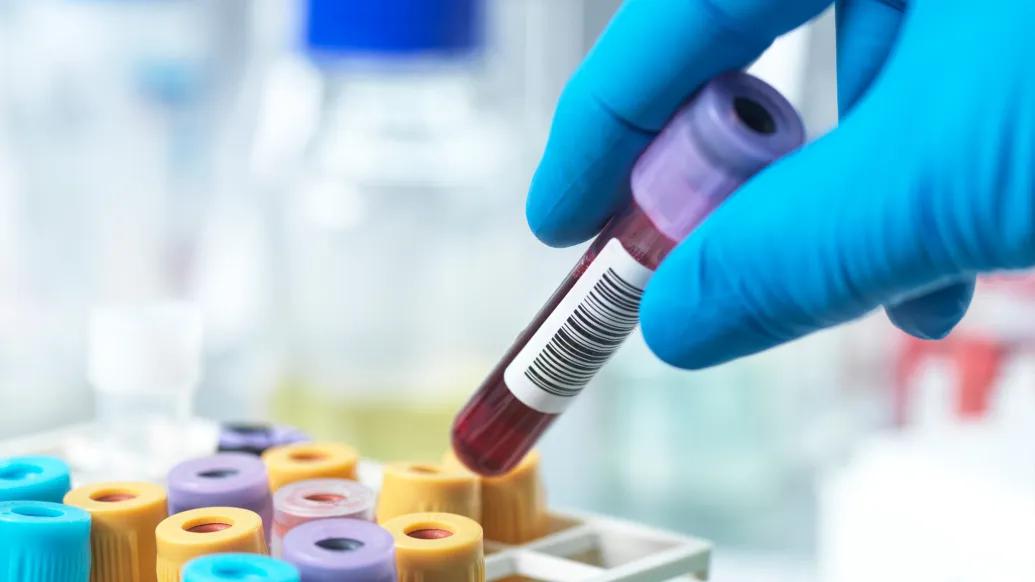
A Michigan Medicine lab has begun providing a first-of-its-kind new cancer test.
Developed at the University of Michigan, MyHPVscore is a highly accurate blood test that can detect human papilloma virus-related head and neck cancer by measuring fragments of tumor DNA in a patient’s bloodstream.
“We needed to create this lab because patients needed results,” said J. Chad Brenner, Ph.D., director of the Michigan Otolaryngology and Translational Oncology Laboratory, where the tests are developed and processed.
“There are almost no otolaryngology departments nationally that have such a lab.”
The joint Otolaryngology and Pathology clinical lab began in July 2022 and, after validation of the testing procedures, began processing patients’ samples in October of this year.
The first patient samples came from Michigan, but the lab plans to offer national testing soon.
They have the capacity to run 400 samples per day, and plan to begin running about 50 per day in the next year as testing carefully ramps up.
Around 48,000 patients receive diagnoses of HPV+ cancer in the United States every year.
The ability to detect such cancers with a simple blood test has obvious benefits as a noninvasive diagnostic tool.
MyHPVscore also allows doctors and patients to more easily assess how treatments are working.
“The work of Dr. Brenner and his team is incredibly exciting,” said Keith Casper, M.D., U-M clinical associate professor for Otolaryngology-Head and Neck Surgery.
“This test has the ability to detect recurrent disease before patients have any signs or symptoms of recurrence. It also can detect recurrence prior to any imaging findings. This opens the possibility of being able to detect recurrence at its earliest stage, which should enable us to intervene earlier.”
HPV-related head and neck cancers have risen in incidence and are predicted to continue to do so given the latent nature of the virus.
Most young adults have not received the HPV vaccine, with a particularly low rate for men, even though it is now approved for adults up to the age of 45.
Michigan’s lab is the first to debut a circulating biomarker test for patients with HPV-related head and neck cancer.
Brenner credits their being first to University of Michigan Health’s willingness to provide multidisciplinary support to quickly translate his team’s idea to a test that helps patients.
“There are so few examples of tests that have been advanced—from development to returning results to patients— within a single institution,” Brenner said.
“That’s really the uniqueness of the Rogel Cancer center.”
As the Michigan Otolaryngology and Translational Oncology Laboratory rolls out MyHPVScore for a growing number of patients, they are also working to develop tests for related cancers, such as HPV-positive cervical cancer.
HIV-positive and other immunocompromised patients, who develop HPV-related cancers at a much higher rate, also stand to potentially benefit more than any other group from expanded applications of the test.
Brenner also hopes the success of the lab will encourage other researchers to pursue their ideas for novel tests—and make Michigan a leader in true bench-to-bedside translation.
Sign up for the Health Lab Podcast. Add us wherever you listen to your favorite shows.

Health Lab
Explore thousands of health news & research stories by visiting the Health Lab homepage for more.
Media Contact

Public Relations
Department of Communication at Michigan Medicine
In This Story

J Chad Brenner, PhD, MSE
Associate Professor
Stay Informed
Want top health & research news weekly? Sign up for Health Lab’s newsletters today!
Featured News & Stories
Family’s gift honors wife and mother, supports nephrology nurses

Comprehensive DNA sequencing reveals hidden drivers of cancer

‘Molecular glue’ stabilizes protein that inhibits development of non-small cell lung cancer and uterine cancer

A second chance at life

Rural-urban disparities in head and neck cancer