Expanding brain tumor research
A prestigious $4.5M NIH grant will help advance the understanding about deadly tumors and provide a path for developing new treatments
5:00 AM
Author |
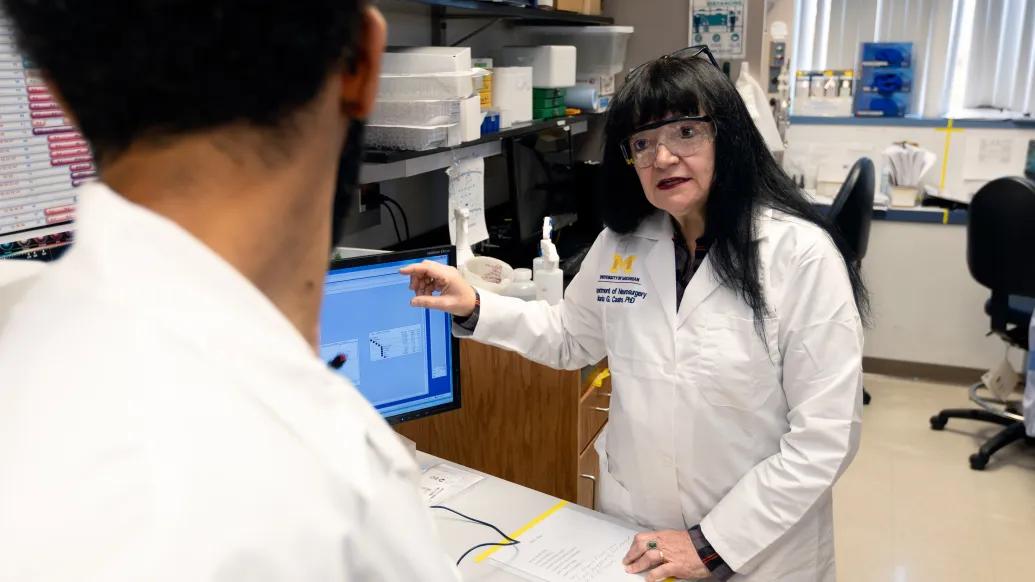
For Maria Castro, Ph.D., moving the needle isn’t enough.
“I would like to go further. I’d like to turn malignant brain cancer into a chronic disease that can be managed,” she said.
It’s a lofty goal, but with a new seven-year, $4.5 million grant from the National Institutes of Health, Castro is poised to push forward game-changing research with tremendous potential to improve outcomes for adults and children with a deadly subtype of brain cancer.
Castro, the RC Schnieder Collegiate Professor of Neurosurgery and professor of cell and developmental biology, recently received the Javits Neuroscience Investigator Award from the National Institute of Neurological Disorders and Stroke.
The award is given out once a year to provide long term support to investigators with a history of moving the needle.
The prestigious award reflects Castro’s significant contributions to the field of brain tumor research as well as her long history of service to the NIH, participating in intramural evaluation meetings, study sections and special emphasis panel review committees.
“I’ve been working on brain cancers for 25 years,” said Castro, who's a member of the Rogel Cancer Center.
“People now have better outcomes than they did 25 years ago – surgical techniques have improved, radiation therapy has improved and there are some new therapeutics. But the needle hasn’t moved in terms of providing lifesaving treatment."
SEE ALSO: Path forward for glioblastoma treatment
This award will allow Castro to continue her pioneering work in glioma, the most common type of brain cancer.
Specifically, she’s looking at a subtype in which a gene called IDH1 is mutated – representing about half of gliomas. These tumors are low grade and occur at a younger age.
Survival can be seven to 10 years, compared to months or years for those without this mutation.
“In spite of the patients living much longer, it’s also a delayed death sentence,” Castro said.
“Eventually the tumor comes back and kills the patient. These are young people who have this disease and know it’s a death sentence. It’s like they have a ticking bomb in their brain.”
Accepting a prestigious NIH award
Castro is passionate about the work she does.
“But it’s not only about the science. The focus of my lab is to develop projects that will eventually lead to clinical implementation.”
Work from Castro’s lab translated to a clinical trial of gene therapy trial in adult glioblastoma patients, which was recently completed. A similar trial in pediatric and young adult glioma patients will start soon.
“The fact that those trials came from work done in my lab is very rewarding and a huge honor for me,” said Castro.
Her driving force is to see her research benefiting patients.
“That’s what drives me to do the work I do.”
When asked why she pursues basic science, Castro says for her it’s a continuum; she starts her research projects from very basic biological questions.
“In five or six years, the answers to these questions lead to novel treatments. It’s basic science that translates to preclinical translational science then leads to clinical trials and clinical science.”
Working in a lab can be challenging day in and day out, along with the failures and the overcoming of those failures, Castro notes.
“Eventually, seeing all the hard work pan out, though, it's very rewarding.”
Embarking on a new research project for brain tumors
The specific topic of her grant is to focus on a subtype of brain cancer in which her lab has done a lot of pioneering work.
“These are tumors that arise in younger patients, around ages 40-45,” explained Castro.
“These tumors have a mutation in a metabolic enzyme, which is called a gain of function mutation. It means this enzyme will have a new function and will produce a new metabolic chemical that’s only made in the cancer cells. It reprograms the cancer cells to the advantage of the patient.”
Patients with this mutation live much longer – anywhere between seven to 10 years.
“So, we’re talking about a huge difference compared to those without this mutation, in which survival is under two years."
The United States Food and Drug Administration has approved an inhibitor that will block this tumor, but Castro notes that’s only for cancer in the initial stages.
“When the tumor progresses 10 years later, there are no treatments. That’s what this grant is about: to develop treatment for when this disease comes back and becomes deadly.”
Her team previously discovered that a brain tumor harboring this mutation can modify the development of immune cells or white blood cells that develop in the bone marrow.
The tumor releases a molecule into the circulation that reaches the bone marrow and alters how the immune cells are made in patients’ bone marrow.
“In this grant we will investigate how these immune cells are modified, how the tumor cells talk to the bone marrow, and how these reprogrammed immune cells go back into the brain microenvironment to modify the immune response against the tumor,” said Castro.
The difference years of research funding makes
The significance of the Javits grant, Castro says, is both the length of time of the grant as well as the amount of money.
“What that will allow my lab to do is, first, keep supporting the outstanding people we have. You have to renew your grants to be able to support your personnel. So this gives us stability in terms of the outstanding people we currently have,” said Castro.
It’ll also allow her group to take more risks.
“The technologies now are incredible – the omics techniques, bioinformatics, epigenetics, three-dimensional architecture of tumors. The sky’s the limit – but these technologies are very expensive. This grant will enable me and my team to harness the power of state-of-the-art technologies to discover biology that will impact tumor progression and enable us to develop novel therapies. That’s the push this grant will give to my research program. It’s very exciting.”
NIH funding has been absolutely critical throughout her career, notes Castro.
“The work we have done, which has been translated into human patients and led to really exciting results – and may lead to changing standard of care for these patients – would not have been possible without NIH funding.”
Today, people reach out to Castro from all over the world to enroll in trials that stemmed from 25 years of laboratory research.
That’s something the public may not realize, she says.
“Science takes time. You have to fund very basic science because you don’t know what is going to pan out. The only one who’s going to fund that fundamental work is the federal government,” said Castro.
“Pharmaceutical companies and philanthropists often already have in mind what they want to fund. But that’s not the way science advances. Science advances by funding good quality work across the board. All the other entities play an important role and help tremendously – but the federal government is key for medical advances across the board.”
Patients who have the best outcomes, Castro says, are the patients who get involved with understanding the disease and who enroll in clinical trials.
“This is proven: patients who enroll in clinical trials live longer,” she explained. “Which is telling you that basic science, clinical science is really moving the needle – and we need more patients to participate.”
Sign up for Health Lab newsletters today. Get medical tips from top experts and learn about new scientific discoveries every week.
Sign up for the Health Lab Podcast. Add us wherever you listen to your favorite shows.

Health Lab
Explore thousands of health news & research stories by visiting the Health Lab homepage for more.
Media Contact

Public Relations
Department of Communication at Michigan Medicine
In This Story
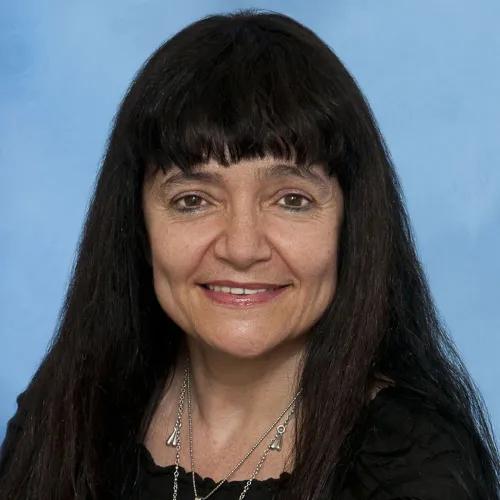
Maria Castro, PhD
Professor
Stay Informed
Want top health & research news weekly? Sign up for Health Lab’s newsletters today!
Featured News & Stories
Online resources and coaching helped people seek genetic testing for cancer

The AI is listening: Implications of machine generated clinical notes on health care
Comprehensive DNA sequencing reveals hidden drivers of cancer
‘Molecular glue’ stabilizes protein that inhibits development of non-small cell lung cancer and uterine cancer

A pediatric epilepsy fundraiser that changes lives