CRISPR study reveals surprising role of Cas9 as a guardian of bacterial defense
The research overturns a common assumption about CRISPR Cas9
11:00 AM
Author |
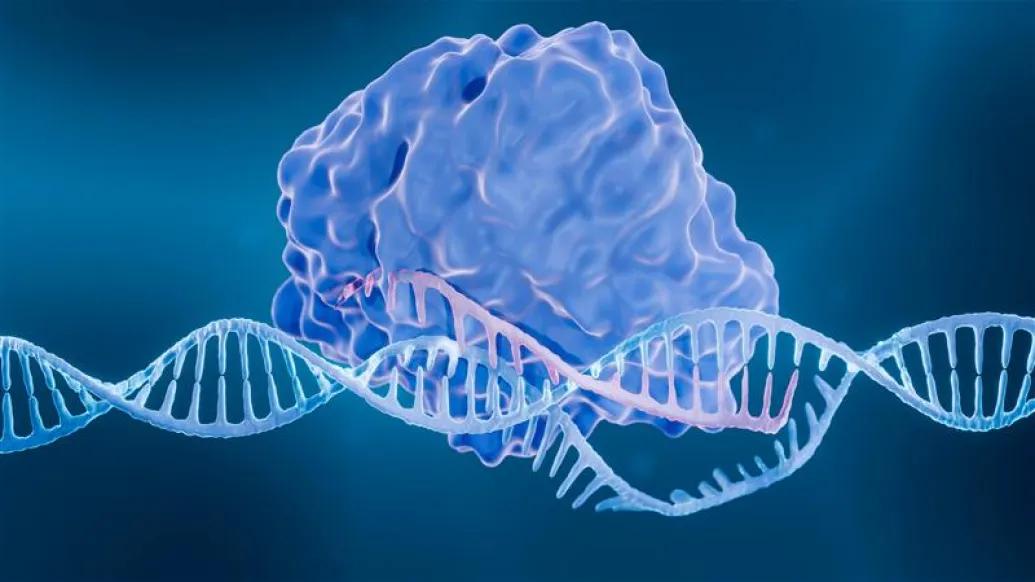
When scientists discovered how bacteria protect themselves against viral invaders, called phages, in the early 2000s, little did they know they’d stumbled upon a revolutionary tool researchers could use to edit the DNA of living cells.
The system, called CRISPR, is built into bacteria’s genome and with it, bacteria can "remember" past viral attacks by storing genetic fragments of the invader, called spacers.
In the system’s most well-known version CRISPR-Cas9, these stored memories are later copied into tiny RNA guides that arm the Cas9 protein to act like a weapon to slice up the invader next time the bacteria encounter a matching phage.
To launch its attack, Cas9 also relies on a short DNA tag called a PAM, as a sign for “can cut here.”
Scientists have modified CRISPR-Cas9 to edit animal and human cells and even develop gene therapies.
But a critical piece of the puzzle about how the CRISPR-Cas9 system works has been less clear: How do bacteria form new immune memories?
Setting out to study this mystery, a paper from the lab of Yan Zhang, Ph.D., of the Departments of Biological Chemistry and Microbiology and Immunology at the University of Michigan, overturns a common assumption about Cas9 — that unbound from its usual RNA partners, the “empty” or apo form of Cas9 is functionless.
Capturing new memory
Until recently, only a handful of genetic studies had shed light on how CRISPR-Cas9 forms immune memories—and these were mostly limited to the Type II-A systems used by the bacteria Streptococcus pyogenes (better known as Group A strep) and Streptococcus thermophilus (often found in yogurt).
In those II-A systems, Cas9 must work together with one of its RNA partners, tracrRNA, to help choose the right spot next to a PAM to capture a new memory.
However, in the Type II-C brand that makes up over 40 percent of the Cas9 family, the memory acquisition process was less understood.
Zhang’s team, including postdoctoral fellow Xufei Zhouand, Ph.D., and Ph.D. student Xin Li, developed a novel model system for studying memory acquisition, using the bacteria Neisseria meningitidis (which can cause meningitis), and infecting it with a phage to see whether memories could be formed in a laboratory setting and then tweaking parts of the immune machinery to see what happened.
“When we started the project, Cas9 was already known as the PAM selector for memory acquisition.
What was less clear were the roles of the two RNAs, though we assumed they must be also be somehow important for Cas9 to help bacteria acquire new memories,” said Zhang.
New spacers
Following phage infection, the team used deep sequencing and informatic support by colleagues Lydia Freddolino, Ph.D., and Rucheng Diao, Ph.D., of the Departments of Biological Chemistry and Computational Biology and Bioinformatics, to examine the “growing” leader end of the CRISPR array.
There, they saw new spacers derived from the viral genome being added.
Next, they deleted the tracrRNA gene and were shocked to find that the acquisition of spacers was greatly stimulated.
Putting tracrRNA back dampened the enhanced acquisition back to normal levels.
A similar pattern emerged with their study of crRNA: without crRNA, Cas9 ramped up acquisition; with crRNA restored, acquisition dropped back down.
“Without the RNAs, we saw that memory formation is highly stimulated to a very robust level,” said Zhang.
“This is really surprising for us and, I would say, for the entire field as well—because Cas9 has always been known to need the RNA partners, whether as an immune effector or as a gene editor. This is the first report of a biological function for non-RNA-loaded ‘empty’ apoCas9.”
Based on these findings, they proposed that Cas9 acts as a monitor for RNA levels: when CRISPR RNA abundance is low, signaling that the bacterial cell carries short CRISPR and fewer immune memories, apoCas9 forms and can dynamically boost spacer acquisition to protect vulnerable bacteria from infection by quickly building up the memory bank.
Short immune memories
The team further demonstrated three natural conditions when bacteria may experience CRISPR arrays that are too short.
One is at the earliest evolutionary stage, when an array has just been born and holds few, if any, spacer content.
At this stage, Cas9 would be without its CRISPR RNA partner and mostly exist in the apo form.
The second and third scenarios both involve the sudden collapsing of a longer CRISPR array into a shorter one, either as a way for bacteria to dump unwanted harmful or autoimmunity memories to acquire new beneficial traits, or as a result of homologous recombination, an event where two similar DNA sequences (a.k.a. CRISPR repeats) swap pieces, erasing intervening CRISPR memories in the process.
This study expands the known functions of Cas9 and fills in a critical missing piece of how CRISPR-Cas9 maintains memory homeostasis.
This dynamic feedback loop offers a new way of thinking about how bacteria safeguard the depth of their immune memory.
It may also inspire new ways to design CRISPR-based molecular recording or DNA barcoding tools for research and medicine.
Additional authors: Christine A Ziegler, Max J Gramelspacher, and Zhonggang Hou
U-M research cores: This work was made possible in part by the Advanced Genomics Core facility.
Paper cited: “Cas9 senses CRISPR RNA abundance to regulate CRISPR spacer acquisition,” Nature. DOI: 10.1038/s41586-025-09577-9
Sign up for Health Lab newsletters today. Get medical tips from top experts and learn about new scientific discoveries every week.

Health Lab
Explore thousands of health news & research stories by visiting the Health Lab homepage for more.
Media Contact

Public Relations
Department of Communication at Michigan Medicine
In This Story

Yan Zhang, PhD
Associate Professor
Related

CRISPR, COVID, Tinnitus, and Beyond
New DNA ‘Shredder’ Technique Goes Beyond CRISPR’s ‘Scissors’
Stay Informed
Want top health & research news weekly? Sign up for Health Lab’s newsletters today!
Featured News & Stories
Study outlines a new framework for direct cell reprogramming
Scientists discover that bacteria use an understudied polymer found in all life to protect cell functions during stress

The Future of Cell and Gene Therapies
New algorithmic tool enables to scientists to see cells “talk” to one another

Could preeclampsia become a thing of the past?