CRISPR acts as commander-in-chief for backup defenses in bacteria
The finding could help engineer more phage resistant bacteria--or to build better antibiotics
Author |
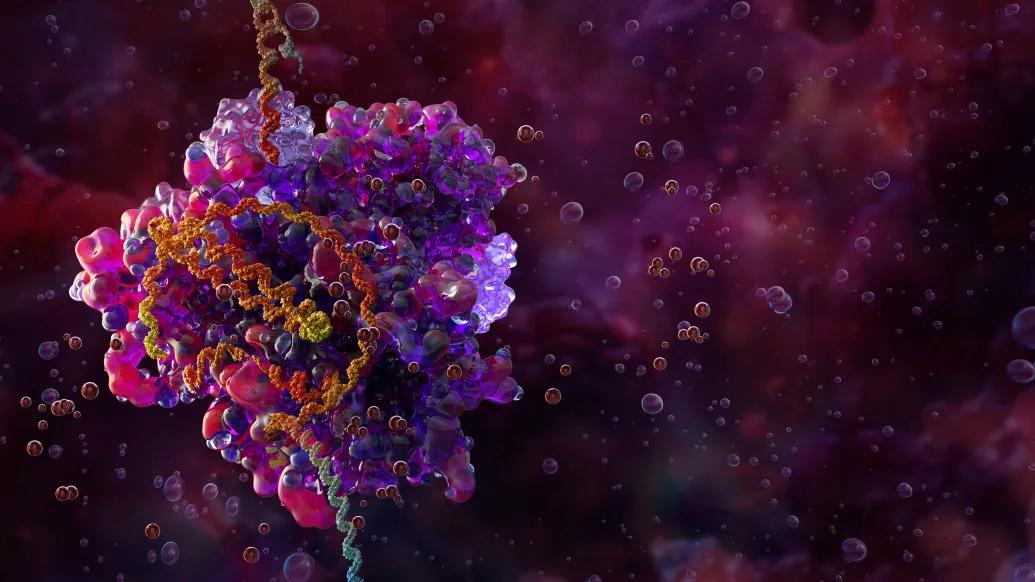
The main function of CRISPR-Cas systems, the revolutionary tool scientists now employ to edit genes, is to defend bacteria against threats such as viruses called bacteriophages. Researchers have continued to study all flavors of CRISPR-Cas systems (to date, 2 classes, 7 types and 46 subtypes have been identified) to understand all their capabilities.
A new paper from the lab of Yan Zhang, Ph.D., Associate Professor of Biological Chemistry and Microbiology and Immunology at U-M Medical School, her colleagues and collaborators uncovers a previously underrecognized feature of the type I CRISPR-Cas system in the bacteria Neisseria: the presence of additional embedded innate immunity genes.
The group found that type I CRISPR moonlights as a manager to regulate the expression of these built-in defense systems.
“Our core finding here is bacteria anti-phage defense systems can be organized into a layered regulatory hierarchy,” said Zhang.
“In our case CRISPR-Cas acts as a commander-in-chief that regulates the repression and de-repression of other innate defense system genes that are tucked within the CRISPR-Cas locus.”
The study, co-led by Dr. Ming Li of the Institute of Microbiology, Chinese Academy of Sciences, is published in the journal Nature.
Under typical circumstances, the production of these defense genes need to be held in check, explained Zhang, because their activation comes with a cost, stifling growth of the bacteria. Such repression is achieved by CRISPR-Cas complex binding to the defense genes’ promoter sequences as a roadblock and preventing their transcription.
“CRISPR is the front line of defense during phage infections, but when CRISPR is defective or disarmed in some way, it lifts the repression, leading to a burst of production of the innate defense systems as backup weapons to wipe out the phages,” explained Zhang.
Phages, of course, have tricks of their own to circumvent CRISPR defense, including using a peptide inhibitor designed to disable the Cas machinery. However, in the face of this layered defense hierarchy, a Cas inhibitor is no longer enough to save the phage because it triggers the release of the backup defenses that can kill the phages, says Zhang.
This new understanding of bacterial antiphage immunity could be leveraged in a couple of ways, she adds. First, for industries that use bacteria, such as manufacturers of yogurt, fermented products or biofuels, these insights could help engineer tougher, phage-resistant bacteria strains. Second, it could aid in the development of phage therapy.
“To make better phage therapies that kill antibiotics-resistant bacterial pathogens, we need to understand what hidden defense systems might be there, so we might engineer the phages to outsmart them.”
This work builds on the Neisseria genetics and phage platforms established by former postdoc Xufei Zhou, Ph.D. and current Ph.D. student Xin Li in the Zhang lab, making it possible to study the physiological importance of this regulation in a native host.
“This was a truly pleasant collaboration”, Zhang adds, crediting Li and members of his team for “initiating this project, inviting us to collaborate, and driving many key aspects of the discovery.”
Additional authors: Additional authors include Xian Shu, Rui Wang, Feiyue Cheng, Jiayue Ma, Zhihua Li, Tuozhan Wu, Aici Wu, Qiong Xue, Chao Liu, Huiwei Zhao, Xifeng Cao, Lin Wang, Shouyue Zhang, and Ming Li
Paper cited: “CRISPR-Cas regulates expression of embedded anti-phage defence systems,” Nature. DOI: 10.1038/s41586-026-10833-9

Health Lab
Explore thousands of health news & research stories by visiting the Health Lab homepage for more.
In This Story
Yan Zhang, PhD
Associate Professor
Featured News & Stories

The AI is listening: Implications of machine generated clinical notes on health care

15 years of data will help uncover how flu spreads—and how to reduce its impact
$3.9 million NIH grant to fuel U-M effort to develop first targeted therapy for fatal childhood brain disorder
Bigger data reveals the second, third and fourth switches controlling a gene
Study outlines a new framework for direct cell reprogramming