Combating Crohn’s with comics
A teenage patient’s unique way of detailing his experience with Crohn’s disease
5:00 AM
Author |
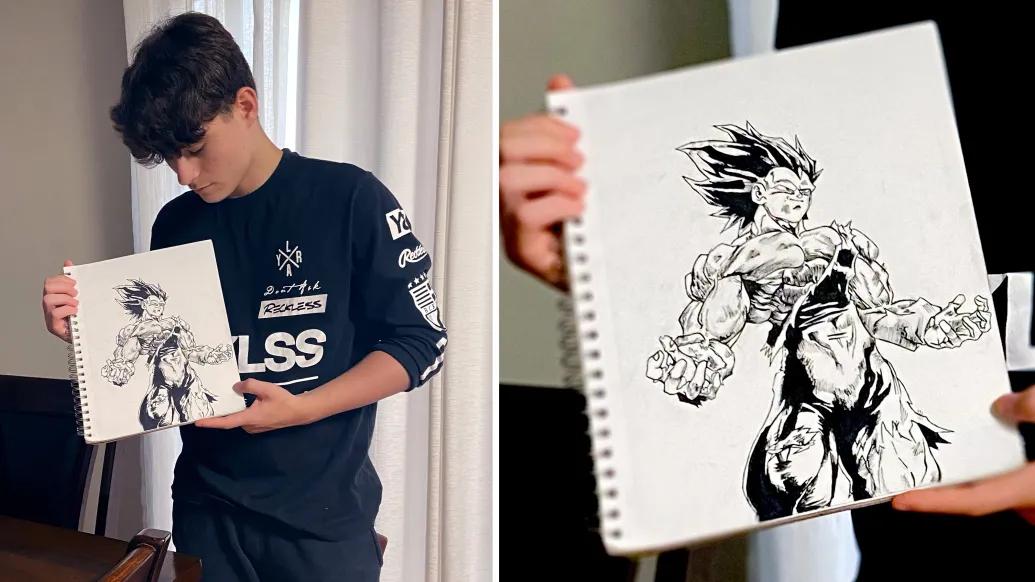
Sawyer Fernandez has spent more time in the hospital than a typical 17-year-old, but he’s created a unique way to help himself manage his condition while inspiring others in the process.
Sawyer has Crohn's disease, a chronic disease that causes inflammation of the digestive tract. The disease has no cure, but there are multiple medications available to treat it.
“Most patients respond very well to medications; however, there are some patients who do not, and instead require surgical interventions. Sawyer was one of those patients,” said Seth Iskowitz, M.D., a pediatric gastroenterology fellow who treated Sawyer.
When Sawyer was diagnosed with Crohn's disease, his endoscopic and radiologic studies showed the presence of scar tissue in his bowels. This had likely formed because of long-standing chronic inflammation.
Since scar tissue cannot be treated with medications, Sawyer underwent a surgical procedure to remove the scarred part of his bowels.
“Like most teenagers, I imagined Saywer would rather be focusing on his friends and hobbies rather than be sitting in a doctor's office discussing the possibility of having a chronic, life-long disease,” Iskowitz said.
“Indeed, little did Sawyer know that within the next three months following that doctor’s appointment, he would both be diagnosed with Crohn’s disease, as well as undergo a surgery to remove the scarred part of his bowels.”
Sawyer spent months going through multiple hospital visits, surgeries and learning about life-long infusion medications.
Like any teenager, Sawyer found it difficult to stay calm and comfortable during his treatments.
That led him to begin detailing his experience through Gastrocomics, a series he created that includes plots and characters each representing different gastrointestinal diseases.
Gastrocomics features characters like “Anti-Inflammatory Man” (who actually represents Sawyer himself) and “Infusi-Ron” who battle villains like “Calamitous Crohns” and “I.B.S. Distress.”
Each character has different superpowers and takes on different villains, depending on which illness they represent.
Creating the comics brought Sawyer comfort during his journey, and he hopes to do the same for other kids in his position.
“I drew up these things to hopefully bring light to a pretty bad situation,” Sawyer said.
“I want my comics to help kids feel comfortable. I want to help kids understand exactly what they have and that they don’t need to be afraid.”
Sawyer knows all too well how scary and uncertain it can be to constantly be in and out of the doctor’s office and how challenging it can be to keep up with medications and appointments; motivating others to continue with necessary treatment is another goal he hopes to fulfill with Gastrocomics.
I want them to feel very special about what they have and know they can do things just like everyone else can."
Sawyer Fernandez
“Even though everyone was really nice, it's still not fun going to the hospital all the time and living with something like this. It’s a blow to your self-esteem,” Sawyer said.
“With these characters that put you in their footsteps, they can make you feel like a superhero, because you're also fighting these diseases. It can make you think ‘I'm just like him. I'm also a superhero.’”
Sawyer’s comics have already impressed many people, including those close to him.
“It's very hard for parents having to see their kids experience so much pain. Sawyer has been through a lot, but I am extremely proud of my son. There are no words to describe it,” said his mom, Daney de la Fuente.
“I am incredibly proud of how Sawyer played his hand. He overcame—and continues to overcome—a very difficult time in his life by focusing his energy on helping others,” Iskowitz adds.
“I cannot wait to begin using Sawyer’s comics with my other patients, and I am beyond excited to see what he does next.”
Sawyer hopes to someday make a career out of his art – he'd like to get more into manga and animation. But for now, he hopes Gastrocomics will continue bringing comfort to other children living with GI Illnesses.
“I want them to feel very special about what they have and know they can do things just like everyone else can,” Sawyer said
“It's not going to end your life. It's there, and you have to deal with it. But you can fight it and get through it as much as possible.”

Health Lab
Explore thousands of health news & research stories by visiting the Health Lab homepage for more.
Media Contact

Public Relations
Department of Communication at Michigan Medicine
Stay Informed
Want top health & research news weekly? Sign up for Health Lab’s newsletters today!
Featured News & Stories
IBS treatment response predicted by gut microbiome in new study
What to know about a benign liver cyst on your imaging results

Family that overcame Crohn’s supports research for future patients

How GI behavioral therapy helped one patient escape the pain of pandemic stress
AI analysis of colonoscopy improves assessment of Crohn’s disease