Challenging procedure opens most important blood vessel in one man’s heart
When Tony Sanchez was given no hope for his completely blocked artery, a skilled team stepped in, and up, to restore 100% of his blood flow.
5:00 AM
Author |
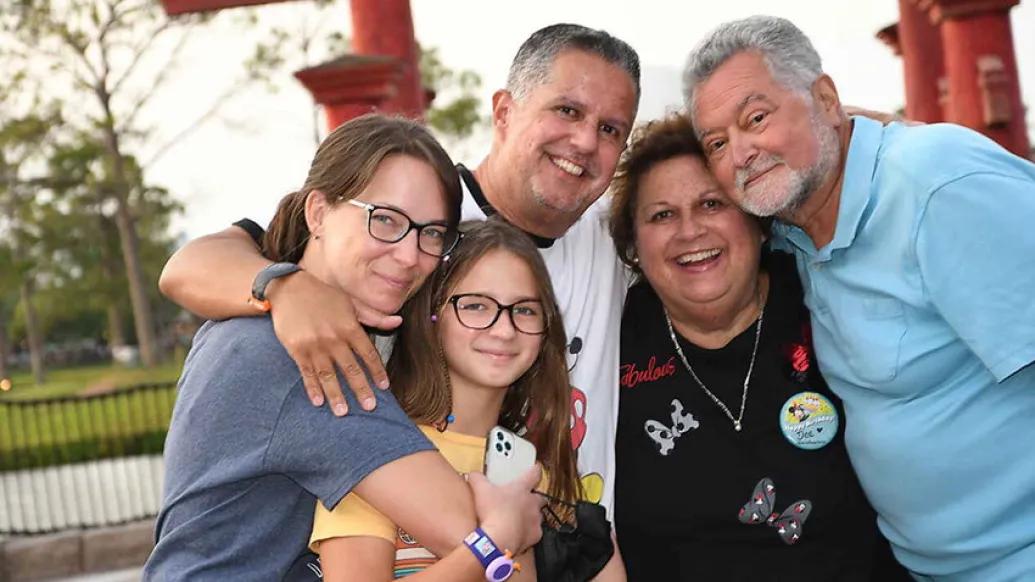
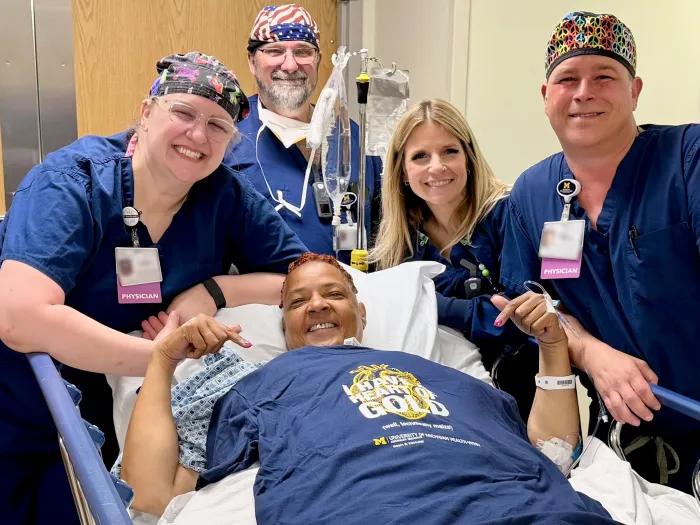
Tony Sanchez calls Florida home, but the 73-year-old has maintained his connections to Michigan, where much of his family lives. It's also where he found a team of cardiologists able to help with a weakened heart muscle from coronary blockages when other doctors could not.
Sanchez's health issues — diabetes, heart failure and coronary artery disease — began years ago and included two stent placement procedures to open coronary blockages and restore blood flow to his heart.
But in 2020, the grandfather of seven began experiencing telltale symptoms, including fatigue and difficulty breathing, ultimately leading to a diagnosis of cardiomyopathy, or a weakened heart muscle. The artery to the front of his heart had become completely blocked, a condition known as chronic total occlusion.
Considered too high risk for an open-heart surgery, he was told by his local cardiologist there were no options — including no minimally invasive options — to restore normal blood flow.
A chronic total occlusion, like most coronary blockages, is a condition caused by a buildup of plaque or fatty deposits within the arteries that supply blood to the heart. Individuals with blockages greater than 70% may begin to experience symptoms such as pain or tightness in the chest, shortness of breath, fatigue or other complications from a weakened heart muscle.
The right place – the right expertise
When the artery is 100% blocked, placing a stent becomes challenging, says Frankel Cardiovascular Center interventional cardiologist Brett Wanamaker, M.D., who, along with fellow interventional cardiologist Daniel Menees, M.D., would perform a series of complex revascularization procedures on Sanchez.
"Mr. Sanchez had a complete blockage of the most important blood vessel in his heart," said Wanamaker.
Despite being told he had no options elsewhere, the chronic total occlusion (CTO) team felt they could help Sanchez after a state-of-the-art nuclear PET scan from Frankel CVC imaging experts confirmed that his heart had a good chance of recovering with restoration of blood flow.
"The results of the PET scan showed us that his heart was fully viable and gave us confidence we could help him," said Wanamaker.
Coming back to Michigan gave Sanchez even more of an advantage than he first realized. The Frankel CVC is one of only a few centers in the state with a formal team of dedicated interventional cardiologists with training and expertise in the catheter-based (percutaneous coronary intervention, or PCI) treatment of chronic total occlusions in heart arteries.
"Until recently, chronic total occlusions were typically treated via coronary artery bypass grafting performed during an open-heart procedure, but newer, advanced techniques now enable cardiologists at the Frankel CVC to offer less invasive alternatives," said Menees. "For these patients who were previously thought to have few options, our CTO team can provide safe and effective minimally invasive solutions to improve their quality of life."
An intricate procedure
The PCI heart procedure is performed by experienced interventional cardiologists using advanced wires and specialty catheters to tunnel through or navigate around the complete blockage, often creating new routes. These routes include using the wall of the artery to go around the blockage or using newly created collateral vessels to approach the blockage from the backside.
Our hope is that more patients and cardiologists realize this is a viable option for those living with heart failure or reduced quality of lifeBrett Wanamaker, M.D.
Then, using a technique called angioplasty, a small balloon is passed into the blockage and inflated to effectively push it aside. Finally, a series of stents is typically placed to ensure the path of blood flow is preserved.
"Following his PCI heart procedure last spring, along with guideline-based medicines, Mr. Sanchez now has full blood flow and his heart muscle function has completely recovered," said Wanamaker, who believes more cardiologists and their patients need to consider this treatment for chronic total occlusion. "Our hope is that more patients and cardiologists realize this is a viable option for those living with heart failure or reduced quality of life."
Sanchez couldn't agree more, saying, "My heart feels good and I'm able to do more now that I've had the procedure."
The best of both worlds
After enjoying last spring and summer with his family in Michigan, he and his wife were back on the road, traveling south in their motor home.
Sanchez believes they have the "best of both worlds" as they spend time in Michigan when it's warm, then head to Florida for the winter sunshine.
But regardless of the season, Sanchez says he wouldn't hesitate to travel back to the Frankel CVC for any necessary treatment.
"There was something about Dr. Wanamaker. I trusted him. When other doctors wouldn't do the procedure, he and his team were confident they could help me."
MORE FROM MICHIGAN: Sign up for our weekly newsletter
Like Podcasts? Add the Michigan Medicine News Break on iTunes, Google Podcasts or anywhere you listen to podcasts.

Health Lab
Explore thousands of health news & research stories by visiting the Health Lab homepage for more.
Media Contact

Public Relations
Department of Communication at Michigan Medicine
Stay Informed
Want top health & research news weekly? Sign up for Health Lab’s newsletters today!
Featured News & Stories
More babies with hypoplastic left heart syndrome surviving critical period between surgeries
Distance, insurance, social factors may hinder access to lifesaving heart monitoring for children

Mobile health app improves heart failure medication use, dosing after hospitalization
Heart of Gold: Rare metal allergy leads to a unique heart device

5 ways to manage politically induced stress