Brains and stock markets follow the same rules in crisis, study finds
Findings suggest that network collapses could be predicted
1:38 PM
Author |
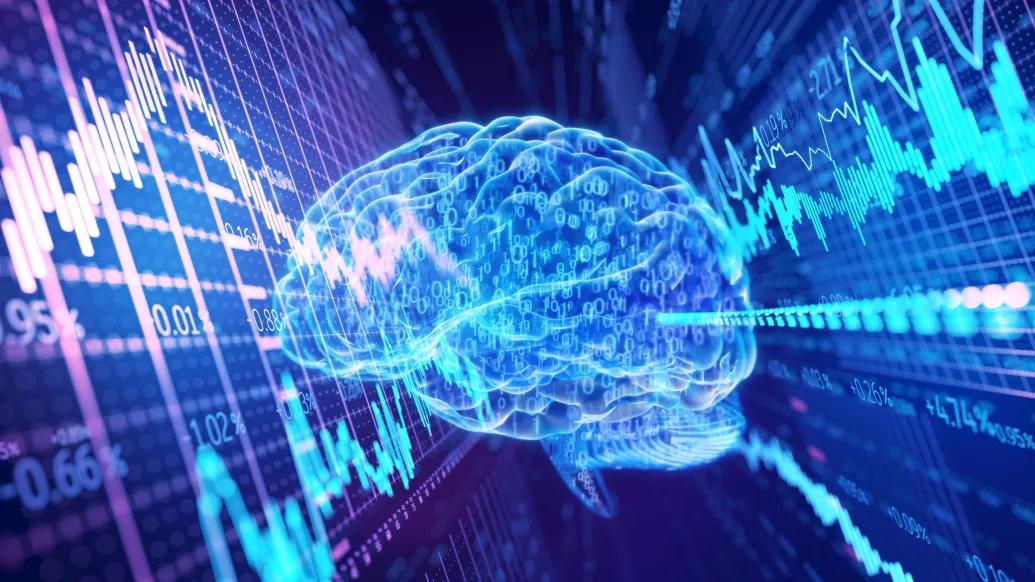
What do brains and the stock market have in common?
While this might sound like a set up for a joke, research from University of Michigan researchers reveals that the behaviors of brains and economies during crises can be explained using observations common in the realm of physics.
UnCheol Lee, Ph.D., of the U-M Department of Anesthesiology and his collaborative team came up with the idea upon observing that some patients under anesthesia recover faster than others.
“General anesthesia can be considered a controlled crisis in the brain, interrupting the brain’s network to induce unconsciousness,” explained Lee.
He wondered whether recovery from a crisis like anesthesia was analogous to a country’s recovery from an economic crisis, like a stock market crash, and whether both examples of collapse could be described by a fundamental principle that could then be used to predict the result.
Brains and stock markets might seem completely different, but they behave in surprisingly similar ways.
Both are complex systems that normally operate in a delicate state of balance, a condition scientists call criticality, where they function at their most flexible, efficient, and informative.
When that balance is disrupted, the system can suddenly tip into crisis, losing those advantages.
In physics, such changes are known as phase transitions, which can occur either abruptly (first-order transition) or gradually (second-order transition).
For example, water freezing into ice is a first-order transition - a slight temperature drop can cause an abrupt transition.
By contrast, a magnet slowly losing its magnetism as it heats up is a second-order transition- more gradual and resilient to disturbance.
The U-M team discovered that both types of transitions occur not only in the brain during anesthesia as people lose and regain consciousness, but also in financial markets as they collapse and recover during economic crises.
Using a computational model, they sought to estimate whether a given network was either a first-order or second-order transition at its tipping point.
Networks of first-order phase transition type, characterized by explosive synchronization and unstable when perturbed, were more susceptible to abrupt collapse and exhibited slower recovery following a crisis.
“With the model, we modulated the phase transition type and generated time series data, analyzed the data, and tried to identify signal characteristics of first- and second-order transitions. We found that a network of a first-order transition exhibits larger variance of network synchronizations,” explained Lee.
Using these results, they were able to characterize networks as closer to first- or second-order patterns and predict whether a network would experience a rapid or gradual collapse and recovery before a crisis occurred.
They tested the model using studies of the 2007-2009 Subprime Mortgage Crisis and readings of EEGs from people undergoing anesthesia.
For stock markets, those closer to first-order transition showed faster collapse and slower recovery after the crisis, and that countries with higher proximity to first-order (explosive transition) tended to be emerging markets with lower gross domestic products per capita.
When applied to EEG recording from people undergoing anesthesia, they found that the brain’s proximity of first-order transition predicted how rapidly or slowly people lost and regained consciousness.
Predicting network collapse has broad-ranging potential applications, from improving the safety of anesthesia based on individual brain characteristics to potentially deploying methods to more effectively weather other transitions in the realm of finance or climate change.
George Mashour, M.D., Ph.D., senior author of the article and founder of the U-M Center for Consciousness, added, “Dr. Lee’s work is highly innovative. Leveraging network science to understand the common dynamics of the brain and other complex systems has been a longstanding goal of our Center.”
Additional authors: Additional authors include Hyoungkyu Kim, Minkyung Kim, Gabjin Oh, Pangyu Joo, Ayoung Park, Dinesh Pal, Irene Tracey, Catherine E. Warnaby, Jamie Sleigh
Paper cited: “Proximity to Explosive Synchronization Determines Network Collapse and Recovery Trajectories in Neural and Economic Crises,” PNAS. DOI: 10.1073/pnas.2505434122
Sign up for Health Lab newsletters today. Get medical tips from top experts and learn about new scientific discoveries every week
Sign up for the Health Lab Podcast. Add us wherever you listen to your favorite shows

Health Lab
Explore thousands of health news & research stories by visiting the Health Lab homepage for more.
Media Contact

Public Relations
Department of Communication at Michigan Medicine
In This Story

UnCheol Lee, PhD
Associate Professor

George A Mashour, MD, PhD
VICE DEAN
Stay Informed
Want top health & research news weekly? Sign up for Health Lab’s newsletters today!
Featured News & Stories
Does Anesthesia, Invasive Surgery Increase Multiple Sclerosis Relapse Risk?
Waking Up Is Hard to Do: Reversing Deep Unconsciousness

The AI is listening: Implications of machine generated clinical notes on health care

Comprehensive DNA sequencing reveals hidden drivers of cancer

Many older adults make Medicare decisions quickly and most don’t change plans, poll finds