Bile duct injury rates higher from robotic assisted cholecystectomy
Compared to laparoscopic cholecystectomies, the rate of needing a second procedure to repair a bile duct injury is high across the board
5:00 AM
Author |
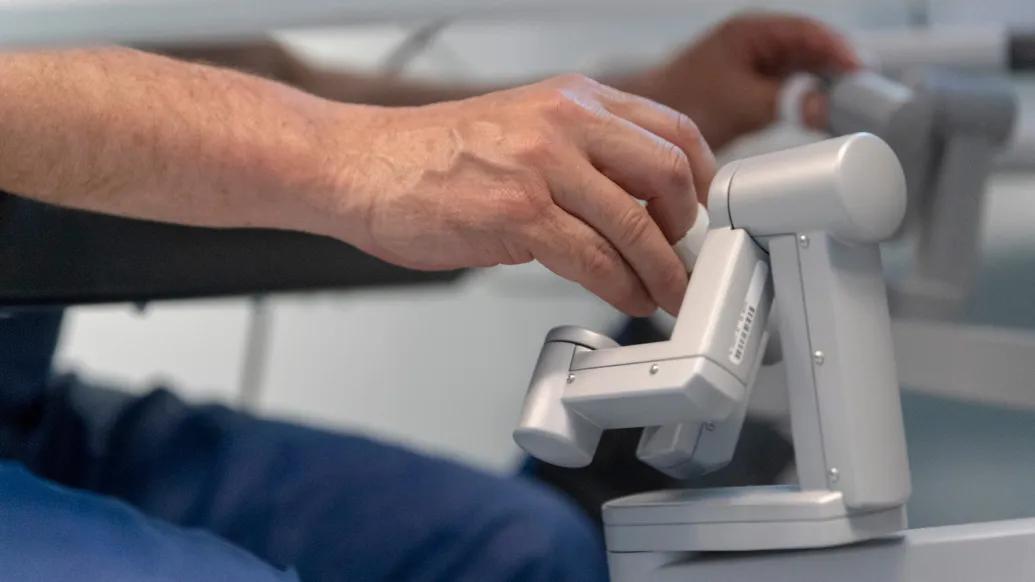
As robotic cholecystectomy, also known as gallbladder removal, becomes increasingly common, researchers have identified higher rates of bile duct injury in robotic cholecystectomy compared to the conventional approach, a laparoscopic cholecystectomy.
A team of researchers at University of Michigan Health led by Cody Mullens, M.D., M.P.H., a general surgery resident, found that there are higher risks of bile duct injury in robotic cholecystectomy, regardless of patient risk factors.
Bile duct injuries are rare and a technical complication from a cholecystectomy but should be treated quickly once located.
An injured bile duct can result in a flow of bile from the liver into the gastrointestinal tract that assists in digestion and absorption which can proceed to leak out into the abdomen.
This can result in further procedures being needed to repair the injured bile duct and stop the leakage.
The purpose of the study was to challenge the claim by surgeons that differences in bile duct injury rates in robotic versus laparoscopic cholecystectomy was due to patient-selection factors.
Using Medicare data, Mullens and team were able to determine that bile duct injury is higher in robotic cholecystectomy compared to laparoscopic cholecystectomy in low, medium, and high risk patients.
“Given these findings and other recent work, patients should be having honest conversations with their surgeons about the risk of using the robotic vs. laparoscopic techniques for a cholecystectomy,” said Mullens.
“While most outcomes are similar between robotic and laparoscopic gallbladder removal, this evidence clarifies that patient risk factors should not be driving decision-making about whether the gallbladder should be removed robotically or laparoscopically.”
Mullens also pointed out that across the different levels of patient risk, bile duct injury was approximately three times higher for robotic cholecystectomies than laparoscopic.
“Across the board, patients are having less bile duct injuries with laparoscopic cholecystectomies than robotic assisted.”
Additional authors: Sarah Sheskey, B.S., and Jyothi R. Thumma, M.P.H., from the Center for Healthcare Outcomes and Policy, Institute of Health Policy and Innovation, University of Michigan, Ann Arbor; Justin B. Dimick, M.D., M.P.H, and Kyle H. Sheetz, M.D. M.S., from the Center for Healthcare Outcomes and Policy, Institute of Health Policy and Innovation, University of Michigan, Ann Arbor, and the Department of Surgery, University of Michigan, Ann Arbor; and Edward C. Norton, Ph.D., from the Center for Healthcare Outcomes and Policy, Institute of Health Policy and Innovation, University of Michigan, Ann Arbor, the Department of Health Management and Policy, University of Michigan, Ann Arbor, and the Department of Economics, University of Michigan, Ann Arbor.
Funding/disclosures: This work was supported by grant R01-DK131584-01 from the National Institute of Diabetes and Digestive and Kidney Diseases (Dimick and Sheetz).
Tech transfer/Conflict of interest: Dimick reported having equity in ArborMetrix Inc outside the submitted work.
Paper cited: “Patient Complexity and Bile Duct Injury After Robotic-Assisted vs Laparoscopic Cholecystectomy,” JAMA Network Open. DOI: 10.1001/jamanetworkopen.2025.1705

Health Lab
Explore thousands of health news & research stories by visiting the Health Lab homepage for more.
Media Contact

Public Relations
Department of Communication at Michigan Medicine
In This Story

Kyle Sheetz
Assistant Professor
Stay Informed
Want top health & research news weekly? Sign up for Health Lab’s newsletters today!
Featured News & Stories
Engineered nanoparticles sensitize gliomas to radiotherapy

Who’s at risk for painful periods?
Identifying avoidant, restrictive food intake disorder in gastroenterology patients

Uncovering cellular stress signal triggered by Salmonella

Psychedelics and anesthetics create mirror image patterns in the brain