Battle of the sex chromosomes
Study reveals how competition affects X vs. Y sperm fitness
5:00 AM
Author |
In evolutionary terms, fitness is defined as an organism's ability to survive and reproduce its genes into the next generation.
Genes influence fitness, sometimes competing against each other within an organism.
This competition, or arms race, is typically hard to observe–except when the genes in question live on the X and Y chromosomes, which determine the sex of offspring in mammals.
In mice, this arms race can result in broods that have more males or females.
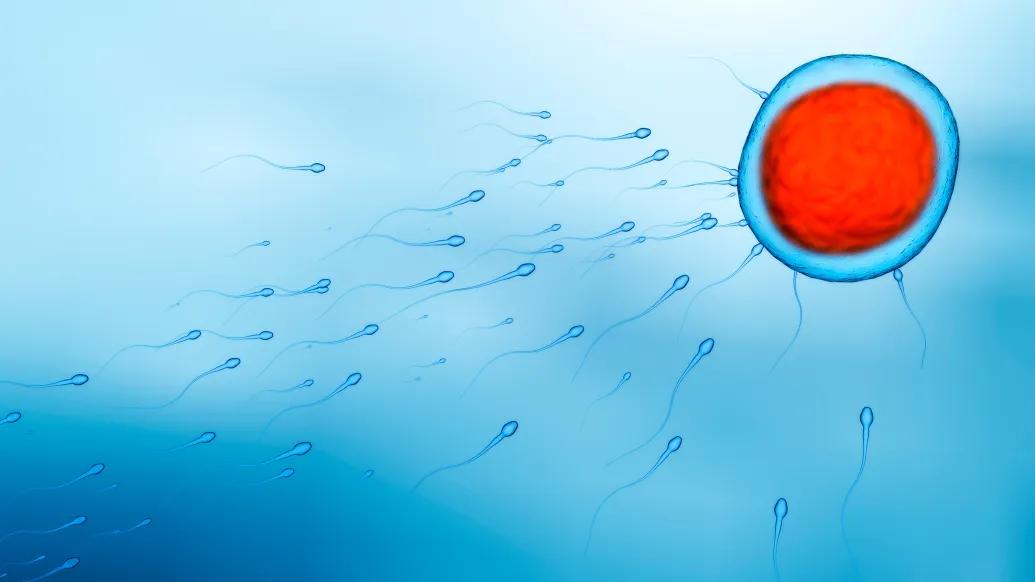
A study from University of Michigan researchers has uncovered the mechanism behind the arms race for mouse X and Y bearing sperm to fertilize an egg, analogous to space races to reach the moon.
“The X-carrying or Y-carrying sperm that gets there first is the one that successfully fertilizes the egg,” said Martin Arlt, Ph.D., associate research scientist in the Department of Human Genetics.
“If there were genes conferring benefits to X-bearing sperm, you would start to see more female offspring and vice versa. Yet we see a close to 50-50 split,” said Arlt, also the first author on the study.
“Over evolutionary time, the 50-50 split is the optimal ratio for a species with minor shifts potentially leading to loss of the species.”
The sex-ratio balance is maintained as genes on the X and Y chromosomes co-adapt to keep each other in check.
How this happens has been a mystery, as sperm cannot be grown in a lab.
The U-M team found a unique solution, moving the X-linked Slxl1/Slx and Y-linked Sly gene families from mouse and putting them into yeast.
“We introduced each player in the competition into yeast to better understand how they work. Then we combined them to see how they interact and compete with one another."
In doing so, they discovered that the proteins encoded by Slxl1/Slx and Sly that affect sperm fitness appeared to compete for proteins called Spindlins, which influence gene expression.
These proteins compete against each other for binding; the more of the X-linked gene family proteins that bind, the more X-carrying sperm that result and vice versa.
“These proteins are relatively new innovations in evolutionary time, only a few million years old, well after humans diverged from chimps,” said Jacob Mueller, Ph.D., associate professor of human genetics and senior author on the paper.
“Spermatogenesis can and does occur fine without Slxl1/Slx and Sly, yet these genes have persisted in mice by integrating themselves into a system that is very important for the species. We have evidence that these arms races are happening over and over again in different species at different times.”
In the future, the team plans to use the yeast model system to explore the evolution of the X/Y arms race and other competitive genes.
Additional authors: Alyssa N. Kruger and Callie M. Swanepoel
Funding/disclosures: This work was supported by NSF grant 1941796 (J.L.M.), NIH grants HD094736 (J.L.M.), HD104339 (C.M.S.), and GM149391 (A.N.K and C.M.S.), and NSF Graduate Research Fellowship DGE 1256260 (A.N.K.)
Paper cited: “Reenacting a mouse genetic evolutionary arms race in yeast reveals that SLXL1/SLX compete with SLY1/2 for binding to Spindlins,” PNAS. DOI: doi.org/10.1073/pnas.2421446122

Health Lab
Explore thousands of health news & research stories by visiting the Health Lab homepage for more.
Media Contact

Public Relations
Department of Communication at Michigan Medicine
In This Story

Jacob L Mueller, PhD
Associate Professor

Martin F Arlt, PhD
Associate Research Scientist
Stay Informed
Want top health & research news weekly? Sign up for Health Lab’s newsletters today!
Featured News & Stories
Nanoparticles genetically modify several human cell types

Researchers uncover why a rare disease resulting in abnormal fat loss can also lead to diabetes

Study identifies function behind mysterious variants for gene linked to colon cancer

Genetic “protection” against depression no match for pandemic stress
Novel genetic scoring system helps determine ALS disease risk