Avoiding recovery delays with hospitalized pancreatitis
Balancing the interleukin-22 protein and interleukin-22 binding protein signals prove crucial in healing from acute and chronic pancreatitis
5:00 AM
Author |
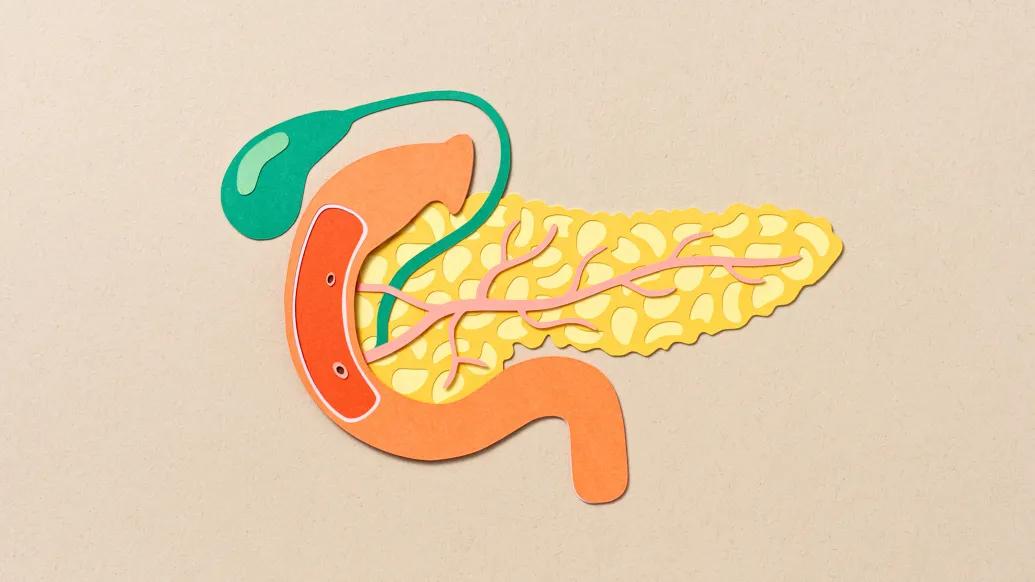
Acute pancreatitis is among the most common gastrointestinal conditions requiring inpatient hospital care in the United States.
Timothy Frankel, M.D., associate professor of surgery, led a University of Michigan Health-based team of researchers investigating the regulation of interleukin-22 signaling and neutralization by interleukin-22 binding protein in both acute and chronic pancreatitis to observe differences in tissue injury, fibrosis and inflammation at various times of recovery.
Interleukin-22 binding protein, or IL-22BP, is responsible for controlling interleukin-22, or IL-22 signaling that helps speed up organ and tissue recovery from acute pancreatitis.
After recovery, IL-22BP ensures that signaling abates and returns to homeostatic balance.
It’s thought that failure to return to this balance may result in persistent inflammation and fibrosis because of uncontrolled IL-22 activity, delaying tissue recovery.
In the study, the loss of IL-22BP resulted in enhanced healing in acute pancreatitis but created chronic fibrosis and inflammation through uncontrolled IL-22 signaling.
This had further negative effects on epithelial cells, fibroblasts and immune infiltration.
“There has been prior work looking at IL-22 in pancreatitis with evidence that its activity can decrease the severity of acute pancreatitis, but its long-term overactivity leads to the development of chronic pancreatitis,” said Frankel.
“We identified a secondary protein, IL-22BP, that was controlling the availability and therefore signaling of the cytokine. When we genetically remove this protein, we see persistent unchecked IL-22 activity, which can lead to chronic pancreatitis."
Regulation of IL-22 is important in tissue response to infection and injury, especially at the barrier sites between the environment and the host, such as the gastrointestinal tract, skin and lungs.
IL-22 is mainly produced by cells from the immune system and plays an important protective role in tissue regeneration and bacterial infections by inducing the expression of genes regulating proliferation, wound healing and apoptosis.
Additional authors: Lei Sun Ph.D., Andrew G Spiteri, Brian D Griffith M.D., Yaqing Zhang Ph.D., Marina Pasca di Magliano, Ph.D., Alberto C Olivei, Jake J McGue, and Jacob Edwards from the University of Michigan, Department of Surgery, Ann Arbor, Michigan and the Rogel Cancer Center, University of Michigan, Ann Arbor, Michigan
Funding/disclosures: NIH R01DK128102 (T.L.F.), R01CA268426 (T.L.F.), and T32CA009672 (B.D.G.), Veterans Administration grant number I01BX005777 (T.L.F.)
Paper cited: “IL-22BP modulates injury in acute pancreatitis but delays tissue recovery in chronic pancreatitis”, PubMed. DOI: 10.1016/j.jcmgh.2025.101520
Sign up for Health Lab newsletters today. Get medical tips from top experts and learn about new scientific discoveries every week.
Sign up for the Health Lab Podcast. Add us wherever you listen to your favorite shows.

Health Lab
Explore a variety of health care news & stories by visiting the Health Lab home page for more articles.
Media Contact

Public Relations
Department of Communication at Michigan Medicine
In This Story

Timothy L Frankel, MD
Professor
Stay Informed
Want top health & research news weekly? Sign up for Health Lab’s newsletters today!
Featured News & Stories
How new care models, within a new building launch, is helping optimize patient care
Path forward for glioblastoma treatment
How a temporary heart pump can support high risk cardiac surgery
Studying neurons using neurons

How AI is helping emergency physicians learn from their patients