Are you still allergic to penicillin?
A new program is finding many diagnosed in childhood with antibiotic allergies are no longer allergic after retesting
9:10 AM
Author |
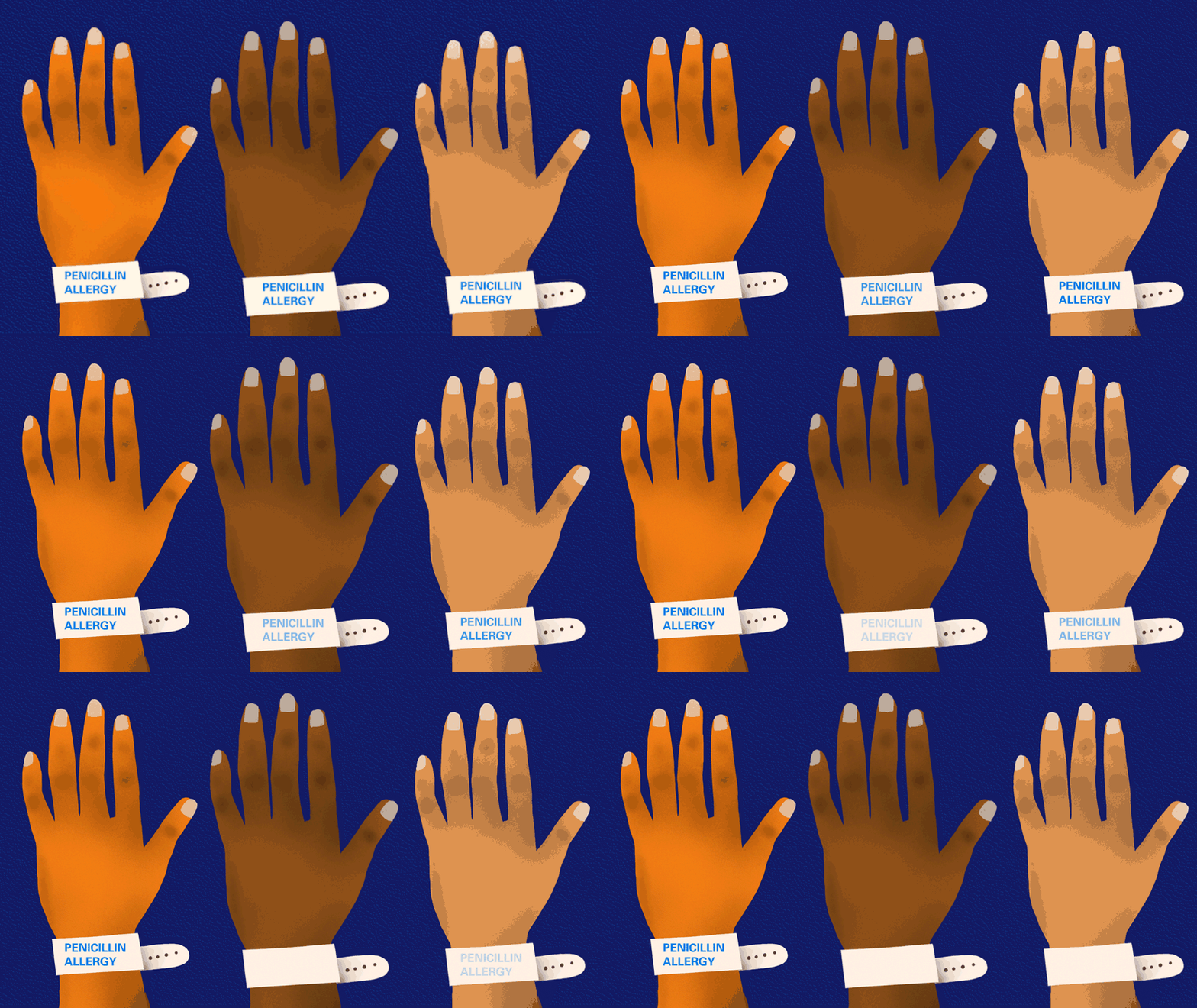
That penicillin allergy label you’ve had since you were five years old? You may not need it anymore.
“Back then, we didn’t know that these allergy labels go away. Now, we do. For example, we know that in just ten years, most people lose their penicillin allergy label,” said Rajan Ravikumar, M.D., assistant professor of Internal Medicine and assistant medical director of the University of Michigan Medical Group at the Medical School.
Evaluating allergy labels to ensure patients receive the best care possible is the goal of Michigan Medicine’s Beta-Lactam Allergy Evaluation Service, initiated in July 2021.
The service uses various methods to test patients labeled as allergic to drugs in the Beta-Lactam family, including penicillin. This family of drugs is the first line of treatment for many common ailments, including ear infections in children and sinus infections in adults. Many patients who are “allergic” were labeled as such due to reactions they had as children, or because of other reactions in their family history. However, patients who don’t have these allergy labels addressed can be at higher risk of complications in the hospital if an alternative medication is needed during their care – for instance, patients who get alternatives rather than beta-lactam antibiotics are more likely to get surgical site infections and are in the hospital longer because of more treatment failures.
This, Ravikumar says, is why it’s so important to have these labels evaluated.
How it works
If you’re determined a good candidate for the Beta-Lactam Allergy Evaluation Service, nurse practitioners will help inpatient teams address a beta-lactam allergy label on your chart, determine if the allergy is still real, and then remove the label when necessary. The practitioners talk to you about your allergy history, and evaluations are done at the bedside. These bedside evaluations are a first, Ravikumar says – this type of testing has typically been performed in outpatient settings, but not in the hospital.
We’re trying to remove those barriers to get people on first line treatment, get them better and out of the hospital faster, and make sure that when they are in outpatient, they can receive these antibiotics without any concern.
You’ll be asked various questions about the label including how long ago it was given to you and your allergy history. You can receive a test dose of a medication or, depending on the severity of the allergy history, a skin test first before getting the test dose. You’re then monitored every 15 minutes for an hour, and the label can be removed if you experience no symptoms during that time. Results are quickly shared with your primary care team, and you receive testing cards with information about your evaluation. If you remain allergic to the drug, it’s recommended that you continue avoiding it, but have your label evaluated again in a few years.
The service has seen great success: in its first year alone, over 700 patients were evaluated, and about 99% passed their test dose and had the allergy label removed.
The relabeling rate is low – only about 5% of people have their label put back. Michigan Medicine teams are in contact with these patients when it happens – a patient is often relabeled simply because they forgot they’d been evaluated for the allergy.
Reminders
Ravikumar says the existence of this program not only teaches people that some allergies can go away with time, but also serves as a reminder for patients to have their allergy labels evaluated – especially if it’s an allergy they aren’t very familiar with or a label they were given as a child – to avoid impacting their future care.
“The goal really is to get people off agents we know don’t work as well, or that lead to more infections and have more side effects,” Ravikumar said. “We’re trying to remove those barriers to get people on first line treatment, get them better and out of the hospital faster, and make sure that when they are in outpatient, they can receive these antibiotics without any concern.”
Live your healthiest life: Get tips from top experts weekly. Subscribe to the Michigan Health blog newsletter
Headlines from the frontlines: The power of scientific discovery harnessed and delivered to your inbox every week. Subscribe to the Michigan Health Lab blog newsletter
Like Podcasts? Add the Michigan Medicine News Break on Spotify, Apple Podcasts or anywhere you listen to podcasts.

Health Lab
Explore thousands of health news & research stories by visiting the Health Lab homepage for more.
Media Contact

Public Relations
Department of Communication at Michigan Medicine
Stay Informed
Want top health & research news weekly? Sign up for Health Lab’s newsletters today!
Featured News & Stories
4 in 5 parents say having a baby is too expensive

Many older adults make Medicare decisions quickly and most don’t change plans, poll finds
What’s the latest on 7-OH and kratom availability and addiction care?

Better prenatal care data could help prevent maternal complications, experts say
Many hospitals still don’t do enough to prevent UTIs from catheters