Alcohol-Related Liver Disease clinic gives patient new hope
Diagnosed with alcohol-related liver cirrhosis, one woman decided it was time for a fresh start
5:00 AM
Author |
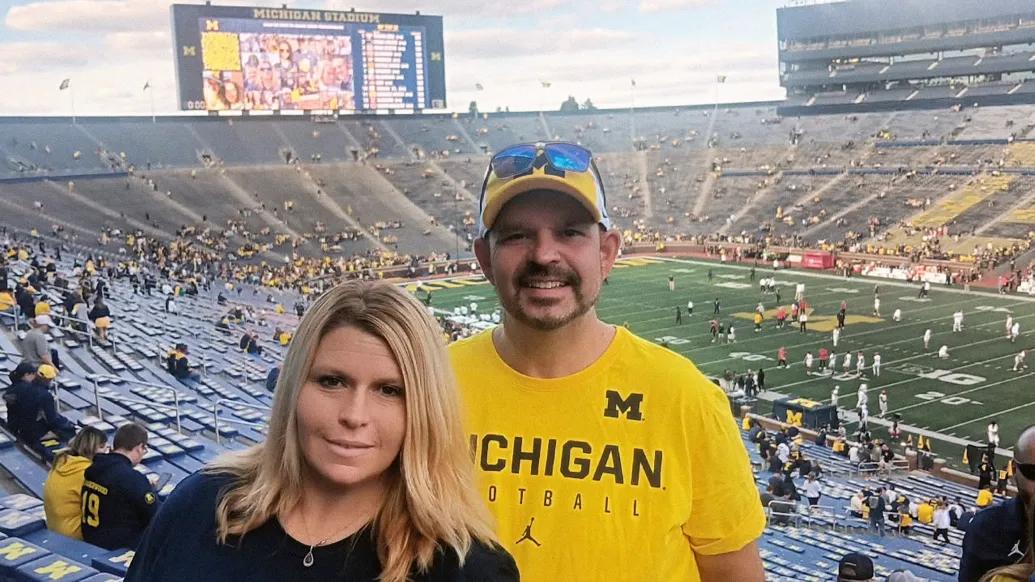
After months of tests and doctor visits, Jennifer Strohpaul still didn’t have answers for persistent, flu-like symptoms that had become increasingly frustrating and disruptive.
No one could explain the severe stomach and side pain, nausea, shortness of breath and weight loss she was experiencing.
In fall 2023, Strohpaul’s local care team sent her by ambulance to MyMichigan Health in Bay City, Mich. affiliated with University of Michigan Health, for more comprehensive testing in hopes of finding answers.
Strohpaul was then transferred again, this time to U-M Health in Ann Arbor, Mich.
There, Strohpaul received a diagnosis: alcohol-related liver cirrhosis.
Her liver was failing.
“They were straightforward about why my liver was in the condition it was,” she said.
“It was made clear that they could treat me, but I would have to be honest with them, myself and those around me.”
Opening up about alcohol
The MyMichigan care team in Bay City told Strohpaul that she needed to make serious lifestyle changes to try to heal her liver and improve her health.
Their message resonated.
Strohpaul began working with the U-M Health Alcohol-Related Liver Disease clinic, or ALD clinic, in Ann Arbor to take the first steps to alcohol cessation.
Alcohol addiction is a disease that makes alcohol cessation challenging. Having a multidisciplinary approach for patients is crucial in helping them permanently quit alcohol consumption.

Unfortunately, discussing alcohol in a medical setting is often stigmatizing and hard for some patients to open up about.
“The U-M Health Alcohol-Related Liver Disease clinic works to coordinate behavioral and medical care into one place to meet patients where they are at in their alcohol cessation journey,” said Kinza Tareen, M.D., an Assistant Clinical Professor of Psychiatry and Co-Director of the ALD clinic at U-M Health.
“In our multidisciplinary, patient-centered model, we focus on bringing medical and behavioral care to patients all in one setting, with hopes that this reduces stigma, improves engagement and ultimately delivers better care and outcomes for our patients."
Over the next year, Strohpaul stayed committed to being open and honest about her drinking habits. She used the tools she learned at the clinic to support her progress.
The U-M Health Alcohol-Related Liver Disease clinic works to coordinate behavioral and medical care into one place to meet patients where they are at in their alcohol cessation journey."
-Kinza Tareen, M.D.
After six months without alcohol, however, her liver was still failing.
SEE ALSO: Doctors perform first liver transplant in Michigan for colon cancer
“Alcohol cessation can lead to a successful recovery in liver function for many patients,” said Ponni Perumalswami, M.D., a Co-Director and Hepatologist of the ALD clinic at U-M Health.
“However, this is not guaranteed for every patient. There are times that alcohol cessation is not enough and a liver transplant is the best option at recovery.”
Because of Strohpaul’s sustained alcohol cessation and the severity of her condition, her care team determined it was time to evaluate her for the liver transplant waitlist.
A “second chance at life”
On March 21, 2024, Strohpaul was officially placed on the list.
The waiting period was emotionally challenging.
She slept with her phone nearby, always waiting for the call, and kept a bag packed in case she needed to leave for Ann Arbor at any moment.
“You waver between feeling like that call will never come and having more hope than you can imagine that the transplant could be any day,” Strohpaul said.
“At the same time, you’re trying to wrap your head around the fact that someone will need to choose organ donation, either as a living donor or deceased donor. This can be hard to come to terms with.”
Seeing the work they did, I knew I wanted to give that back to someone else. They inspired me to go back to school and get my Master’s of Social Work.”
-Jennifer Strohpaul
She did receive a call that a liver was available but ultimately the transplant couldn’t proceed.
“Receiving a false alarm is not easy and can cause you to lose hope,” she said. “It’s important that you wake up the next morning and keep moving forward with the belief that it will come.”
In May 2024, she received another call. This time, everything aligned. A deceased donor liver was a match.
On May 9, 2024, Strohpaul received her liver transplant at U-M Health.
“Her transplant went smoothly,” said Alexandra Shingina, M.D., the Medical Director of Liver Transplantation at U-M Health Transplant Center.
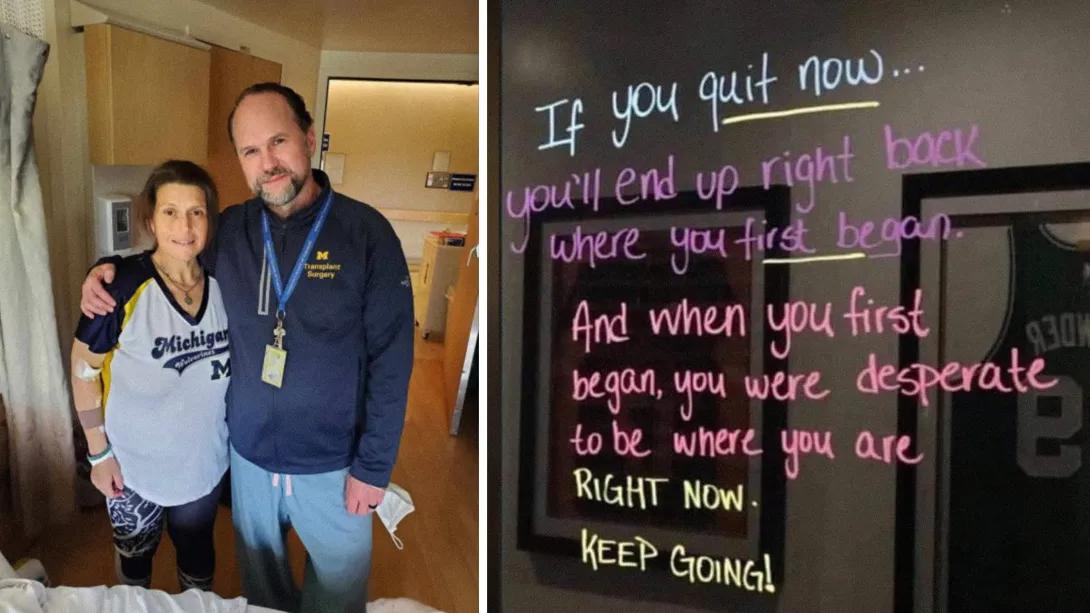
“Jennifer is an amazing example of how the comprehensive care team of the ALD Clinic, combined with patient commitment, can give an opportunity for a second chance at life.”
After five days at the hospital, Strohpaul was well enough to go home.
“After the transplant, it hit me harder that someone had just given me another chance at life,” said Strohpaul.
“To this day, it is hard to find the right words to express how grateful I am for that. Upon my discharge, I knew I wanted to do everything in my power to not damage this gift I had been given.”
Following her transplant, Strohpaul continued regular follow-up visits to ensure her new liver was functioning well and that her body was not rejecting it.
Over time, those visits became less frequent.
Honoring her gift
Today, Strohpaul is making the most of her second chance.
She will begin school this spring to become a social worker.
“The social workers at U-M Health forever touched my life,” she said.
“Seeing the work they did, I knew I wanted to give that back to someone else. They inspired me to go back to school and get my Master’s of Social Work.”
Having experienced both substance use challenges and a transplant, Strohpaul encourages anyone diagnosed with alcohol liver cirrhosis to be honest with themselves and their care team.
“If I can do it, you can do it. It is not an easy diagnosis, but if you are honest with yourself and your team, there is a light at the end of the tunnel,” she said.
“With the help of my care team at U-M Health and my liver donor, I wake up each morning healthier and ready to face the day head on.”
Sign up for Health Lab newsletters today. Get medical tips from top experts and learn about new scientific discoveries every week by subscribing to Health Lab’s two newsletters, Health & Wellness and Research & Innovation.
Sign up for the Health Lab Podcast: Add us on Spotify, Apple Podcasts or wherever you get you listen to your favorite shows.

Health Lab
Explore thousands of health news & research stories by visiting the Health Lab homepage for more.
Media Contact

Public Relations
Department of Communication at Michigan Medicine
In This Story

Kinza Tareen, MD
Clinical Assistant Professor
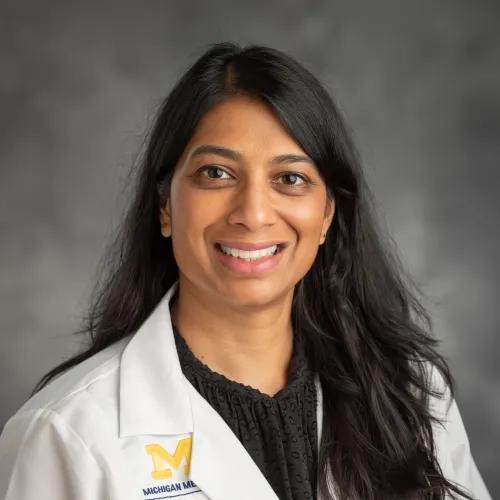
Ponni Perumalswami, MD, MsCR
Clinical Professor
Alexandra Shingina, MD, MSc
Clinical Associate Professor
Stay Informed
Want top health & research news weekly? Sign up for Health Lab’s newsletters today!
Featured News & Stories

Foundation gift inspires additional gifts to strengthen youth mental health care

Evolving causes, diagnosis of drug-induced liver injury
More leucovorin prescribed to kids after federal officials touted its unproven benefits for autism
University of Michigan Health Liver Transplant Program Earns Top Five National Ranking for Transplant Access
Looksmaxxing isn’t just a TikTok trend – it often reflects severe body image issues in boys and young men