Advancements and trends in lung transplantation
Updates in lung transplantation as University of Michigan Health celebrates its 1000th lung transplant patient
5:00 AM
Author |
The University of Michigan Health Lung Transplant program recently celebrated its successful 1,000th transplant patient, representing a significant landmark not only for the hospital, but in the world of lung transplants, experts explain.
"This milestone reflects the culture and history behind University of Michigan Health being at the forefront of a number of innovative fields," said the program’s medical director, Dennis Lyu, M.D.
"It reflects our commitment to making sure we're doing good things and is an achievement we can be proud of."
Surgical director, Rishindra Reddy, M.D., even performed the 499th lung transplant at U-M Health almost 17 years ago to the day.
"It’s interesting to be here today as the transplant surgical director and to have helped with the 1,000th transplant. It’s been a great privilege to be a part of the program for these important milestones and to watch the program evolve and grow," said Reddy.
Here, Lyu and Reddy answer important questions about lung transplantation advancements and how further development of these programs ensures more patients receive the life saving care they need.
What would you say is the biggest advancement in lung transplantation?
Lyu: One of the biggest advancements in lung transplantation is the way donor lungs are preserved.
In the past, donor lungs would be preserved by being stored on ice for no longer than six hours.
We would then have to get recipient patients to the operating room very quickly, performing many transplants in the middle of the night or having to cancel other cases to get the lung transplanted within the given timeframe.
Today, we use a refrigeration system in which the donor lungs are stored in a temperature-controlled cooler (6 to 10 degrees Fahrenheit) for up to 24 hours.
Our clinical trials have included treatment and prevention of infections after transplant, and investigations of stem cells found in transplanted lungs that could play a role in preventing or causing scarring (chronic rejection) of the new lungs.”
-Dennis Lyu, M.D.
This allows us greater control over scheduling, which benefits recipients and the surgical team.
Reddy: On the procurement side of transplant, we are beginning to use donation after circulatory death donors, or patients whose organs are recovered for transplant after the heart and breathing have stopped.
This allows us to access more organs and has helped to increase the number of lung transplants from approximately 2,000 to 3,500 annually in the United States over the past 5 to 10 years.
What are the major challenges involved with lung transplants?
Lyu: One of the biggest challenges has been accepting viable lungs for transplant.
In the past, a lung might have been passed over as unsuitable due to unclear or marginal quality.
Today, we’re able to evaluate the donor lung via ex vivo lung perfusion, or EVLP, a process that allows us to optimize the function of suboptimal lungs that typically would not be accepted for transplantation.
This permits us to optimize these lungs in an “incubator” and then transplant them into individuals on the waitlist and improve patient outcomes.
Reddy: Historically, less than 20% of donor lungs were usable.
With DCD donors and EVLP, we are increasing that percentage to allow us access to more lungs to get people off the waiting list.
Another future opportunity is xenotransplantation, which is the ability to use non-human lungs that have been genetically modified to place into humans.
This proof-of-concept work is being done at major health centers with pig lungs and will be revolutionizing lung transplantation in the next couple of years.
What should you look for when deciding where to have a lung transplant?
Reddy: Patients needing a lung transplant should consider a high-volume center with a consistent team that performs more than 20 lung transplants each year, because experience makes a difference in terms of quality of outcomes.
Studies have shown that patients transplanted at high-volume centers (greater than 20 lung transplants a year) have better patient survival rates than those transplanted at low volume centers (fewer than 20 lung transplants a year).
We are beginning to use donation after circulatory death donors, or patients whose organs are recovered for transplant after the heart and breathing have stopped.”
-Rishindra Reddy, M.D.
Lyu: Our Lung Transplant program provides the highest level of patient-centered care at every point — from before, during and post-transplant.
Our team approach provides multiple touch points of learning about the process to help inform the patients, starting with the pulmonologist and the surgeon.
But we also have coordinators, nurses, social workers and peer mentoring groups for patients and donors — a whole team of professionals at multiple levels providing information.
What strengths should a lung transplant program/team exhibit?
Lyu: For our team, we're committed to helping patients delay the need for lung transplantation through our advanced lung disease therapies for chronic obstructive pulmonary disease, or COPD, interstitial lung disease and other very rare lung diseases.
For example, we manage the largest group of patients with interstitial lung disease in the state, offering new therapies that have shown real improvement in the past 10 years.
We're able to help treat the patient’s lung disease, working with their local providers and ultimately use lung transplant if needed.
Reddy: The diverse breadth of clinical expertise at University of Michigan Health is what contributes to the strength of our lung transplant program here.
We have a very strong thoracic surgery program outside of lung transplant, with expertise in all aspects of managing end-stage lung disease with extracorporeal membrane oxygenation, or ECMO, and lung volume reduction surgery.
Similarly, our broad-based pulmonary group includes a growing interventional pulmonary practice that can help with biopsies, endobronchial valves and other endoscopic procedures.
Our intensive care unit teams excel at taking care of the sickest patients in the hospital and across the country.
Another strength has always been in the ECMO lab and the artificial lung work that has been pioneered by our team of experts who are on the cutting edge of treatment as it relates to end-stage lung disease.
What research and/or clinical trials is the Lung Transplant program involved with?
Lyu: Our clinical trials have included treatment and prevention of infections after transplant, and investigations of stem cells found in transplanted lungs that could play a role in preventing or causing scarring (chronic rejection) of the new lungs.
We are currently part of a multi-centered randomized control trial with a drug that can slow the development of chronic rejection.
What future developments are you most excited about for lung transplants?
Reddy: I’m looking forward to growing our program again to be a leader nationally and internationally in lung transplant, in terms of clinical volume and our research contribution — and being on the cutting edge of how we improve and deliver care to patients in the state of Michigan and beyond.
Our goal, as always, is to be a robust program that cares for as many patients as possible and that provides the foundational research and discoveries to make this whole process better for everyone.
Sign up for Health Lab newsletters today. Get medical tips from top experts and learn about new scientific discoveries every week
Sign up for the Health Lab Podcast. Add us wherever you listen to your favorite shows

Health Lab
Explore thousands of health news & research stories by visiting the Health Lab homepage for more.
Media Contact

Public Relations
Department of Communication at Michigan Medicine
In This Story
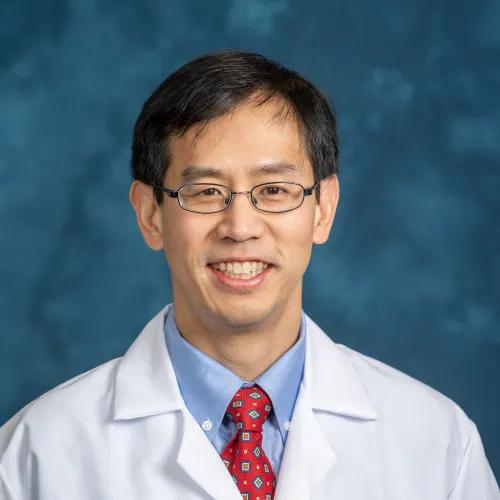
Dennis Lyu
Clinical Professor
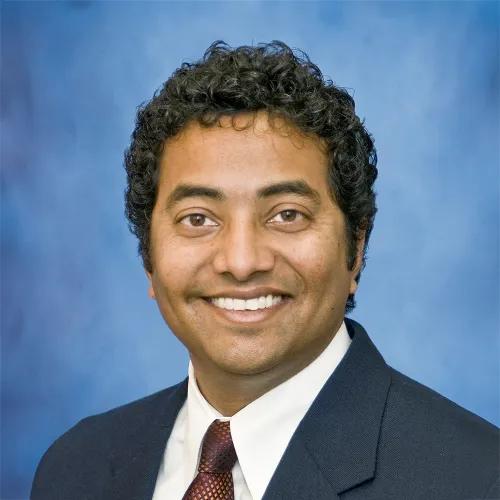
Rishindra M Reddy, MD, MBA
Professor
Stay Informed
Want top health & research news weekly? Sign up for Health Lab’s newsletters today!
Featured News & Stories
U-M-led consortium to receive up to $52 million in NIH funding to study why viral respiratory infections affect children differently

‘Molecular glue’ stabilizes protein that inhibits development of non-small cell lung cancer and uterine cancer

State of Michigan allows tax credit for private employers of living organ donors

Nicotine pouches: Youth survey shows opportunity for prevention
Lung health expert weighs in on Zyn and other nicotine pouches