4 ways to check your moles for skin cancer
Everyone has them, but not all moles are the same. How to examine yours properly — and when it’s time to see a doctor
1:14 PM
Author |
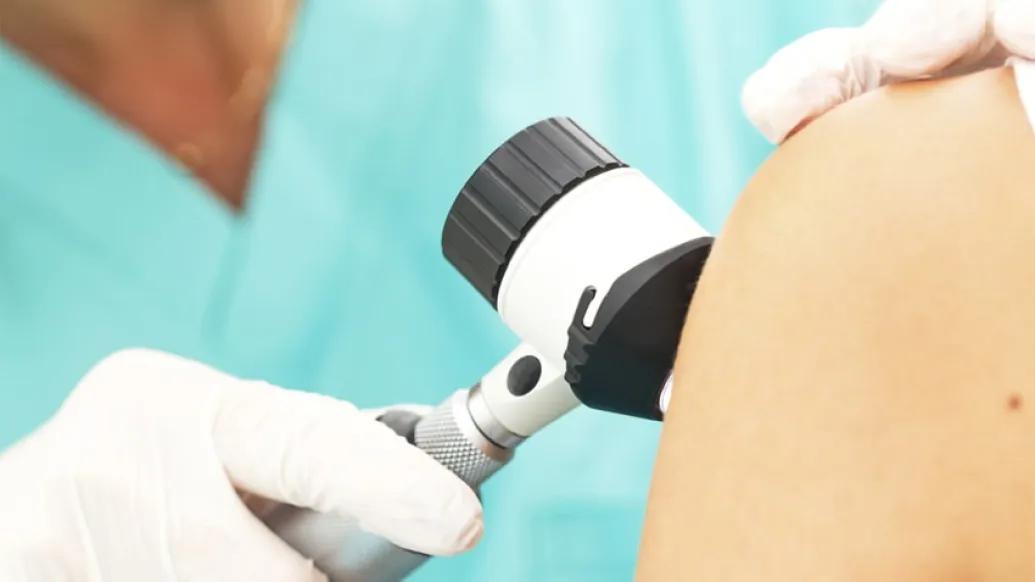
This article was originally published on June 7, 2016 and was updated on May 8, 2025.
When is a mole not just a mole?
The question can be a concern for many people, especially during the summer months when we are apt to spend time outside and expose more of our skin to the sun.
Although it's important to look for atypical moles, spots or changes in your skin that could signal skin cancers such as basal cell carcinoma or melanoma, it also is helpful to know when a mole needn't be cause for concern.
"Most of the time, if you have several moles that look similar to one another, then those are benign," says Kelly Cha, M.D., Ph.D., an assistant professor in the Department of Dermatology at the University of Michigan.
"Also, if you have a mole that's been with you since childhood without significant change, that's usually a good sign that you don't need to worry about it."
Still, Cha says, it is a good idea to get a yearly skin exam from your dermatologist or primary care physician (and to utilize resources such as the Rogel Cancer Center's skin cancer self-screening card and UMSkinCheck app.)
Cha offered these additional mole and skin monitoring tips.
4 ways to check your moles for skin cancer
Check yourself monthly
Over time, you get to know the kinds of spots you have, and you'll be more likely to notice one that stands out from the crowd or looks different than it used to.
Some people refer to this as the "ugly duckling" sign.
A mole that has changed in appearance, or one that is new and doesn't fit in well with others on your skin, needs to be evaluated.
Look all over
Stand in front of a full-length mirror with a hand mirror to help look at difficult-to-see areas like your back, and the backs of your arms and legs.
While seated, check the bottoms of your feet and even between your toes.
Most skin cancers occur on sun-exposed areas such as the face, back, arms and legs — but skin cancer doesn't always follow the rules.
Be thorough and look at places that are usually covered by clothing.
Know your "A-B-Cs"
Consider the ABCDEs of melanoma: A spot may be more concerning if it is Asymmetric or lopsided, has ragged Borders, has more than one Color, has a Diameter greater than 6mm (about the size of a pencil eraser), and in particular if it is Evolving: changing in size, shape or color.
Melanoma can start as a flat, discolored spot, so don't ignore funny-looking flat spots any more than you would ignore an unusual bumpy spot.
Take precautions
To keep your skin looking healthy and to decrease your risk of skin cancer, you should avoid indoor tanning and always put something between you and the sun's rays.
Some people like to protect their skin by staying in the shade and using umbrellas; some like to wear hats and sun-protective clothing; some prefer sunscreen; and some mix and match all of these options.

Health Lab
Explore thousands of health news & research stories by visiting the Health Lab homepage for more.
Media Contact

Public Relations
Department of Communication at Michigan Medicine
In This Story

Kelly B Cha, MD, PhD
Clinical Associate Professor
Stay Informed
Want top health & research news weekly? Sign up for Health Lab’s newsletters today!
Featured News & Stories
4 in 5 parents say having a baby is too expensive

A metabolic “switch” that could help reset scar-producing cells in scleroderma

E-Bikes are everywhere, but most parents say they don’t know enough about them

School night bedtime tips every parent should know

E-bikes are faster than ever. Are families prepared for the risks?