2-year-old thrives after liver transplant for biliary atresia
The generosity of a living donor has restored Nora Fuchs to full health, allowing her to be an active toddler
5:00 AM
Author |
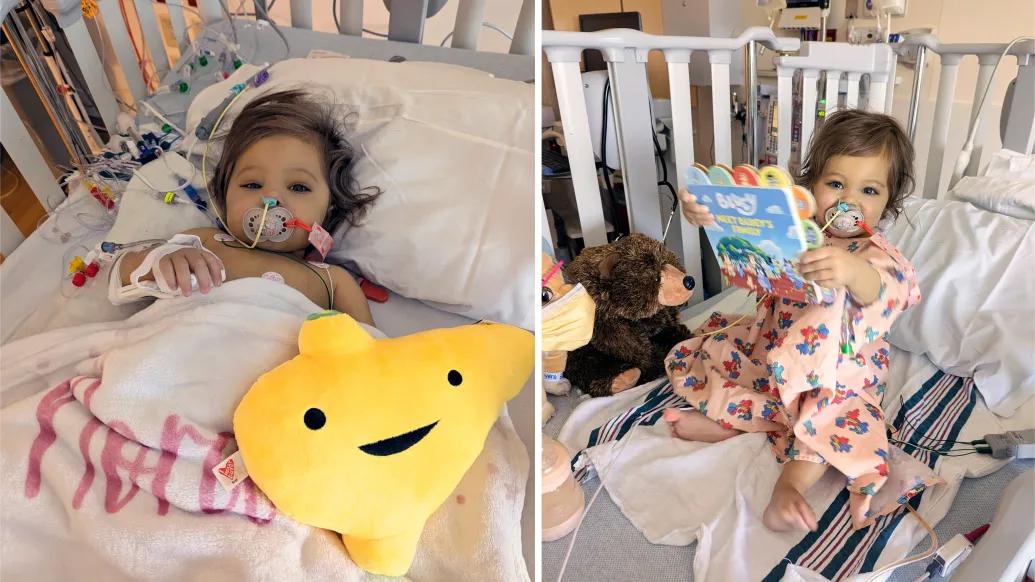
In March of 2024, Nora Fuchs was born healthy and without complications. However, on routine newborn testing, her team noticed that her bilirubin levels were elevated.
Testing determined that Nora was not jaundiced and was sent home with instructions to follow up with her pediatrician.
While being monitored by her pediatrician, Nora’s bilirubin levels continued to rise and her stool became pale.
Nora was referred to a gastroenterologist at two weeks old to assess the cause of her elevated bilirubin.
Initial testing didn't provide conclusive results and recognizing the need for specialized evaluation, Nora’s team recommended she go to the Pediatric Liver Clinic at the University of Michigan Health C.S. Mott Children's Hospital for consultation.
By May of 2024, Nora had undergone multiple laboratory tests, ultrasounds, a liver biopsy and a dye study of the biliary tree, ultimately leading to a diagnosis of biliary atresia.
At two months old, Nora underwent a Kasai portoenterostomy that attempted to restore bile flow from the liver to the gut.
After some initial complications, Nora recovered well and was sent home where she experienced about a month of normalcy.
In July 2024, however, Nora’s parents noticed the return of pale stools and feared she was back where she started.
Nora’s care team determined the procedure wasn't as successful as hoped in allowing the liver to drain bile into the intestine, an outcome that occurs in up to 50% of all cases even if it's performed within the first 60 days of life as ideally recommended.
“She was doing okay, but we were doing all we could to make sure she was okay,” said Holly Fuchs.
One morning in June 2025, everything changed for Nora.
Beginning the liver transplant journey
As Fuchs and her husband went to wake their daughter, they found Nora lying in a crib covered in blood.
The family acted quickly by calling their nurse at Mott, packing a bag and heading straight to the Mott emergency department.
Nora’s team was able to determine she had ruptured esophageal varices from portal hypertension related to her end-stage liver disease.
Her team was able to medically support her with blood transfusions, medication and an endoscopy to prevent further bleeding.
Nora was cared for in the pediatric intensive care unit during this period of time.
While in the ICU, the U-M Health Transplant Center pediatric liver transplant team informed the family it was time to list Nora for a liver transplant.
“Unfortunately, about 50% of children who undergo the Kasai procedure will require a liver transplant by the age of two due to rapid progression to end-stage liver disease,” said Victoria Shakhin, M.D., a Clinical Assistant Professor of Pediatrics at U-M Health C.S. Mott Children’s Hospital.
Nora’s parents, Holly and Lucas Fuchs, requested to be evaluated as possible donors for Nora but were found to not be appropriate matches, leaving them to wait for an unknown living or deceased donor.
Within two days of being listed, Nora’s team identified a potential donor, known as a non-directed donor, that would be a perfect match for Nora.
Non-directed donors are living donors who would like to donate a piece of their liver to a person in need, though that person is a stranger to them.
While the donor may specify if they would like to donate to a child, the remainder of the matching process is based exclusively on physiological characteristics such as blood type, liver size and anatomic characteristics.
In the case of Nora’s donor, it had been specified that the donor wanted to donate to a pediatric patient.
“It didn’t feel real hearing that news,” said Holly Fuchs.
“Learning that a patient in need of a liver transplant has a good match is always a happy moment,” said Shakhin.
“Finding a match for Nora while she was still quite well meant that she would go into the difficult transplant surgery under the best conditions possible, we could not ask for more.”
By July 2025, Nora had a new liver.
She was discharged from the hospital within just six days of her transplant, which her team credited to her receiving a liver transplant prior to getting very ill while waiting for a deceased donor.
Nora had a couple of bumps in the road following her transplant. She experienced a round of organ rejection, one of the primary complications that may occur in the first year after transplant.
Thankfully, rejection in a liver transplant, when diagnosed and treated in a timely fashion as it was for Nora, is not as scary as it sounds and typically doesn't affect the long term health of the liver.
She also required a return to the operating room for a bowel obstruction, a complication that can happen after abdominal surgery.
Throughout this process, and as Nora continues to grow now, her parents keep a close eye on making sure Nora is free from illness to protect her due to her immunosuppressive medications.
“We encourage everyone to check their license and see if they are an organ donor, but more importantly, we encourage everyone to consider getting vaccinated and staying home if you are ill,” said Fuchs.
“The immune systems of people like Nora are more susceptible to infection, and having others help look out for her immune system is not only beneficial to patients like her, but their families as well.”
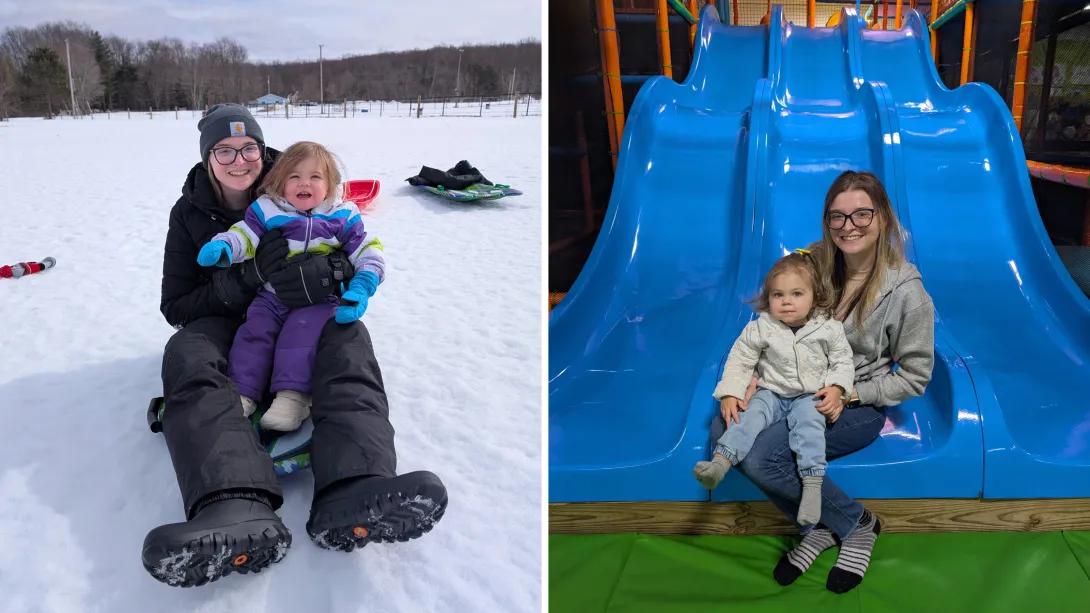
As she continues to heal from her transplant, Nora’s body has been able to bounce back from complications and she has been busy being a playful and curious toddler.
She has also had the chance to meet the person who gifted her this new lease on life: her donor.
Making the choice to donate
Amber Blackmer registered to be an organ donor in February 2025 when she saw a Facebook post about a pediatric patient in her area that needed a liver transplant from a donor with O- blood.
“I thought, ‘I have O blood! Maybe I’m a match’,” said Blackmer.
After going through the testing, it was determined that Blackmer was not a match due to the size of her liver, but this didn’t mean she was ready to give up on being a donor for someone else.
Every potential donor who is evaluated at U-M Health is asked if they would consider being a donor for someone else if they are not a perfect match for their intended recipient.
Blackmer expressed she would like to be considered for other patients in need and specified she wanted to donate to a pediatric patient if possible.
In June 2025, she received a call that she was a match and started making plans for surgery.
“On the day of surgery, I had so many emotions,” said Blackmer.
“I was nervous and realized that I was voluntarily putting myself through pain that I didn’t need to. I cried a few times before they took me back to the operating room, but the whole team at U-M Health reassured me that these feelings were normal and what I was doing priceless.”
Having only had laparoscopic surgeries before, Blackmer didn’t have much frame of reference for how she might be feeling when she woke up from her liver donation.
“I was in a lot of pain and felt nervous to look at my scar,” she said.
“The recovery was harder than I expected and took around eight weeks. It’s crucial that you listen to what your care team is telling you and feel all the emotions. This is a big decision, but it is worth it.”
When Blackmer had the chance to meet Nora for the first time though, the experience turned from clinical to emotional.
For the Fuchs family, the feeling was mutual.
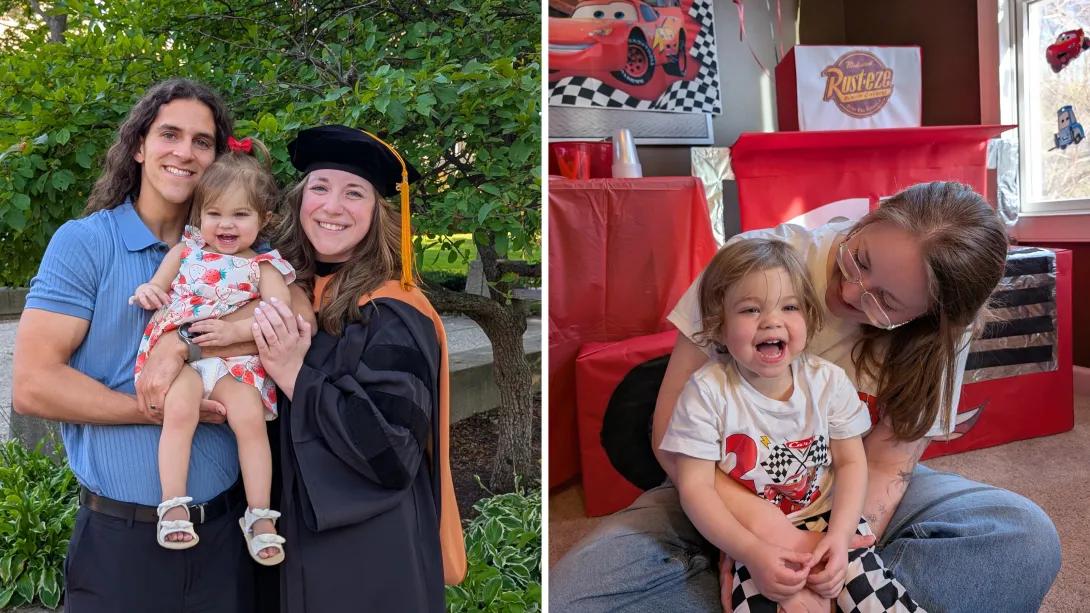
“Meeting Amber made the transplant feel real,” said Fuchs. “Before, we were just taking each step as it came making sure Nora was getting the care she needed. When we met Amber, there were a lot of emotions at once."
Seeing Nora be able to play and be a kid gave a new perspective to the donor experience for Blackmer.
“You look at her and wouldn’t know that she has gone through what she has. She has so much energy,” said Blackmer. “Knowing that I was able to be a part of helping her thrive and develop new skills is a feeling that can’t be described.”
Blackmer says that looking back on her liver donation, it feels like a small blip of time.
Achieving milestones
Since her transplant, Nora has been able to consistently reach new milestones as her body is no longer fighting to survive.
“I anticipate a happy and healthy childhood for Nora,” said Shakhin.
“As she gets older, she can do just about anything she wants to do - playing sports, travelling, having a family. However, she will require lifelong medication and medical supervision to ensure the long-term health of her transplanted liver.”
According to Fuchs, Nora loves dancing, talking, reading books and is obsessed with Lightning McQueen, Bluey and Bear in the Big Blue House.
“She is a ray of sunshine and has been thriving after her transplant,” said Holly Fuchs.
“We are so grateful to her transplant team, donor and everyone else along the way who has helped her get to a place where she can be a healthy toddler.”
Sign up for Health Lab newsletters today. Get medical tips from top experts and learn about new scientific discoveries every week.
Sign up for the Health Lab Podcast. Add us wherever you listen to your favorite shows.

Health Lab
Explore thousands of health news & research stories by visiting the Health Lab homepage for more.
Media Contact

Public Relations
Department of Communication at Michigan Medicine
In This Story
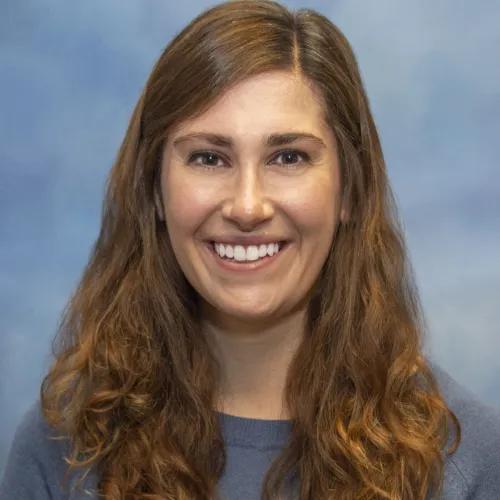
Victoria Shakhin, MD
Clinical Assistant Professor
Stay Informed
Want top health & research news weekly? Sign up for Health Lab’s newsletters today!
Featured News & Stories
A second chance at life
Exceptional response to immunotherapy gives patient with liver cancer more milestones to celebrate
Better prenatal care data could help prevent maternal complications, experts say
Pediatric patient treated for rare kidney cancer

E-Bikes are everywhere, but most parents say they don’t know enough about them