10-year-old works to regain independence after rare brain hemorrhage
Determined middle school cheerleader relearns basic motor skills through specialized multidisciplinary rehab clinic
10:15 AM
Author |
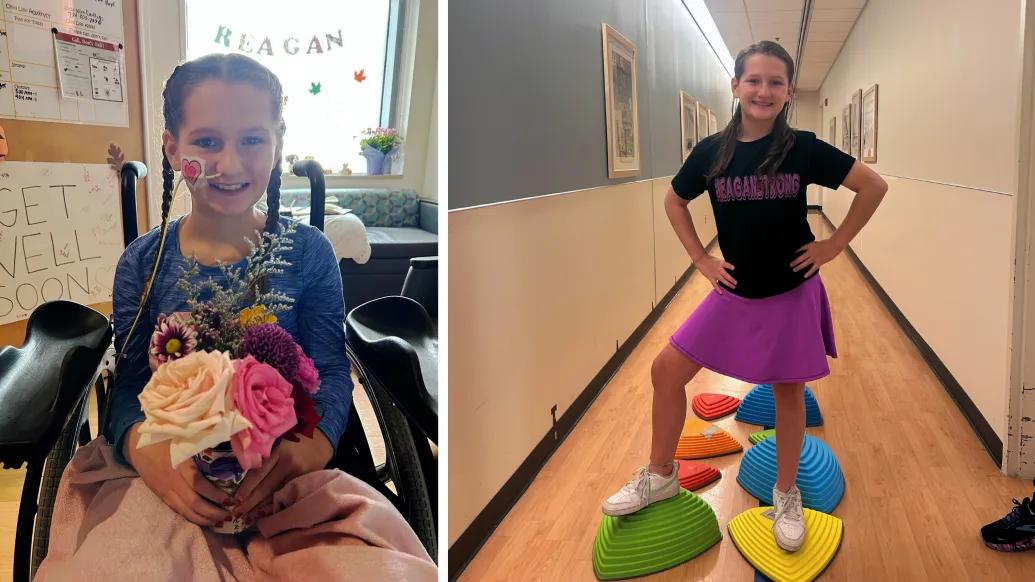
Ten-year-old Reagan Kotzian loves cheerleading and hanging out with her friends, but these activities came to a halt last year when she suddenly had to relearn how to walk, talk and even breathe on her own.
While cheering during a football game in the summer of 2023, Reagan abruptly sat down by her parents and complained of a headache.
“I assumed that she was probably dehydrated and exhausted since it was so hot outside,” said her mom, Lauren Kotzian.
“I told her to sit with us for a bit and catch her breath, but she slowly became less coherent and then lost consciousness.”
Reagan’s parents rushed her to the car while calling an ambulance that would bring her to University of Michigan Health C.S. Mott Children's Hospital.
When she got to Mott, Reagan was quickly evaluated in the emergency department and diagnosed with what’s known as a brain arteriovenous malformation.
The condition is characterized by a tangle of blood vessels in the body that can eventually begin bleeding due to an excess of blood being delivered into a smaller blood vessel.
Brain arteriovenous malformations aren’t normally found in the body until they begin bleeding or they are sought out by a health care professional.
They’re also something you’re born with.
“We didn’t know that she had this condition and had never suspected a thing,” said Lauren Kotzian.
“We were shocked with how quickly the symptoms came on and how much our lives changed.”
When minutes mattered
Reagan was placed into emergency surgery with the Mott neurosurgery team where the lower part of her skull was removed to relieve the pressure on the brain while a tube was placed to help regulate her cerebral fluids.
The surgery was successful, but Reagan would need months of physical rehabilitation to become independent again.
She stayed in the Mott pediatric intensive care unit for 22 days before being moved to a rehabilitation floor for another 48 days where she had to relearn motor skills from scratch.
“She had to relearn breathing on her own, eating on her own, how to use her voice, how to walk and more,” said Lauren Kotzian.
“Every day she worked with the team she got a little bit farther along in her progress.”
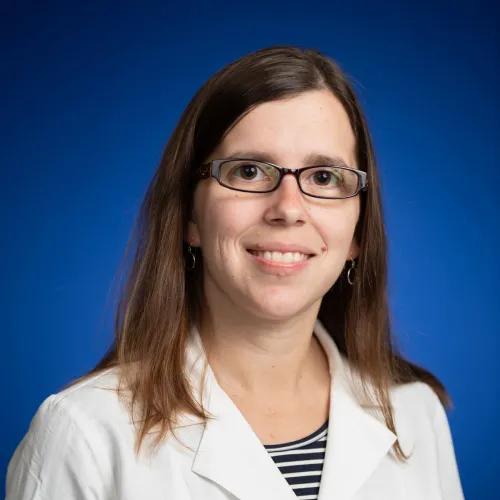
While in the intensive care unit, Reagan met physical medicine and rehabilitation specialist, Alecia Daunter, M.D., an assistant professor of pediatric rehabilitation medicine at U-M Health.
Daunter was also her physician during the rehabilitation portion of her stay, where Reagan worked with physical, occupational and speech therapists who helped her relearn basic skills that were lost due to the brain arteriovenous malformation rupture.
Gaining back her independence
In November 2023, Reagan was able to return home, but she still was far from reaching her health goals.
Daunter arranged for Reagan to follow up at the University of Michigan Health Pediatric Rehabilitation Center once she left Mott, which allowed her to see a coordinated team of multiple specialists to maximize all aspects of her recovery.
Reagan was referred to the Beginning Recovery After ICU Neurorehabilitation Clinic, as well as the Milestones therapy program.
When Reagan first arrived at the rehabilitation center, she was having trouble speaking, walking, swallowing and taking care of herself.
Despite this, she was determined to work hard to return to her favorite activities, such as cheerleading.
Reagan continues to participate in both programs which allows her to have access to both coordinated physician and psychological care, as well as a coordinated rehabilitation therapy approach.
The interdisciplinary clinic lets her follow up with three types of clinicians, including neurology, physical medicine and rehabilitation and neuropsychology. It also has nursing and social work support present.
“The Beginning Recovery After ICU Neurorehabilitation Clinic is special because it allows patients rapid automatic scheduling of multiple specialties shortly after discharge from Mott in a single visit,” said Marie Vantubbergen, Ph.D., the program director for the Milestones Neurorehabilitation Clinic at U-M Health and pediatric clinical psychologist at Mott.
“It also provides the team a chance to consult with each other in real time and discuss important aspects of care such as medication changes, therapy recommendations, and guidance for return to school and other typical activities.”
In the clinic, Reagan sees an art therapist, occupational therapist, physical therapist, recreational therapist, speech therapist and psychologist.
She’s also enrolled in swim therapy classes at Domino’s Farms.
Each day, her therapists create plans for her that revolve around activities and hobbies that she likes to do such as drawing, reading, baking and practicing her cheerleading skills.
“Both in the hospital and in the clinic, Reagan always seemed ready to get to work,” said Daunter.
“Her therapists would tell her what the expectation was for her that session and she would do her best to exceed it. She always comes with a positive attitude which can be difficult for kids in her situation.”
Over the last seven months, her family, providers and Reagan have seen significant progress in her fine motor skills.
It’s unknown how much longer Reagan will require therapy.
Her team and her family want to ensure they’re taking the treatment at a pace that works for her so that she continues to have a positive progression.
Daunter says Reagan’s personality shines while participating in her therapies. She recalls Reagan writing about her rehab goals as part of her therapy work.
“While in the hospital, she pulled out her own feeding tube because she was determined to eat on her own,” recalled Daunter.
“During her occupational therapy, she wrote a sentence about doing that. It really shows her determination to keep progressing and exceeding her goals.”
When Reagan left Mott, she was using a wheelchair. Now? She’s walking without assistance.
Looking to the future
Today, Reagan is working on reaching her physical rehabilitation goals through being active around the house with art projects, baking and practicing her veterinary skills while watching Dr. Pol on Animal Planet.
She hopes to be able to return to cheer this fall to root on her team, the Mustangs.
“This was one of the scariest moments of our lives, but we have been met with nothing but care and kindness from her care team, our community, family and friends,” said Lauren Kotzian.
“We are so grateful for the care team at Mott for quickly treating her and for her current care team for dedicating the time to work with her to get her independence back.”
Sign up for Health Lab newsletters today. Get medical tips from top experts and learn about new scientific discoveries every week by subscribing to Health Lab’s two newsletters, Health & Wellness and Research & Innovation.
Sign up for the Health Lab Podcast: Add us on Spotify, Apple Podcasts or wherever you get you listen to your favorite shows.

Health Lab
Explore thousands of health news & research stories by visiting the Health Lab homepage for more.
Media Contact

Public Relations
Department of Communication at Michigan Medicine
In This Story
Alecia K Daunter
Clinical Associate Professor
Related
A way to measure brain blood flow in pre-term babies at the bedside
Stay Informed
Want top health & research news weekly? Sign up for Health Lab’s newsletters today!
Featured News & Stories
After 13 years of IV nutrition, teen finds freedom to just be a kid
A gift for Michigan’s most vulnerable babies
Are you at risk of a genetic disease? Guidelines for testing should be updated, experts say
FDA approved drug slows type 1 diabetes progression in 5-year-old patient

Galens Tag Days celebrates 100 years of helping kids