10 ways to stop a bloody nose
Icky and sometimes scary, a bloody nose in most circumstances is nothing to fear. Here’s what to do if you have one
7:00 AM
Author |
This article was updated on August 2, 2023.
Let's face it: There is never a convenient time to get a bloody nose. They're messy, make us stop what we're doing and, frankly, can be a little scary. The fact that a bloody nose can happen to anyone at any time, especially during the cold, dry months of winter, does not make them any less shocking.
But know this: Nosebleeds are common. The good news is that nosebleeds are harmless for most people — and the tools you need to handle them are likely already in your home.
Typical causes of nosebleeds include dry climate, heated indoor air during winter months, steroid nasal sprays or direct injury to the nose. People who take blood-thinning medications (anticoagulants) also are more likely to get a bloody nose.
No matter when or how your nose starts bleeding, these simple strategies can help:
10 steps to stop a bloody nose
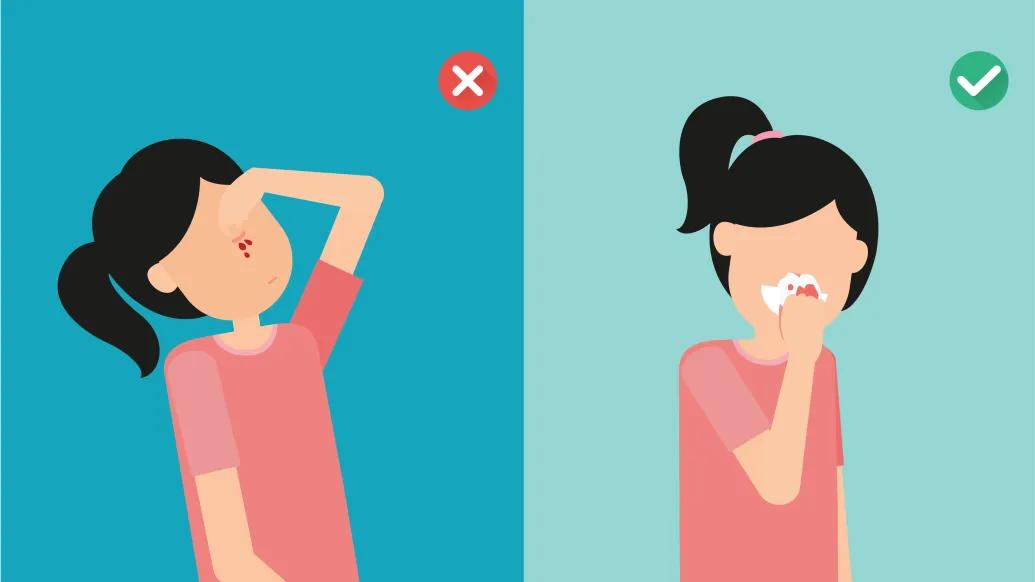
- Keep calm. Bloody noses can be scary, but they are rarely dangerous.
- Lean forward. If there is blood in your mouth, spit it out; do not swallow it.
- Stay upright. Do not tilt your head back or lie flat. This may cause you to choke on blood. Blood in the stomach can make you sick to your stomach and cause vomiting.
- Try a spray. Apply three sprays of decongestant nose spray, such as Afrin, into the side that is bleeding.
- Skip foreign objects. Do not pack the nose with tissues or other household items like tampons. This can make the bleeding worse.
- Use a pinch. Pinch the soft part of your nose shut for 10 minutes. Use a clock to keep track of time. Resist the urge to peek after a few minutes to see if your nose has stopped bleeding.
- Observe and react. After 10 minutes, let go of your nose. If it is still bleeding, soak a cotton ball with the nose spray. Place the cotton ball into the bleeding nostril and pinch for 10 minutes. Again, use a clock to time it.
- Check your blood pressure. High blood pressure can cause nosebleeds.
- Take it easy. Once bleeding has stopped, do not blow your nose for two days.
- Avoid exertion. It can take up to two full weeks to heal after a nosebleed. Do not lift anything heavy, such as groceries, or perform physical activities or household chores. Do not pick up young children and babies
Seek immediate medical help if you have:
- Bleeding that does not stop in 30 minutes
- Bleeding that is very heavy, pouring down the back of your throat and out the front of your nose
- Bleeding accompanied by other symptoms, such as very high blood pressure, light-headedness, chest pain and/or rapid heart rate
- Bleeding that occurs three to four times weekly or greater than six times per month
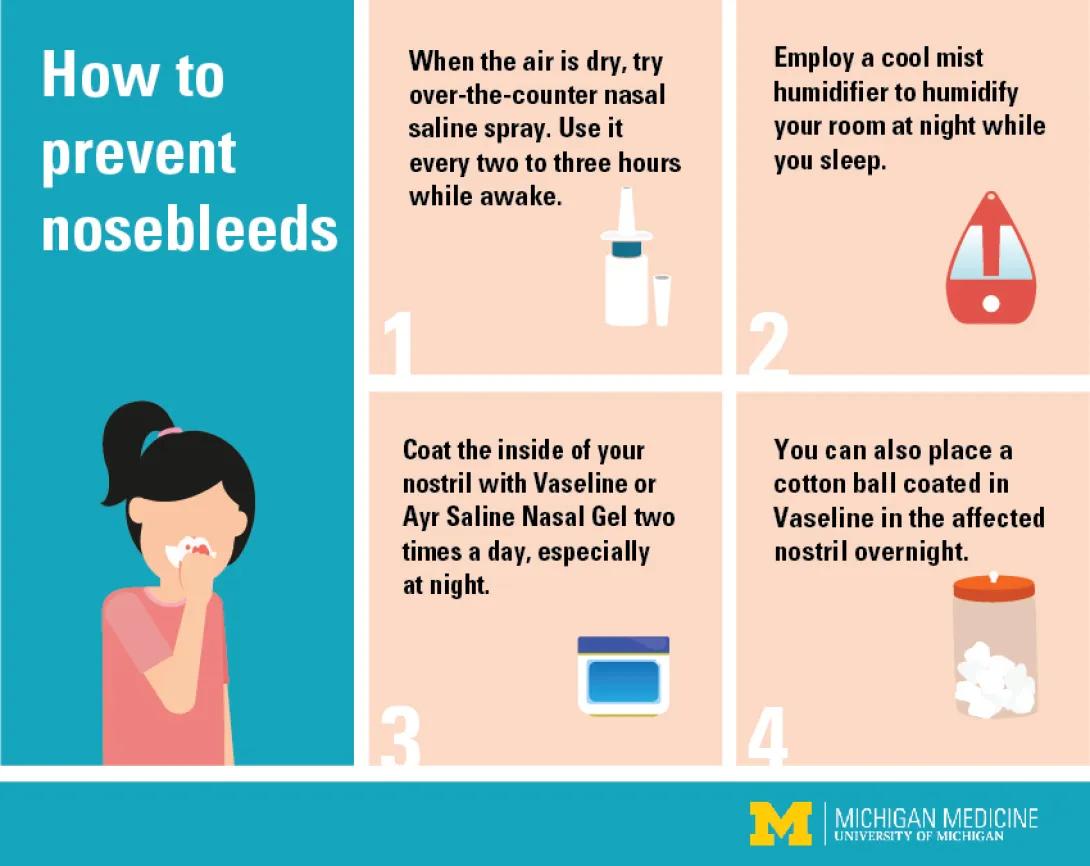
Preventing future bloody noses

Health Lab
Explore thousands of health news & research stories by visiting the Health Lab homepage for more.
Media Contact

Public Relations
Department of Communication at Michigan Medicine
Stay Informed
Want top health & research news weekly? Sign up for Health Lab’s newsletters today!
Featured News & Stories

5 things to know about ALS
Weight loss and surgery restore patient’s throat after near-death brush with likely COVID
Research may help better predict outcomes in kids with congenital cytomegalovirus

5 hot weather tips that could save an older adult’s life
Timely treatment helps former baseball pro survive on-field stroke with no complications