1 in 10 older americans has dementia
National study aims to give more precise prevalence estimates for both dementia and mild cognitive impairment
11:00 AM
Authors |
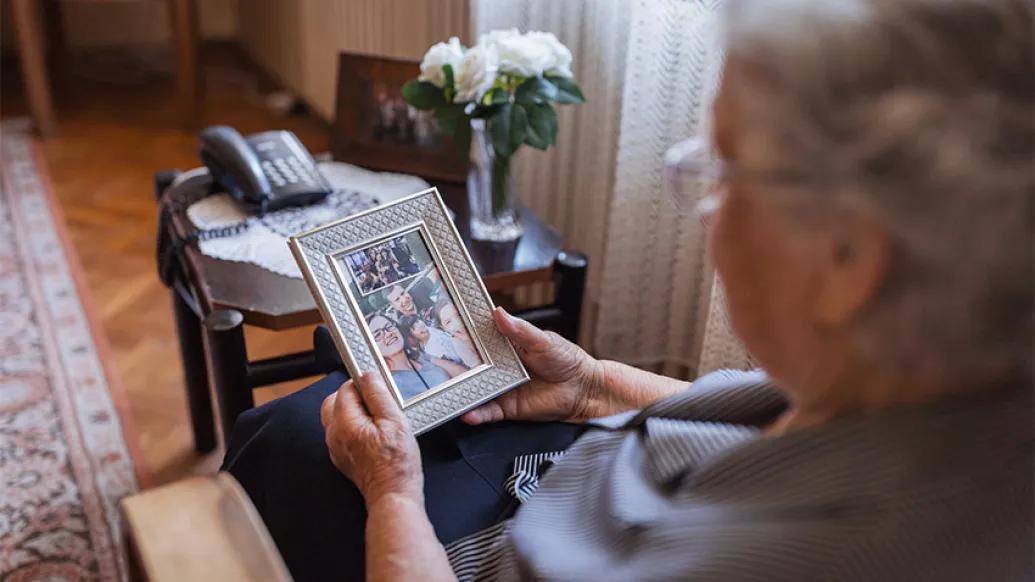
The first nationally representative study of cognitive impairment in more than 20 years has found that nearly one in 10 United States adults over age 65 have dementia.
The study, led by researchers from Columbia University and includes University of Michigan scientists, also found that another 22% have mild cognitive impairment. People with dementia and mild cognitive impairment are more likely to be older, have lower levels of education, and to be racialized as Black or Hispanic. Men and women have similar rates of dementia and mild cognitive impairment.
Although dementia and mild cognitive impairment are known to be common in the United States, accurate, up-to-date measures of their national prevalence were scarce.
"Because it's part of the nationally representative and long-running Health and Retirement Study, these data not only show the burden of dementia now, but will be used in the future to track the trends in dementia burden in the decades ahead," said study co-author Kenneth Langa, M.D., Ph.D., the Cyrus Sturgis Professor of Medicine in the U-M Medical School, a research professor in the Institute for Social Research, and a researcher at the Veterans Affairs Ann Arbor Healthcare System and the VA Center for Clinical Management Research.
"Following those trends will be especially important given the likely impact of COVID and other recent population health changes on the risk for dementia in the coming decades."
The study was published in the journal JAMA Neurology.
Dementia rate 35% among people in their 90s
The study was based on data on 3,500 individuals in the Harmonized Cognitive Assessment Protocol Project, also known as HCAP, part of U-M's nationally representative Health and Retirement Study, also referred to as HRS . Between 2016 and 2017, each participant completed a comprehensive set of neuropsychological tests and in-depth interviews, which were used to develop an algorithm for diagnosing dementia or mild cognitive impairment.
Rates of dementia and mild cognitive impairment rose sharply with age: three percent of people between 65 and 69 had dementia, rising to 35% for people aged 90 and over.
"Such data are critical for understanding the causes, costs, and consequences of dementia and mild cognitive impairment in the United States, and for informing policies aimed at reducing their impact on patients, families, and public programs," said Jennifer Manly, Ph.D., the study's lead author and professor of neuropsychology in neurology at the Gertrude H. Sergievsky Center and the Taub Institute for Research in Aging and Alzheimer's disease at Columbia University.
These data not only show the burden of dementia now, but will be used in the future to track the trends in dementia burden in the decades ahead.Kenneth Langa, M.D., Ph.D.
"With increasing longevity and the aging of the Baby Boom generation, cognitive impairment is projected to increase significantly over the next few decades, affecting individuals, families and programs that provide care and services for people with dementia."
Like Podcasts? Add the Michigan Medicine News Break on Spotify, Apple Podcasts or anywhere you listen to podcasts.
The economic impact of dementia, including unpaid family caregiving, is estimated to cost $257 billion per year in the United States and $800 billion worldwide.
Disparities in cognitive impairment are driven by exposure to structural and social inequalities
Unlike previous large studies of dementia in the United States, participants in the new study are representative of older adults, and the researchers could examine differences in the national prevalence of dementia and mild cognitive impairment by age, race and ethnicity, gender and education.
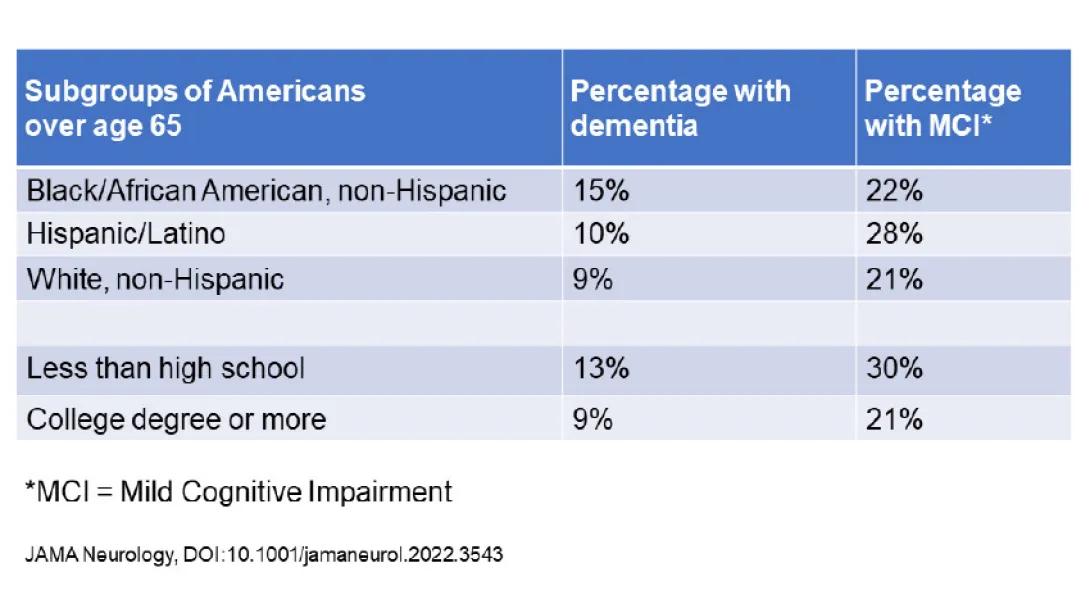
The data show a disproportionate burden of dementia among older adults who self-identified as Black or African American, of mild cognitive impairment among older adults who identify as Hispanic, and both categories of cognitive impairment among people who had fewer opportunities to obtain education.
David Weir, Ph.D., a research professor at Institution for Social Research's Survey Research Center, is the principal investigator of the Health and Retirement Study, and co-author of the current study.
"Large, diverse and nationally representative population studies are essential to identifying the kinds of disparities shown here," Weir said. "This study caps over a decade of development of methods to bring robust diagnostic tools out of the clinic and into the population."
Langa is the principal investigator of the Harmonized Cognitive Assessment Protocol Project study. Weir and Langa are co-principal investigators of the HCAP International Network. Langa, Weir and collaborators developed the project protocol prior to implementing it in the U.S. in 2016 as part of the HRS.
The project is also part of an international network of studies on dementia using the same study protocol to collect comparable data on dementia in 15 countries around the world. This will allow researchers to gauge and compare the burden of dementia in low-, middle- and high-income countries now and into the next decade.
Langa, Weir and co-author Deborah Levine, M.D., M.P.H., are members of the U-M Institute for Healthcare Policy and Innovation.
Other contributors include Richard Jones (Brown University Warren Alpert Medical School); Lindsay Ryan, Ryan McCammon and Steven Heeringa (University of Michigan); and Deborah Levine (University of Michigan and Veterans Affairs Center for Clinical Management Research, Ann Arbor).
The study was funded by grants from the National Institute on Aging (U01 AG009740 and U01 AG058499).
Paper cited: "Estimating the Prevalence of Dementia, Mild Cognitive Impairment in the US," JAMA Neurology. DOI: 10.1001/jamaneurol.2022.3543
This story originally appeared as a news release that was posted by Columbia University.

Health Lab
Explore thousands of health news & research stories by visiting the Health Lab homepage for more.
Media Contact

Public Relations
Department of Communication at Michigan Medicine
In This Story

Kenneth M Langa, MD, PhD
Professor
Stay Informed
Want top health & research news weekly? Sign up for Health Lab’s newsletters today!
Featured News & Stories

Wide variation seen in family caregiver availability for people with dementia
Stress, Reward and a Few Surprises Found in Poll of Those Who Take Care of Loved Ones with Dementia

Top 7 tips for choosing Medicare prescription drug coverage for 2027

Many older adults make Medicare decisions quickly and most don’t change plans, poll finds

What’s the latest on 7-OH and kratom availability and addiction care?