How Does Barbie Wear Those Heels All Day? The Answer: Plastic Feet
The Barbie feet challenge isn’t worth your Ken-ergy
A social media trend inspired by the new film can cause pain and injuries if done for too long.
Transcript
Host:
Welcome to Health Lab, your destination for news and stories about the future of healthcare. Today: How Does Barbie Wear Those Heels All Day? The Answer: Plastic Feet.
The Barbie feet challenge isn’t worth your Ken-ergy.
A social media trend inspired by the new film can cause pain and injuries if done for too long.
Life in plastic isn’t always fantastic, especially when it comes to the health of your feet.
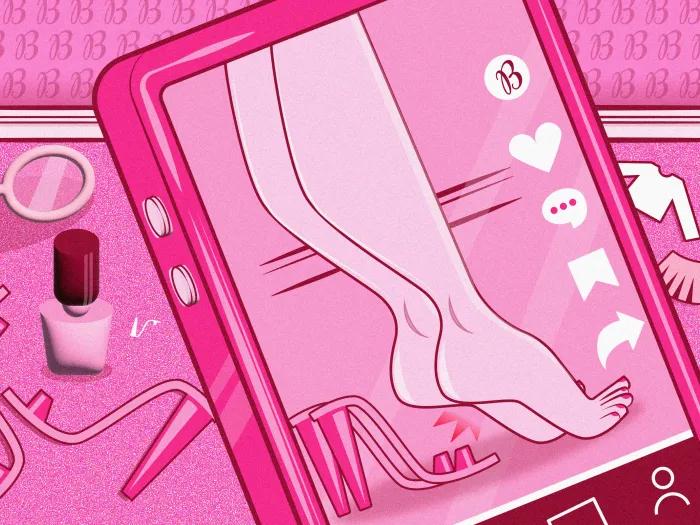
In now viral clips of the upcoming Barbie movie, the film’s star Margot Robbie is seen stepping out of her shiny high heels and standing nearly tiptoe, maintaining the classic arched-foot look of a real-life Barbie doll.
Robbie has said the feet in the clip are in fact her own, and the shot was accomplished in about eight takes. The crew used double-sided tape to keep the shoes secured to the ground, and Robbie held on to a bar for support while filming.
The clip has inspired TikTok users to make their own attempts at mimicking Robbie’s Barbie feet, dubbing it the “Barbie Feet Challenge.”
While making a quick attempt at the trend is fairly safe, podiatrist Sari Priesand, DPM, advises against walking like a Barbie for too long.
“I think it’s okay to try this trend once to see if you can achieve it. But if you're repeatedly trying to do it or trying to walk in that way, it's just not natural,” Priesand said. “Doing this for extended periods of time can be dangerous and cause injuries.”
Maintaining a Barbie-like foot stride for multiple steps or for too long can injure both the ankle and different parts of the feet in various ways, Priesand says.
She notes that most TikTokers doing the Barbie feet trend don’t have their shoes secured or a support bar the way Robbie did during filming, which places all the pressure on the forefoot. This can result in a condition called Metatarsalgia, an injury to the ball of the foot or inflammation between the metatarsal bones.
The Barbie feet position also puts the ankle at an increased incline, rendering both the ankle and the hind foot unstable - that can predispose people to sprains, strains, tendonitis, fractures, and more.
Another risk of prolonged or too many Barbie feet attempts is injuries to the Achilles tendon, which runs from the back of the heel and across the ankle joint. Stretching the ankle in an abnormal position like Barbie feet can cause equinus, a condition which shortens the Achilles tendon, resulting in a lot of tightness and pain.
In addition to her arched feet, Barbie’s usual choice of shoes are not beneficial for humans. Sky-high heels are not the healthiest type of shoe for our feet, Priesand says, and wearing them comes with risks similar to those of the Barbie Feet Challenge.
High heeled shoes can put extra pressure on the forefoot, stress the Achilles tendon, cause blisters from rubbing against the skin, increase callus development, and create more pain for people who have bunions.
Many patients have big toe joint arthritis, making it challenging for the big toe joint to bend in a way that would fit comfortably in heels. Even wearing gel inserts or products that claim to make heels more comfortable can reduce the amount of space inside the shoe, cramping the feet up even more, Priesand says.
“If the shoe is not comfortable to begin with, it's probably not going to be a good choice in terms of having to wear it for working, commuting, standing for long periods of time, or other everyday activities,” Priesand said.
Most people can easily switch to a different shoe if they’re feeling uncomfortable, but Priesand notes that some patients with diabetes mellitus or those with neurological issues can run into more problems if they don’t have much feeling in their feet.
Those who can’t sense the discomfort are more likely to get blisters, open wounds, sores, or have other issues from the shoes. In any case, it’s best to keep one’s high-heel wearing habits to a minimum, Priesand says.
Recovery for Barbie Feet or high-heel related injuries is dependent on the severity, Priesand says. Simple injuries like inflammation, can typically be treated with anti-inflammatories, resting, and wearing more appropriate shoes for a week or two. Epsom salt or ice baths and even over the counter pain medications can also help with mild pain caused by the Barbie Feet Challenge.
But anything more serious, like fractures or large-scale sprains, can take much longer to heal and should require medical attention.
The bottom line?
“Leave the Barbie feet to the Barbies,” Priesand says.
For more on this story and others like it, visit michiganmedicine.org/health-lab. Health Lab is a part of the Michigan Medicine Podcast Network, and is produced by the Michigan Medicine Department of Communication. You can subscribe to Health Lab wherever you get your podcasts.

Health Lab Podcast
Listen to more Health Lab podcasts - a part of the Michigan Medicine Podcast Network.
Related
The Barbie feet challenge isn’t worth your Ken-ergy
Featured News & Stories

Is the United States Lagging Behind Europe in Memory Improvement?

AI, Well-Being and the Human Connection

The Care Ecosystem: Supporting People Living with Dementia and Their Families

Beyond the White Coat: The Med Student Tradition Behind Michigan’s Smoker

Caregiver Resources: Reduce the Risk of Burnout