The Future of Cell and Gene Therapies
An interview with Dr. Monalisa Ghosh
8:00 AM
On this episode of The Fundamentals, we talked to physician scientist, Dr. Monalisa Ghosh, assistant professor of medical oncology and internal medicine, who is looking to expand CAR-T's application from cancer to autoimmune disorders and beyond.
Transcript
Kelly Malcom:
Welcome to The Fundamentals, a podcast where we explore biomedical research here at Michigan Medicine. Research is fundamental to University of Michigan's mission to improve the world. On each episode, we'll meet the people behind the research, learn more about their fields and the fundamental questions they are trying to answer.
I'm Kelly Malcom, a science writer and communication strategist for the University of Michigan Medical School. This season we'll start by explaining a little bit of the history behind the questions our experts are asking and get a glimpse into the future of healthcare.
Chimeric antigen receptor engineered T-cell therapy. It's a mouthful term that represents new hope for many people with cancer and more recently autoimmune disorders like scleroderma, which we'll hear more about later in this episode. CAR-T therapy, as it's more commonly known, is a form of immunotherapy wherein a patient's own immune system is recruited to fight tumors or out of control cells. This concept has been around for a while, as early as the 1860s, when German physicians notice tumors shrinking in patients with an unrelated skin disease. Over the ensuing decades, scientists have sought to harness the power of different parts of the immune system. Those efforts were finally realized when the first CAR-T cell therapy was approved by the FDA on August 30th, 2017 for the treatment of pediatric and young adult acute lymphoblastic leukemia.
On this episode of The Fundamentals, we talked to physician scientist, Dr. Monalisa Ghosh, assistant professor of medical oncology and internal medicine, who is looking to expand CAR-T's application from cancer to autoimmune disorders and beyond.
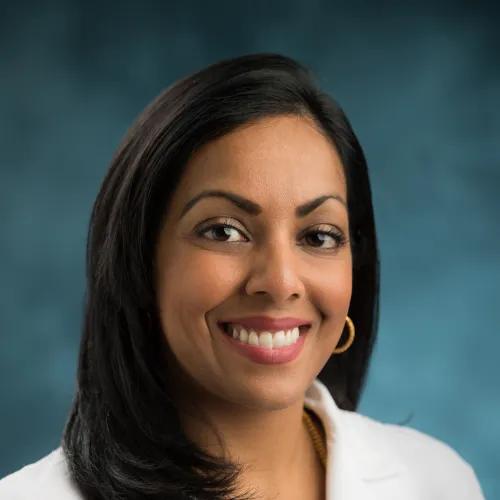
We're joined today by Dr. Monalisa Ghosh. Dr. Ghosh is a clinical associate professor of internal medicine and she's going to talk to us a little bit about the future of cell and gene therapies.
Welcome, Dr. Ghosh.
Dr. Monalisa Ghosh:
Thank you for having me.
Kelly Malcom:
Why don't we start first a little bit about you? How did you get into oncology?
Dr. Monalisa Ghosh:
Well, I have always had an interest in oncology. From a very early age, I knew I wanted to be a doctor. I wanted to go into medicine. And as I went through my training, I became very interested in immunology, which immunology is actually a very, very important part of oncology, especially the treatment of oncology. And more and more recent treatments that have been developed are immunology-focused. So that's something that I had an early interest in and I knew actually that I wanted to do bone marrow transplant from a very early-
Kelly Malcom:
Oh, wow.
Dr. Monalisa Ghosh:
... period of my training. So I was one of those strange people that wanted to go into bone marrow transplant, but also, most importantly because it's just the most rewarding specialty. I can't imagine doing anything else. The ability to actually potentially cure certain cancers is amazing. I love working with people who are going through this very difficult time in their lives and potentially curing their disease or at least giving them more time with their loved ones.
Kelly Malcom:
Yeah. Yeah, absolutely. I think most people are familiar with bone marrow transplants and they've been around for a really long time. So the concept behind that is what?
Dr. Monalisa Ghosh:
The concept behind a bone marrow transplant, that actually started many, many years ago. The first bone marrow transplants were done in the wake of the atomic bomb actually because after significant radiation, doctors observed that people, they became what we call aplastic. They lost all of their blood counts, their bone marrow. And so they tried to do transplants in people to simply replace the bone marrow, to get bone marrow from others, even from other animals and try to transplant into humans. It didn't go well most of the time, of course, but that was where the concept was born. And over the years, in the 1960s, bone marrow transplant really moved into the medical realm a bit more, and especially for cancer, for blood cancers, because the idea was to replace a dysfunctional bone marrow from which blood cancers arise with a more functional bone marrow from a healthy individual.
As we progress through bone marrow transplant in the '80s and '90s, what we learned is that it's not just replacing the bone marrow itself that is curing the cancer, but it's actually replacing the immune system. So the immune system helps to fight off the cancer. The T cells in the immune system especially are very important in killing cancer cells. They can physically kill cancer cells. And we learned that using that component of the immune system, it's what's really driving the curative potential of the bone marrow transplant.
Kelly Malcom:
Okay. So really, maybe the cellular therapy is sort of phase two of a bone marrow transplant?
Dr. Monalisa Ghosh:
Exactly.
Kelly Malcom:
Harnessing that power?
Dr. Monalisa Ghosh:
It did. Yeah. Cellular therapy came from bone marrow translation. That's why you find that most cellular therapy physicians or bone marrow transplant physicians. All of the research, the work that was done in this area was done by people who were researching bone marrow transplant. And so once we recognized that T cells in the immune system were, not necessarily the most important part, but a huge and important component of what's going on in the bone marrow transplant. From there, the T cell biology and manipulation of T cells really took off as a field.
Kelly Malcom:
Okay. Cellular therapy is manipulating T cells, manipulating your own immune system to go after cancer cells.
Dr. Monalisa Ghosh:
Correct.
Kelly Malcom:
Is that correct?
Dr. Monalisa Ghosh:
Yes.
Kelly Malcom:
Okay. Is it related to gene therapy and how?
Dr. Monalisa Ghosh:
That's a bit of a controversial question because people are still debating what is gene therapy, what is cell therapy? In the simplest terms, gene therapy is transferring of usually DNA or RNA material into the patient and using that to treat a disease. Cell therapy actually uses a physical cell. So a T cell is put into somebody's body or some other type of cell is put into the body. However, genetic engineering does go into creating those T cells that we are putting into people's body. So gene therapy, cell therapy really do overlap. There are distinct treatments, but there are areas where cell therapies are gene therapies, and some gene therapies can only be done as cell therapies.
Kelly Malcom:
Got it. Okay. So they really do overlap?
Dr. Monalisa Ghosh:
Yes, they do.
Kelly Malcom:
Okay. It sounds like maybe we're moving in the direction of primarily focusing on cell therapy. Is that true? Has it really changed how you treat cancer, or I guess how far away are we from moving completely to cellular therapy?
Dr. Monalisa Ghosh:
Sure. The standard of care still, for most diseases, is chemotherapy and many other immune therapies that are not cell-based, so antibodies, things that are called bispecific antibodies, which actually interact with T cells and with the cancer. Cell therapy has become very, very prominent mostly in blood cancers and hematologic malignancies. So leukemias, lymphomas, multiple myeloma, these are all cancers that come from immune cells or blood cells. The reason that that happened is because, again, T-cell treatments mostly came from the bone marrow transplant field and that's what we do. We treat lymphoma, leukemia, myeloma mostly. Those cancers also, they do have a solid component, but we think of cancers as solid and liquid cancers, and the blood cancers are more liquid cancers. Solid cancers behave a little bit differently. Solid cancers have giant tumors that have vascular systems. They have a complicated immune system within themselves. And so that has been a little more difficult to get cells into that environment to actually kill those tumors. So we have found that so far the blood cancers are more amenable to T-cell therapy.
Within the blood cancer realm in, for instance, childhood acute lymphoblastic leukemia, which is the first disease for which CAR T-cell therapy was FDA-approved and in diffuse large B-cell lymphoma, which was the first lymphoma that CAR T-cell therapy was FDA-approved, it's been completely field changing and we are curing diseases that we never cured before. So there are patients that I treated where the conversation was hospice versus trying a CAR T-cell therapy trial and there are people who went on CAR T-cell therapy and are now cured.
Kelly Malcom:
Wow.
Dr. Monalisa Ghosh:
So it's been revolutionary. It's been amazing in blood cancers. We're hoping to see that in solid cancers as well. There just needs to probably be a little more tweaking and maybe some combination therapies. So in blood cancers, T-cell therapy is a huge component of the treatment. Right now, FDA approvals are first, second line therapy. So usually people get chemo or what we call chemo immunotherapy for the first line of treatment. If they relapse or if they are not responding to that treatment, then they get CAR T-cell therapy. But we do currently have some large trials ongoing actually looking at CAR T-cell therapy as the very first treatment. We have a trial at University of Michigan right now that's looking at CAR T-cell therapy versus chemo in a randomized clinical trial, and we're hoping that in certain lymphomas we can do CAR T-cell therapy and cure the disease without even giving any chemotherapy.
Kelly Malcom:
CAR T-cell therapy is used primarily for especially blood cancers, but I think it's also used for other conditions.
Dr. Monalisa Ghosh:
That's correct. So we are actually, and University of Michigan is actually on the forefront of this, but we are moving into autoimmune diseases, and that's because the CAR T-cell therapies that are available commercially, the ones that are FDA-approved, most of them target either something called CD19. So CAR T cells, one of the reasons that they're unique also is that they target a certain antigen or a certain surface protein structure on the lymphoma or myeloma or leukemia cell. So they're more targeted. They're not just going in and attacking all the different tissues in the body. They're going in and specifically attacking the cancer because they can recognize the cancer.
Right now, the targets that we use are CD19. CD stands for cluster of differentiation. It's a protein structure that is present on the surface of B cells, and B cells are the ones that are part of the immune system that produce antibodies, which they can protect you against infection, the antibodies. But in autoimmune disease, the antibodies are what drive the autoimmune disease. So in autoimmune disease, bodies are producing antibodies against the body's own tissue and organs and then that causes organ damage, tissue damage. That causes things like scleroderma, lupus, myositis, multiple sclerosis. All of these are autoimmune diseases. The idea behind the CAR T cells is that we are administering CAR T cells that will kill off the B cells that are producing those autoreactive antibodies.
We have multiple trials going on right now. None of them are FDA-approved for the indication of autoimmune disease, but we have trials in systemic sclerosis or scleroderma. We have upcoming trials in lupus. We have a trial open in multiple sclerosis. We have inflammatory myositis. We have trials in vasculitis. So all these different autoimmune diseases. And we've seen some pretty remarkable results so far in the patients we've treated. So it's very exciting.
We don't know if we're going to cure any of these diseases that's going to take several years of clinical follow up to make that determination, but right now, what we know is that we are seeing some durable responses. And the great thing about it is people can go off of their meds for hopefully a long time, and that's huge in autoimmune disease where people are being treated with immune suppressing medications for their entire lives. And so to be able to come off medications for even a few years is really exciting.
Kelly Malcom:
What would you say differentiates Michigan medicine as being like a good place to hold trials like that?
Dr. Monalisa Ghosh:
I think that there are multiple reasons. One is that we have lots of people, lots of patients who are coming for various conditions and coming to be treated at Michigan medicine because of the expertise that we have here.
For instance, in the autoimmune realm, I have to give a shout-out to our rheumatology colleagues because they've been absolutely fantastic. In medicine, a lot of times, we find ourselves siloed and we don't necessarily... Your specialists become very hyper specialized in the area that they're in and difficult to collaborate across specialties and collaborate to maintain smooth, seamless clinical care for our patients. But we've had a lot of excitement within our rheumatology group and I work very closely with my colleagues there and we've built what we feel is an innovative collaboration platform through which we can really move these trials through smoothly because I'm not a rheumatologist. I don't know how to treat a lupus patient.
I don't know how to treat a scleroderma patient, but I know how to do the CAR T-cell therapy. And so we have a collaboration where we are switching roles and I manage certain part of the therapy and then the rheumatologist manages the other part and it's not about who is doing what necessarily it's not about ego and all those kind of things. We work very well together and we're doing it for our patients.
So because of that collaboration that exists at Michigan Medicine, I think that we're a great place to do these kind of innovative collaborative trials.
Kelly Malcom:
What drew you to University of Michigan originally? I didn't even ask you that?
Dr. Monalisa Ghosh:
Yeah. I've been here now since 2017 and I was at the National Institutes of Health before this at the National Cancer Institute and I did a lot of work there on T-cell therapy and I did lab work physically in the lab, mouse models, all those kind of things, which bless the hearts of people who do that, I cannot do that anymore. I wanted to do clinical investigation. And so in 2017, CAR T-cell therapy and adoptive T-cell therapy was something that University of Michigan had been doing on a smaller scale already because it was still in its infancy and we really needed here to start the cell therapy program and to really establish it as a program. So that's what I came here, to do to really lead the clinical program, establish the cell therapy program. And Michigan has a great reputation, of course, just University of Michigan, the medical school in general, but also the bone marrow transplant program and our prior director, Dr. Reddy, was very, very interested in moving forward these areas of investigation and that's why I ended up coming here.
Kelly Malcom:
Great. In your opinion, what are some of the necessary steps to really making inroads into making this more widespread cellular therapies or gene therapies?
Dr. Monalisa Ghosh:
Right. A few things that we're actually working on right now. The main thing is that institutions have to invest in this therapy and Michigan is working on. That and there are institutions that are frankly way ahead of us in the research arena because they have invested early. University of Pennsylvania, for example, is a great example. That's where really some of the earliest T-cell therapies started. Dr. Carl June there is the grandfather of cellular therapy and because of that work, led to a lot of focus there, and so they started early. I'm not saying that we are not a big player. We are. We treat lots of patients. Our patient volume more than doubled in the past year and we have lots of trials and a lot of clinical innovation, but really does take from an institutional level a commitment to doing this, and Michigan is committing to it. They did this recently by establishing a cell and gene therapy official center.
And so the Cell and Gene Therapy Center program is a strategic initiative that we actually went to the institution, to our leaders, and asked them, "Could we please combine with our gene therapy colleagues who are also doing these unique treatments where they're treating unique diseases where only one patient has been diagnosed ever potentially?" And so they have a lot of needs that are very similar to what we do. And so we wanted to combine our efforts and our resources. And after about a year of discussing this and trying to figure out what the best way would be, we did finally get to that point where the institution is putting this determined strategic effort into it.
And that's what we need because to do cellular therapy, it's a very complicated, complex treatment. We have to collect cells from the patient. They have to be manufactured into CAR T cells. Then we have to collaborate with the other oncologists that are taking care of the patients. For instance, if they come from an external institution or practice. And then when we treat them, a lot of the treatment occurs in the hospital. And hospitals are crowded, hospitals, beds are a priority right now. And so most of our treatment is occurring inpatient, but one of our large initiatives also is to bring this therapy outpatient. We have done some treatments outpatient in the clinic where patients don't have to be admitted to the hospital, but we are working on expanding that significantly.
Our goal in the next few years is to do all of these treatments outpatient and that would involve local housing, et cetera, because there are significant side effects that can happen from these treatments and only certain treatment centers in the state can actually do cell therapy. You have to be certified. You have to be audited. There are lots of regulatory hurdles. And we are probably next to Karmanos. We are the largest volume cell therapy center right now. I think Karmanos is about the same as us or maybe do a few less, but we're very similar in the way we operate.
So patients are coming from seven, eight hours away to get treated to get this highly specialized treatment. It's very complex. It requires a lot of coordination, a lot of staff. So that's what an institution needs is that investment, the commitment, staff, we need to hire more staff, and then the research infrastructure. We need the innovation happening in the labs, the translational work. We need the ability to actually produce our own CAR T cells. Right now, we use products that are produced by pharmaceutical companies because we don't have a physical facility where we can produce some of these on our own. That's another part of our initiative is to build up our own manufacturing facility where we can more quickly manufacture cells and for much cheaper. So all of these things are part of our future plans and what it takes to be able to administer cell therapies.
Kelly Malcom:
Right. Okay. What are some of the therapeutics on the horizon that you are most excited about?
Dr. Monalisa Ghosh:
There are lots of different cell therapies that are on the horizon. The cell therapies we have right now, they're great, but they do have side effects. There are newer cell therapies being developed that have fewer side effects. The targets are modified the way that the cells behave are modified a little bit more. We also are working with off the shelf products as we call them. Right now, most CAR T-cell products take anywhere from three to six weeks to manufacture. So someone with an actively progressing or growing cancer is waiting during that time for the cells to be manufactured. They do get chemotherapy and other treatments in between to try to keep things under control, but hopefully we can avoid doing that by getting access to cells quicker. And so off the shelf cells are what we call allogeneic. They're from a donor, and so donor T cells that are already manufactured that could be available to administer.
They also have their negatives because those are cells that come from someone else. So potentially, the body's immune system could destroy them. You can get something called graft versus host disease, which we see in bone marrow transplant when we give people cells from others, but there are benefits to it as well. So that's one technology.
Also, the technology of using different types of cells or cells called natural killer cells, which those are in development. We've had some trials with those. Those are also off the shelf and they don't have the side effects that the T cells have.
There's also gene editing. There are products now available for sickle cell and for beta thalassemia and things like that where they use the... A lot of people have heard of CRISPR, using the gene editing. So those type of platforms and technologies are being leveraged to create novel cell therapies.
Kelly Malcom:
As you were describing waiting for the cells to be made, I have like a picture of Willy Wonka or them making the cells in a factory. What do you mean making the cells?
Dr. Monalisa Ghosh:
Yeah. So making the cells, what does that mean? That means that when we extract T cells from someone, we do it through a process called apheresis, which it's kind of similar to dialysis. It's an outpatient procedure. We pull out blood and extract the T cells from the blood and return the blood back into the body. Takes a few hours to do that. We send those T cells to the manufacturing company. What they do is they then genetically engineer those T cells. And recall that I mentioned the specific antigen that the T cells are created to target. That is what they're doing when they're making the T cells. So they take pieces of genetic material, usually DNA or RNA that has the sequence, the genetic sequence for what's called the chimeric antigen receptor. And so that is put onto a viral vector usually, and then that viral vector and the cells are cultured together. Then the viral vector takes that genetic material into the cells, inserts it into the T cells and that instructs the T cells to produce on its surface, this chimeric antigen receptor, the CAR, which then is specifically targeted to a structure on the cancer cell.
So that process can take several weeks, getting the vector, genetically engineering the cells, but then what actually takes the longest is having those cells multiply. So those cells are multiplying, you're expanding them so that you create a huge supply of cells. So it's often five to 10 fold number of cells they're sending back to us than what we sent in.
Kelly Malcom:
I see.
Dr. Monalisa Ghosh:
And then most of the products are frozen and then shipped to us. When we administer the cells, we do have to do a couple of days of fairly low dose chemotherapy to prepare the body and then we infuse the T cells into the veins.
Kelly Malcom:
And ideally, all of that would happen here and it would cut down on the time?
Dr. Monalisa Ghosh:
Yes, yes.
Kelly Malcom:
Okay. Was there anyone you wanted to maybe shout out specifically as your collaborators? I know you said that you work interdisciplinary to make this happen. Is there anyone?
Dr. Monalisa Ghosh:
Yeah. We do. Cell therapy especially, it's an interdisciplinary specialty even before we started moving out of oncology. So within oncology, of course our bone marrow transplant group leads cell therapy, but we also work with the cell processing lab, which is housed in pathology. They are the ones that... Our blood bank team does the apheresis process, and then the cell processing group does the actual processing of the cells before they get shipped out. And then when the cells come back in, doing the actual thawing and bringing the cells up to the patient. So they do a lot there. Our T cell products actually do not move through pharmacy at all, but we need pharmacies help as well. They help us with the chemo and with some of the drugs and medications that we use to treat side effects.
Other collaborators right now, I will mention our rheumatology colleagues. I work very closely with Dr. Dinesh Khanna, who is really the premier scleroderma expert in the world. And so he has, I believe, the largest number of scleroderma patients in the world in his clinic. And they come from everywhere. So we've treated patients from Canada, from Florida, they come from all over the country to be treated here. So Dr. Khanna has been a great advocate and really has helped us pioneer the way that we collaborate.
We're working with several other rheumatologists in the division. Also, we work with various translational researchers, Dr. Manish Tawari. His lab has helped us with doing what we call point of care testing in CAR T-cell therapy where we're using various methods of monitoring vital signs such as temperature patches or heart rate and then different inflammatory markers in the blood to predict who's going to get side effects post-CAR T and when that will happen. So a lot of very exciting work has come from there. Dr. Sung Choi in pediatric BMT, her group as well has helped us with this.
So we're working with a whole lot of wonderful, amazing, brilliant people across the institution, and we collaborate across institutions as well. We do collaborate with our colleagues all over the country in various clinical trial networks and T-cell consortiums as we call them to put out lots of exciting data.
Kelly Malcom:
Great. We will probably end up having patients or caregivers listen to this episode. What would you tell them if they are looking for a more advanced treatment of this type? How would they go about finding that?
Dr. Monalisa Ghosh:
The best way is to go to the Michigan Medicine website. There are links there to bone marrow transplant cell therapy program. They can contact us directly. They can even just call the M line or the cancer answer line as it's called. If they have a cancer, if they have an autoimmune disease, there are different ways to get in contact with us that are on the Michigan medicine website, or they can ask their doctor to just place a referral, or they can just, what a lot of people do is directly call me. I get calls from doctors all across the state, "Hey, I have a patient who I think would be eligible for CAR T-cell therapy."
Within the blood cancer realm, pretty much... When we first started this in 2017, 2018, when we were getting the first FDA approvals, not many people knew when to refer people or what conditions to refer people for. Now there has been a lot of push. And I have to say actually the pharmaceutical companies, I'm not promoting them or anything, but they have gone out and done a lot of education in the community, of course, to let people know when to refer. We have done a lot of education.
We recently held our cell therapy symposium, our first annual symposium where we invited providers from all across the state and our catchment area to come and learn about the innovations in cell therapy and when to refer their patients. But honestly, I think that most hematologists, oncologists at this point know when to refer patients. I think most of the questions are with autoimmune disease and where there are trials. A lot of people just look on clinicaltrials.gov, which is a great resource and they can search for University of Michigan and what trials we have open.
I could provide some numbers as well for people to contact if we can post that somewhere for our research coordinators and they can help field some of the calls. I get calls. We all get calls from lots of people who are excited about this.
Kelly Malcom:
I mean, it's exciting.
Dr. Monalisa Ghosh:
Yeah, it's very exciting. I know Dr. Khanna and I have done many presentations at our various advocacy groups we work with, the National Scleroderma Foundation. We've gone to the American College of Rheumatology meetings, et cetera. And so we're spreading the word as much as we can and people can get in touch with us in various ways.
Kelly Malcom:
Thank you. All of this is super inspiring and exciting to me. I'm hoping that we do more investment here and we can make those cells onsite and just help more patients, and it's been great to talk with you about this work.
Dr. Monalisa Ghosh:
Well, thank you so much. It's my pleasure being here and I appreciate what you're doing here here in getting the word out about these different therapies. Thank you.
Kelly Malcom:
The Fundamentals is produced by the Michigan Medicine Department of Communication in partnership with the University of Michigan Medical School. Find us and subscribe wherever you listen to podcasts.
For more information:
The Fundamentals
Listen to more The Fundamentals podcasts - a part of the Michigan Medicine Podcast Network.
In This Story
Monalisa Ghosh
Clinical Associate Professor
Featured News & Stories
Gene editing is coming for common diseases. Are we ready?

A metabolic “switch” that could help reset scar-producing cells in scleroderma
Pain, psychological factors and physical function closely linked in people with systemic sclerosis
Rheumatologist finds contentment and community through family farm
U-M alumni return from Central Asia to seek treatment for their child at Mott