NOTE: This podcast first aired in 2018. As of 2026, CAR T-cell Therapy is used for lymphoma, ALL, Multiple Myeloma (refractory and metastatic). To learn more about this treatment, please visit our CAR T-cell Therapy webpage.
View the transcript
Using one's cells to attack and treat cancer continues to grow. Cellular therapy and in particular CAR T-cell therapy offers new opportunities to adult and pediatric patients with blood cancers like leukemia and lymphoma. Dr. Monalisa Ghosh, Rogel Cancer Center oncologist talks about these treatments and and the future of cellular therapy.
Transcript
Scott Redding:
Welcome to the Three P's of Cancer podcast, where we'll discuss prevention, preparedness, and progress in cancer treatments and research. Brought to you by the University of Michigan Rogel Cancer Center.
I'm Scott Redding. We're here with Michigan medicine oncologist, Mona Lisa Ghosh, to talk about CAR T-cell and cellular therapy options for blood cancer patients.
Dr. Ghosh is part of the Rogel Cancer Center's cellular therapy program, which is currently the only place in Michigan offering all FDA approved CAR T-cell therapy options for adult and pediatric leukemia and lymphoma patients.
Welcome, Mona Lisa.
DR. MONA LISA GHOSH:
SCOTT REDDING:
Let's just dive in. What is cellular therapy, and in particular CAR T-cell?
DR. MONA LISA GHOSH:
So cellular therapy refers to, in general, using the body's own cells to treat a disease. So in this case, we are talking specifically about Treating cancers, and we're talking about using something called CAR T-cell therapy.
CAR T-cell therapy is a specific type of cellular therapy. The way that it works is we take the patient's immune cells out of their bodies, and then we modify those cells so that they can target a specific marker on a tumor cell. This way, we are training these patient's cells to target that specific tumor.
SCOTT REDDING:
Could you explain a little bit more what you mean By really utilizing the cells to target the specific tumor?
DR. MONA LISA GHOSH:
So normally, there are several types of immune cells that the body produces that fight against cancer.
And what we're doing with CAR T-cells is we're specifically directing these cells to go and attack the tumor cells. So by making them, or arming them specifically with a marker that can target another marker on the tumor cells, we can give these cells back to the patient, and essentially, we've trained them to specifically hone in on the cancer cells. That way, these cells, these CAR T-cells, can go in directly, engage with the tumor cells, and then kill those tumor cells.
SCOTT REDDING:
So how are these markers identified?
DR. MONA LISA GHOSH:
So the markers that we identify are specific markers on the surface of tumor cells, and each type of tumor has different markers, different proteins, structures on the surface of their cells.
So right now, a lot of the focus has been on the marker CD19. This is a protein structure that is expressed on cells of acute lymphoblastic leukemia or diffuse large B-cell lymphoma.
SCOTT REDDING:
So this is basically a game changer for cancer treatments, or in particular, blood cancer treatments?
DR. MONA LISA GHOSH:
Yes, it is being considered a game changer, and that's because this therapy does not rely on chemotherapy. So far, most of the basis of our standard of care for these types of cancers has been really heavy doses of chemotherapy that can cause a lot of side effects and are more general and not as targeted as this particular therapy.
So here, we are using the patient's own body and the patient's own immune system to target the cancer.
SCOTT REDDING:
Can you explain a little bit more about how you're utilizing this? Is there a special process? Is there, if it's not chemotherapy, how do I get my cells to attack my tumor if I have cancer?
DR. MONA LISA GHOSH:
So right now, there are a couple of commercial products that are available. There were two cellular therapies that have been approved by the FDA for various indications. Right now, we are able to treat a specific type of leukemia called B-cell ALL. We are also able to treat diffuse large B-cell lymphoma.
And those are the two products that we have tested extensively in clinical trials, and those are the two that are available to patients. There are other products that are available in the clinical trial setting, but these two are available commercially.
So what we do is we determine, based on the patient's previous treatments and characteristics of the disease, whether they are eligible for these particular cellular therapies.
Once we determine that the patient is eligible, we then collect their own immune cells. We send the cells off to the pharmaceutical companies that manufacture these products.
They manufacture the cells. It takes a few weeks.We get the cells back, and then we infuse them into our patients to treat their cancer.
SCOTT REDDING:
So if I'm a patient and you take my cells out, I have to wait a few weeks before it comes back, and what do I do during that time? As a patient, what would I expect during this whole process?
DR. MONA LISA GHOSH:
Sure, so that is a very good question. You do have to wait a few weeks, because it does take time to manufacture the cells. They have to be trained to target the tumors, and they have to divide, and we have to produce multiple cells. So that does take a few weeks. It can take anywhere from three to four weeks.
During that time, you can get other treatments. So if you need to get any other chemotherapy or other drugs that we feel would work for your disease in order to control the disease while you're waiting, you can get those therapies, and then we'll come back and give you the cellular therapy afterward.
SCOTT REDDING:
What kind of side effects are there? I know with other cancer treatments that usually there's some sort of side effects or other issues long-term that could affect me as a patient. What are some of the side effects patients could expect?
DR. MONA LISA GHOSH:
So the side effects for CAR T-cell therapy is different than the side effects that you may have had with chemotherapy. The reason that it's different is we are using the immune system and you can have what we call immune reactions. So one of the most common side effects to CAR T-cell therapy is something called cytokine release syndrome, also more commonly abbreviated as CRS.
This is basically due to activation of your immune system once you receive the CAR T-cell infusion. And most of the time patients describe feeling as if they have a severe infection or they have the flu. So this can present with fevers, elevated heart rate, it can affect the blood pressure.
There are multiple different effects you can feel during this process. This usually occurs within the first few weeks after cellular therapy infusion, after the CAR T-cell therapy infusion, and typically resolves, we do have medicines we can use to treat it.
There is another side effect called neurologic toxicity and this is where the brain can be affected temporarily after getting the CAR T-cell infusion. This did not occur in as many patients as cytokine release syndrome did, but it can most commonly lead to headache, perhaps some confusion during this process, maybe some effect on speech and ability to speak. But usually again, this is temporary, we have ways to treat it and the majority of patients recover within a few days.
SCOTT REDDING:
Although the process is a little bit different, it sounds very similar to BMT or a bone marrow transplant. Is it the same kind of process or is it similar? How do these differ because it's for the same type of patients?
DR. MONA LISA GHOSH:
So CAR T-cell therapy did actually sort of evolve out of bone marrow transplant. Bone marrow transplant is also considered a cellular therapy. We are using the immune system to fix a cancer.
So typically in bone marrow transplant, when we're talking about the type of transplant that you get from a donor, we are transplanting someone with somebody else's cells, somebody else's stem cells that are healthy, someone else who has a healthy immune system. We do that to fix the patient's immune system so that the new immune system can help fight off the cancer.
So there are a lot of similarities in bone marrow transplant and CAR T-cell and that we're utilizing the immune system. However, CAR T-cell therapy is more specific to the particular markers on the cancer cells.
So we are targeting a particular cancer cell marker rather than trying to fix the entire immune system. Therefore, the side effects are different.
With a bone marrow transplant, there's the risk of something called graft-versus-host disease. That's not the case in CAR T-cell therapy because we are not using another person's cells. We are using the patient's own cells and giving them back to them. Targeting more of that specific area.
SCOTT REDDING:
Do you see this CAR T-cell or cellular therapies be in a way that down the road could potentially replace some of the normal ways of treatment right now like chemotherapy or BMT?
DR. MONA LISA GHOSH:
I think it's still too early in the development of CAR T-cell therapy to say that. I honestly do not think it will completely replace other modalities of treatments such as bone marrow transplant and chemotherapy.
Each of those therapies has a specific role and as of right now, CAR T-cell therapy has a very specific role. I think it will fall into the spectrum of treatment and I think eventually treatment for blood disorders and also other types of cancers will be using chemotherapy, CAR T-cells and bone marrow transplant.
Not everyone is gonna be eligible for CAR T-cell therapy. It's not gonna be something that will be used for every single type of cancer or every single patient. So I think it's a good weapon to have in our armamentarium, but I don't think that it's going to be eventually replacing standard therapy.
SCOTT REDDING:
So with that being said, is there a particular place that is better suited to offer this kind of treatment for a patient?
DR. MONA LISA GHOSH:
Well as of right now, this therapy is only available at select centers. It's only available in centers that have experience with cellular therapy which translates to centers that have experience with bone marrow transplant.
As I mentioned before, bone marrow transplant is also a form of cellular therapy. Because the side effects of this product and this treatment are very specialized, it should only be administered by people who have experience with this type of therapy in order to deal with the potential side effects.
Right now, the CAR T-cell therapy is only offered in two centers in all of the state of Michigan. So it really is a very specialized therapy. It is not yet available in multiple cancer centers and honestly, it may not ever be available very widely Because of the experience and expertise that's required to administer the therapy.
SCOTT REDDING:
Is there an additional cost involved with this kind of treatment compared to other treatment options?
DR. MONA LISA GHOSH:
This is an expensive therapy in that the pharmaceutical companies that produce the cellular therapy products that are on the market right now have priced them at a very high price. They're definitely more expensive than most drugs that patients get. However, because they have received FDA approval for certain indications, insurance carriers should approve and pay for the entirety of the therapy if the indications are met.
SCOTT REDDING:
We've been talking about this really as it relates to leukemia and lymphoma right now is what the indications are, FDA. Where do you see this moving forward for either other blood cancers or cancer in general from CAR T cell aspect as well as cellular therapy as we move forward in the future?
DR. MONA LISA GHOSH:
Well, CAR T cell therapy and other cellular therapies are being looked at in multiple diseases right now. And cellular therapies in general are being looked at even in non-oncologic non-cancer diseases. CAR T cell therapy specifically is being used for cancers and it's being looked at in everything from pancreatic cancer to lung cancer to multiple myeloma.
For almost any cancer that's out there, there are CAR T cell therapies that are being developed and researched. None of those are on the market yet as there have been varying levels of success in early trials.
However, the disease in which CAR T cell therapy is most advanced next to lymphoma and leukemia is in multiple myeloma.
There have been multiple clinical trials across the world using various CAR T cell therapies for multiple myeloma.
We will have a trial that will be opening here later this winter using CAR T cell therapies in multiple myeloma.
So there is a lot of interest in that particular disease that will most likely be the next disease in which there will be an FDA approval for CAR T cell therapy that may be a few years from now. But it is being looked at in other blood cancers and other solid tumors.
SCOTT REDDING:
So you talked about other areas outside of cancer for cellular therapy.
Where do you see the University of Michigan going forward with any of those if they are?
DR. MONA LISA GHOSH:
There are actually lots of trials going on all across the university in various divisions and departments using cellular therapy in general. So for instance, stem cells or other types of modified cells are being used in neurology, in ophthalmology, in orthopedic surgery, in cardiovascular surgery to repair various defects in various organs or to treat various diseases.
So we see this really as the future of medicine and University of Michigan sees that and wants to foster research and collaboration to develop cellular therapies. In that interest, we are developing a general cellular therapy program here at University of Michigan to include the various specialties that will be using different types of cell therapy to treat various diseases.
SCOTT REDDING:
Somewhat similar to the way many cancer programs operate with a multidisciplinary approach is that it sounds like there's a larger avenue where multiple specialties can get together to look at these opportunities?
DR. MONA LISA GHOSH:
That's correct. We are trying to build a multidisciplinary program where we're all working together to really streamline the processes in which we do clinical trials for cellular therapy and administer cellular therapy to patients.
So this is definitely a very large collaborative effort that is being supported by the university.
SCOTT REDDING:
Well, it sounds like the future of cancer care and treatment is exciting and a lot of opportunities to be more targeted. If there's one thing that a listener would take away from this, what would it be?
DR. MONA LISA GHOSH:
One thing that I would say is that CAR T cell therapy is a very exciting and promising new therapy. It is a therapy that we've been able to offer to patients who previously would have no further options to treat their cancer.
Really when they run out of chemotherapy options, CAR T cell therapy could potentially work for them. If you are interested in this therapy or feel that it might be indicated for you, please ask your doctor or contact us.
You can see our CAR T website at rogelcancercenter.org. There is more information on CAR T cell therapy there and there is information on how to contact us if you would like a referral or if a physician would like to make a referral for their patients.
SCOTT REDDING:
Great, thank you for taking the time today.
DR. MONA LISA GHOSH:
Thank you for having me here.
SCOTT REDDING:
Thank you for listening. And tell us what you think of this podcast by rating and reviewing us.
If you have suggestions for additional topics, you can send them to [email protected]
For more information:
Cancer Aware
Listen to more Cancer Aware podcasts - a part of the Michigan Medicine Podcast Network.
In This Story
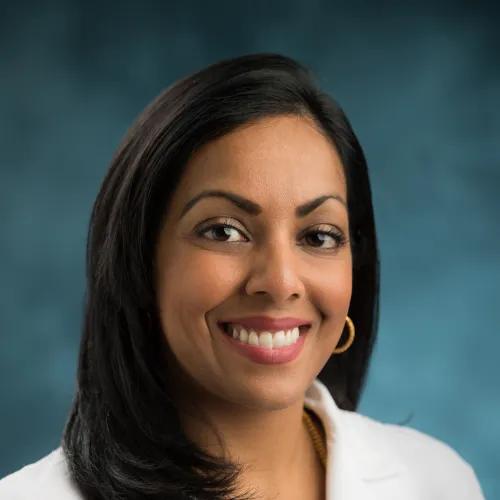
Monalisa Ghosh
Clinical Associate Professor
Featured News & Stories
Online resources and coaching helped people seek genetic testing for cancer
‘Molecular glue’ stabilizes protein that inhibits development of non-small cell lung cancer and uterine cancer
Exceptional response to immunotherapy gives patient with liver cancer more milestones to celebrate
FDA-approved drug offers hope for patients with polycythemia vera, a rare bone marrow disorder
Pediatric patient treated for rare kidney cancer