Inside the Regional Infectious Containment Unit

The very front line of Michigan Medicine’s fight against COVID-19.

Author | Katie Whitney
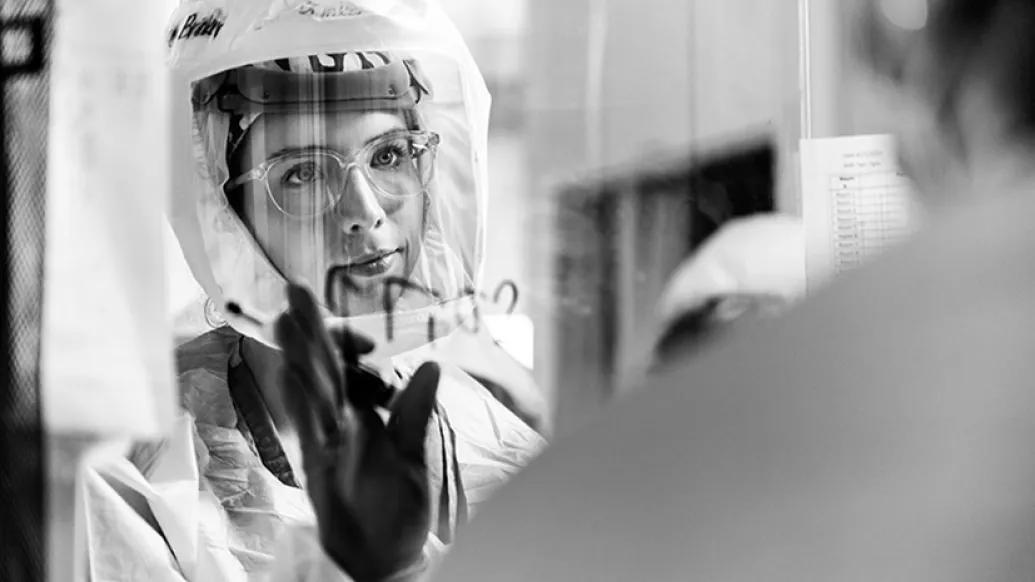
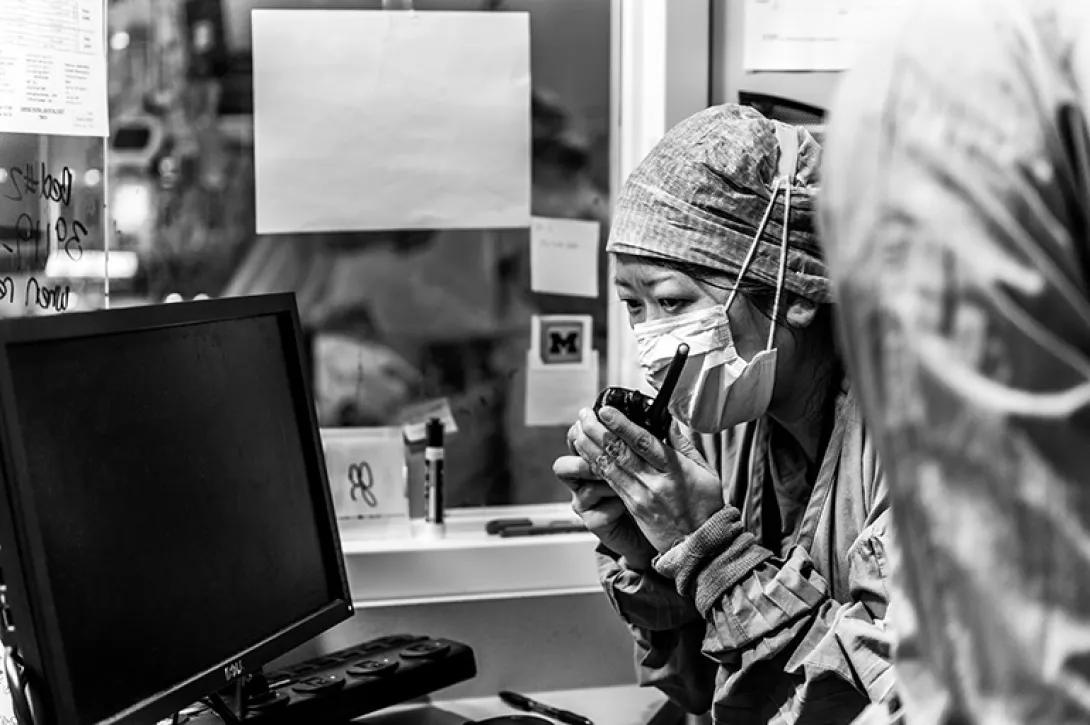
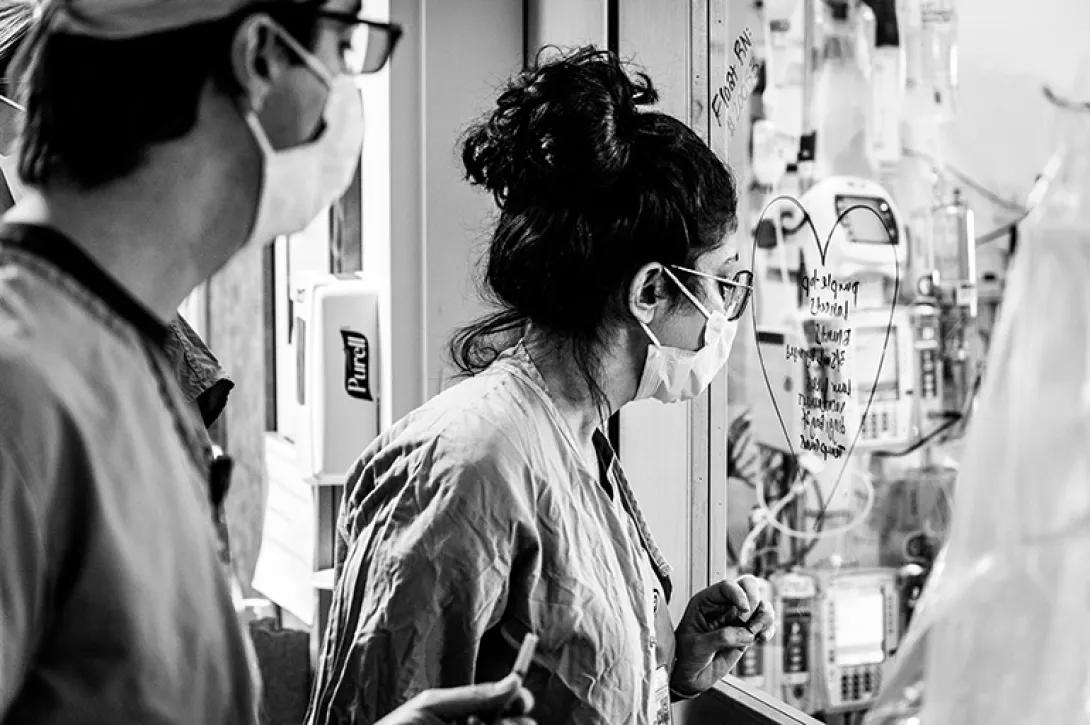
Top photo: Lisa Brinker, BSN, RN, communicates with physicians from inside a patient’s room by writing on the window. The marker system lowers infection risk by limiting the number of workers who need to enter the room. Photography by Steven Upton

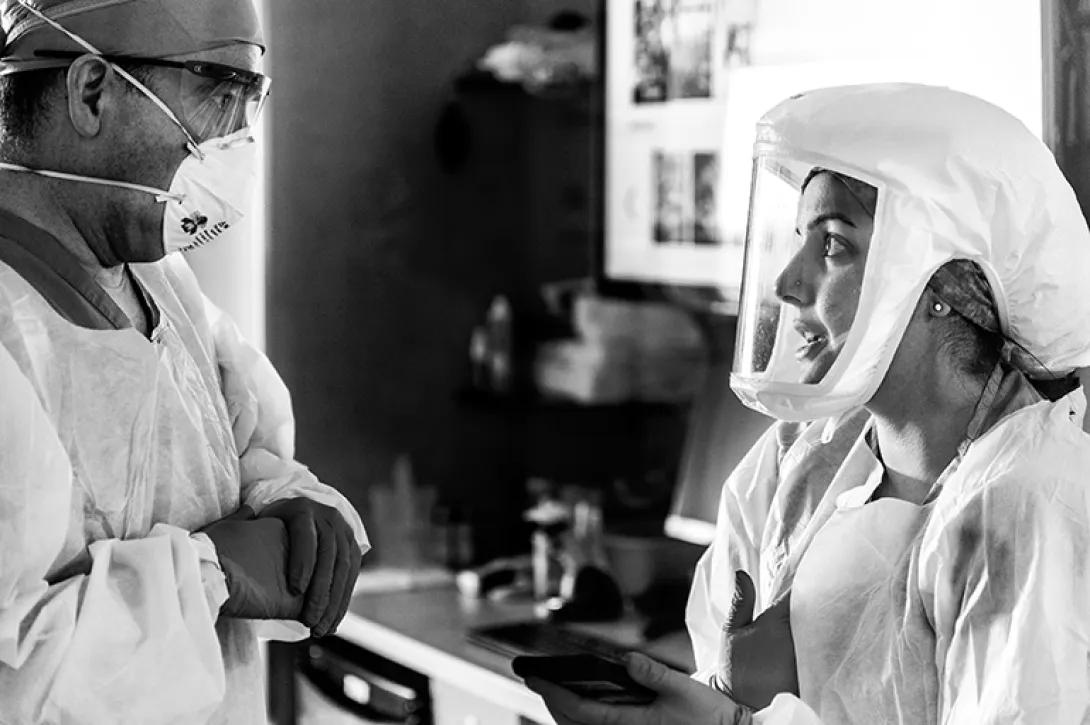
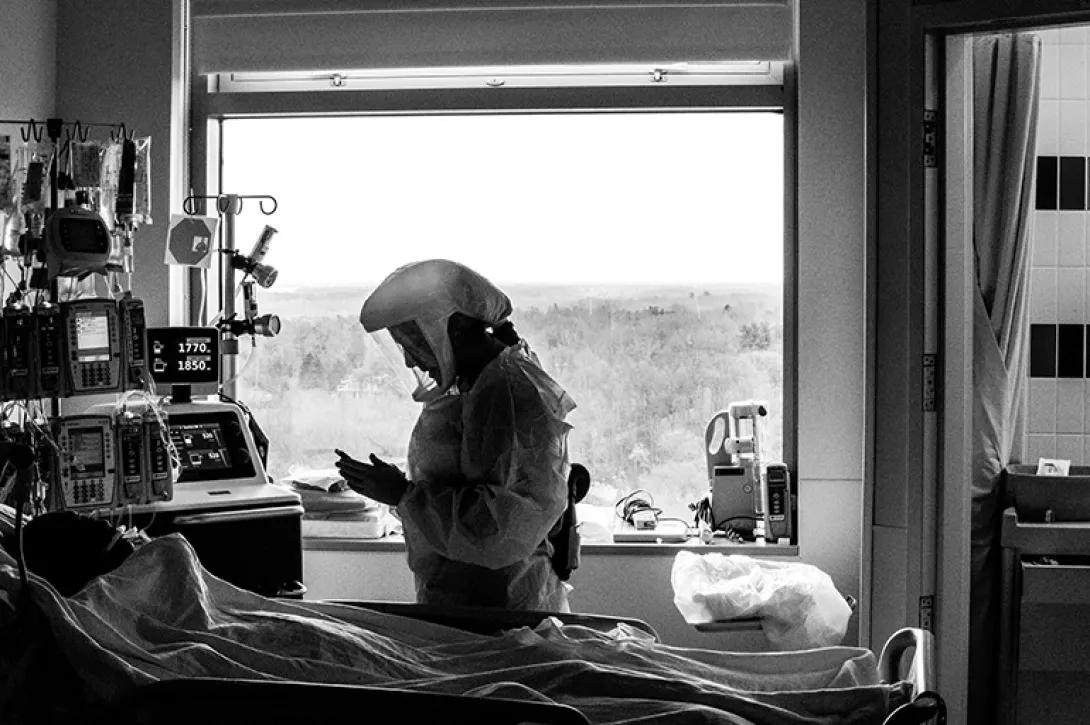
Six days after the first two COVID-19 cases in the state were confirmed, Michigan Medicine opened the Regional Infectious Containment Unit (RICU) in C.S. Mott Children's Hospital. The 32-room negative-pressure isolation unit was designed for optimal care of adult COVID-19 patients and optimal safety for health care workers. Thanks to his unique position as both a physician assistant and professional photographer, Steven Upton, PA, was able to gain access to this special unit. His photos offer a glimpse into this historical moment at Michigan Medicine, from the otherworldly strangeness of extensive personal protective equipment (PPE) to the practical simplicity of poignant sticky notes conveying messages from loved ones. 
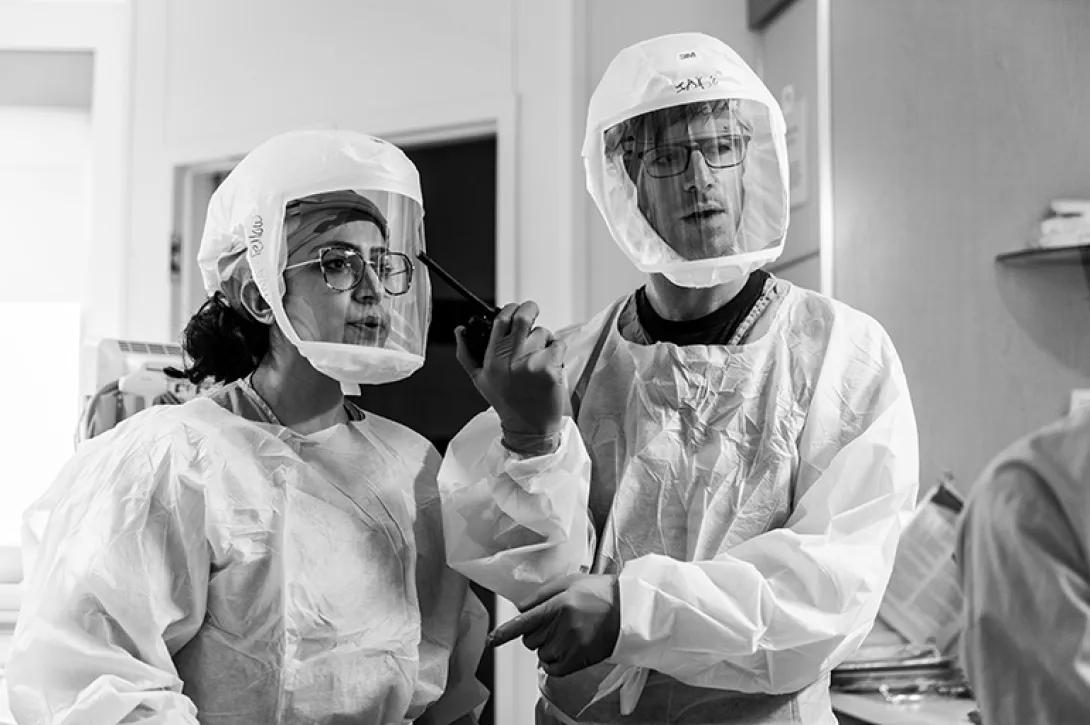
From inside a patient's room, Mina Pirzadeh, M.D., a pulmonary and critical care medicine fellow, and Jakob McSparron, M.D., assistant professor of internal medicine, communicate by walkie-talkie with health care workers outside the room. 


Jessica Mast, CRNA, talks to an RN in a patient room about adjusting the IV sedation settings. Walkie-talkies are used so the RN does not have to go in and out of the room, donning and doffing PPE. 


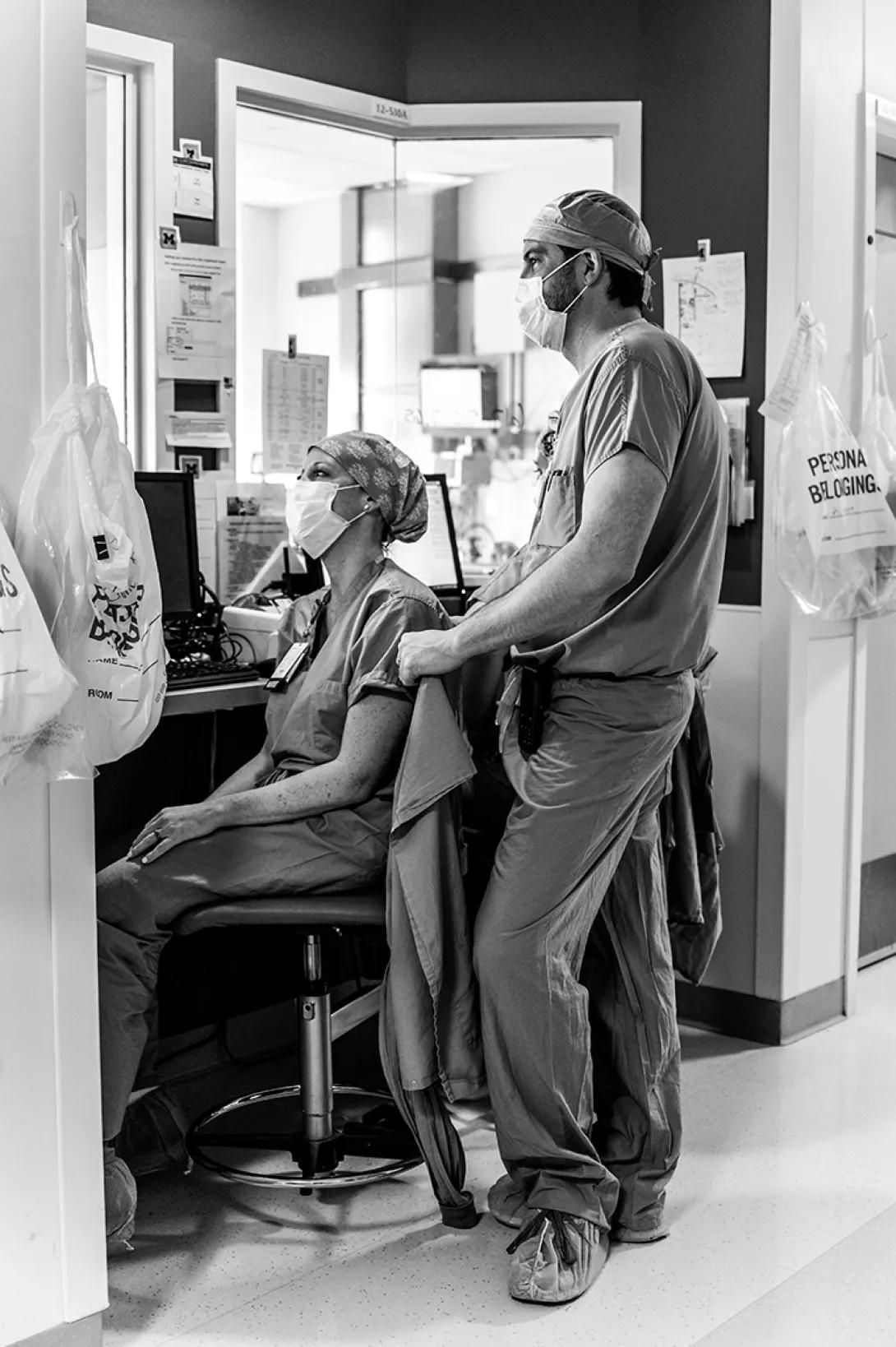
Jonesta Kimble, RN, and Erik Hopkins, RN, stand by to see if the nurse in a patient room needs anything. "The nurses donning protective gear and going into the negative pressure rooms, they would spend quite a bit of time in there," says Upton. "If they needed anything, they would communicate with the nurses standing at the windows, either through a walkie-talkie or they would write on the glass."


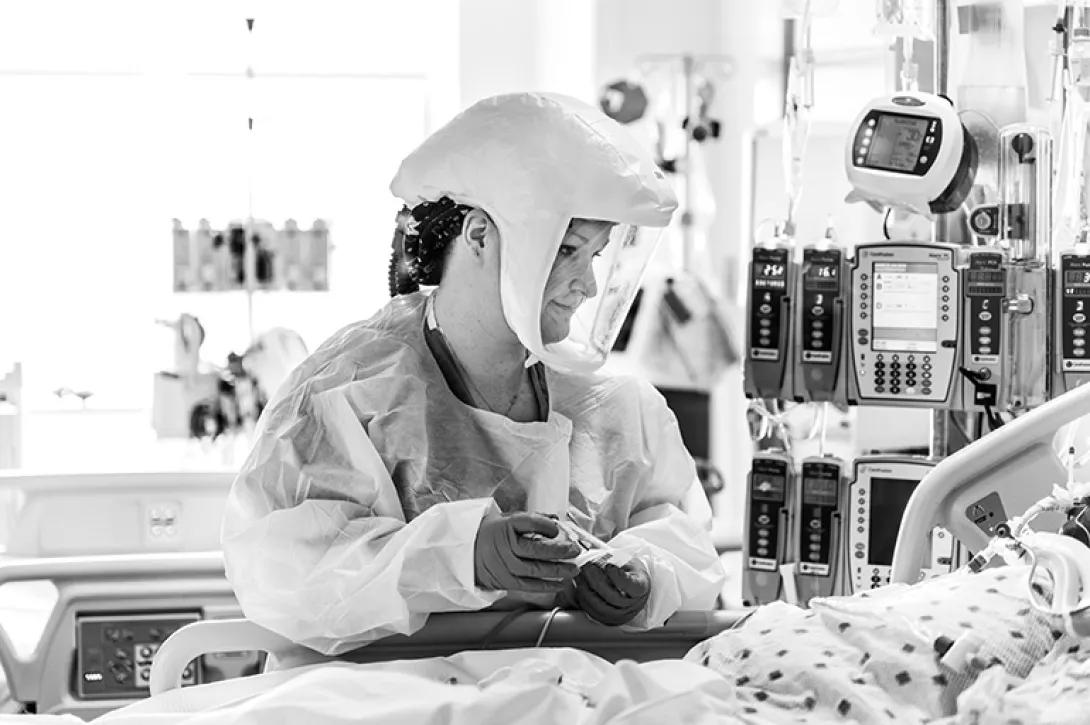
Jamie Langlois, RN, cares for a patient in the RICU. Langlois normally works in the Pediatric Intensive Care Unit, but she volunteered to care for COVID-19 patients and was redeployed to the RICU. "The amount of resources, and skill, and mental, emotional, and physical care that goes into trying to get these patients better is … extraordinary," Langlois told the Washtenaw Voice in an interview May 2. "It's very hard as a nurse to try to comfort somebody when you're wearing a shield and a mask. … It alters the whole human response."


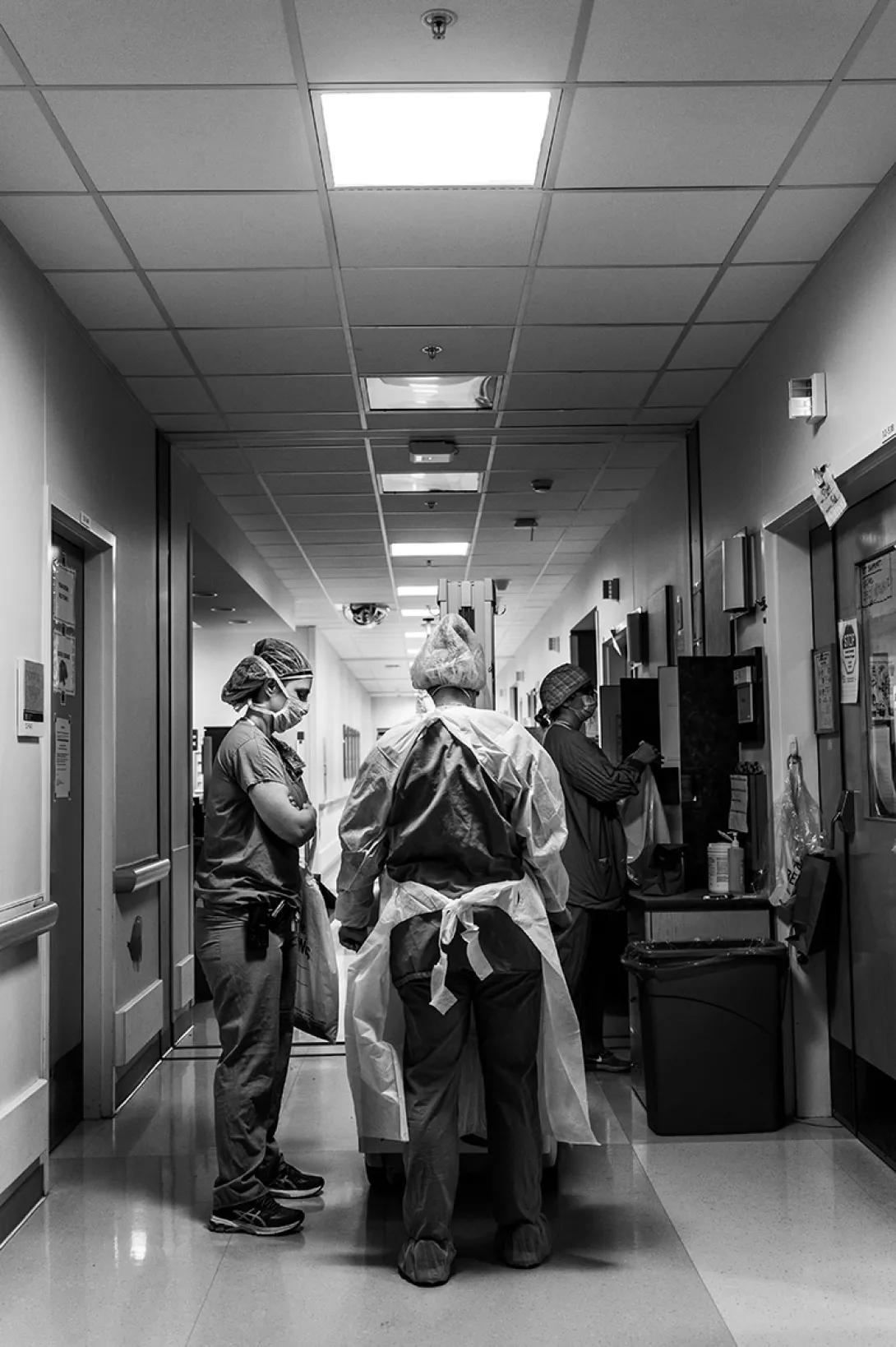
Radiology technicians wheel portable chest X-ray equipment to a patient's room in the RICU. 


McSparron and Pirzadeh read notes about patient care written by a nurse from within the patient's room. 


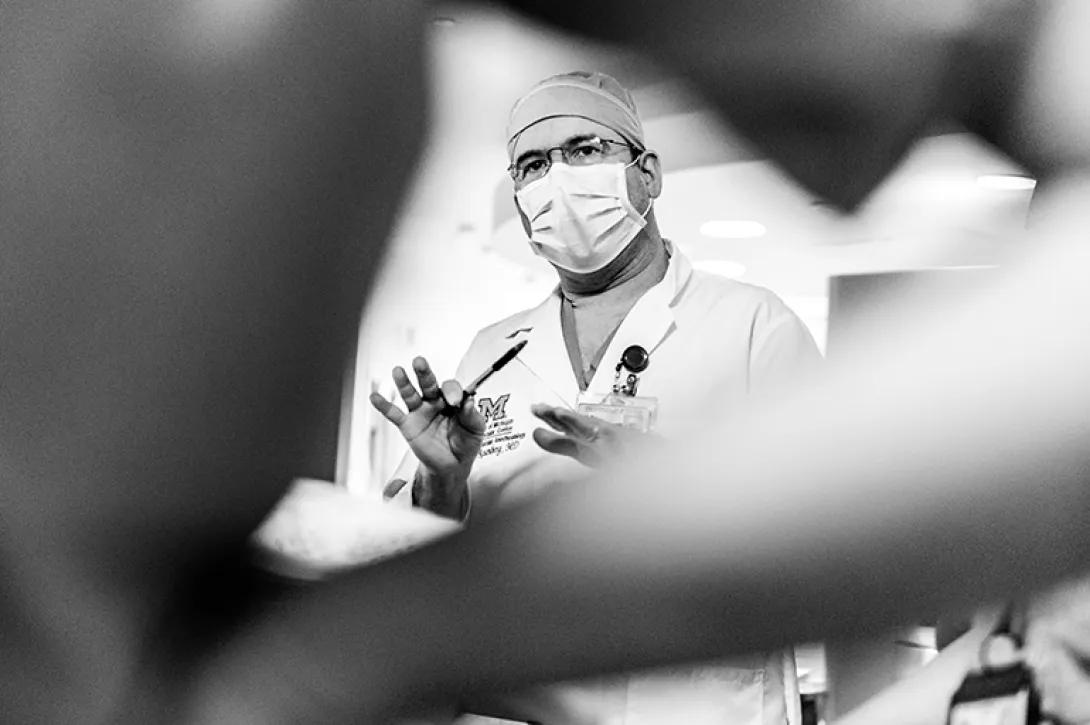
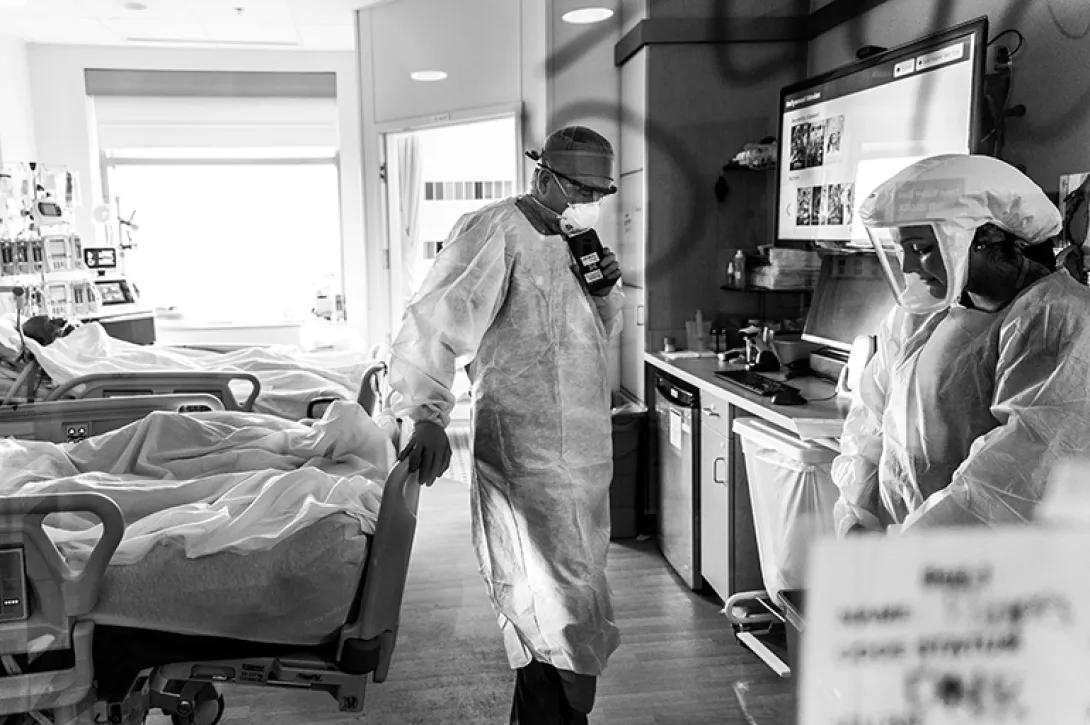
Andrew Rosenberg, M.D., chief information officer for Michigan Medicine and associate professor of anesthesiology and internal medicine, teaches early-career physicians while rounding in the RICU.


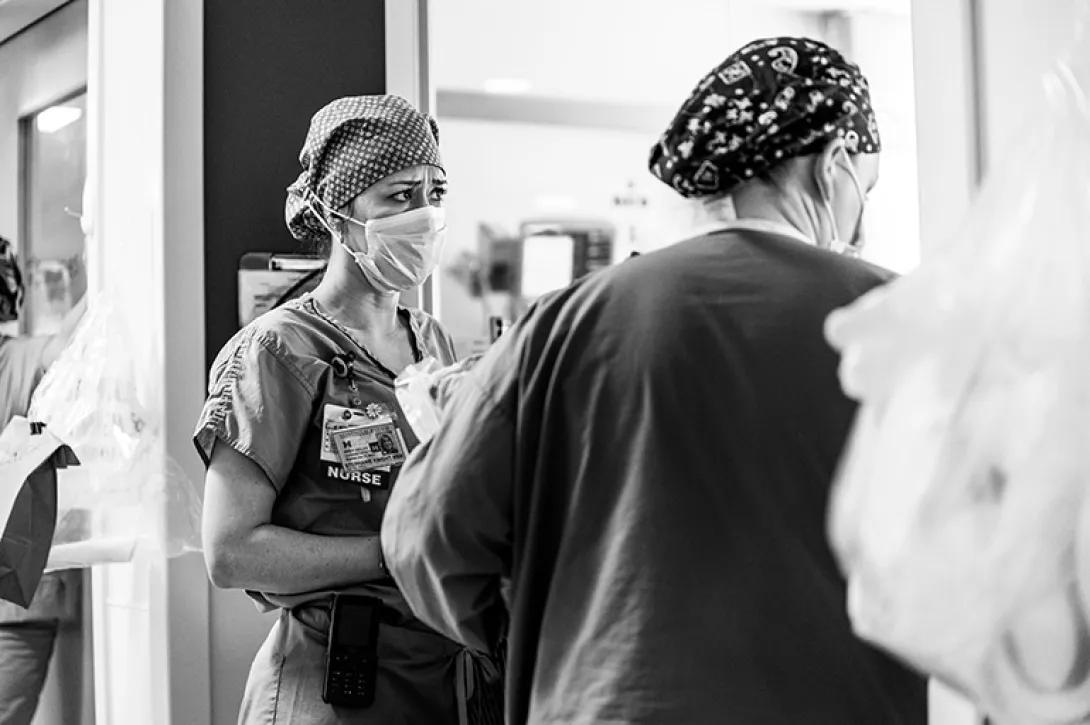
Stephanie Knight, BSN, RN, discusses a patient with her colleague.


Messages on windows in the RICU keep spirits up.


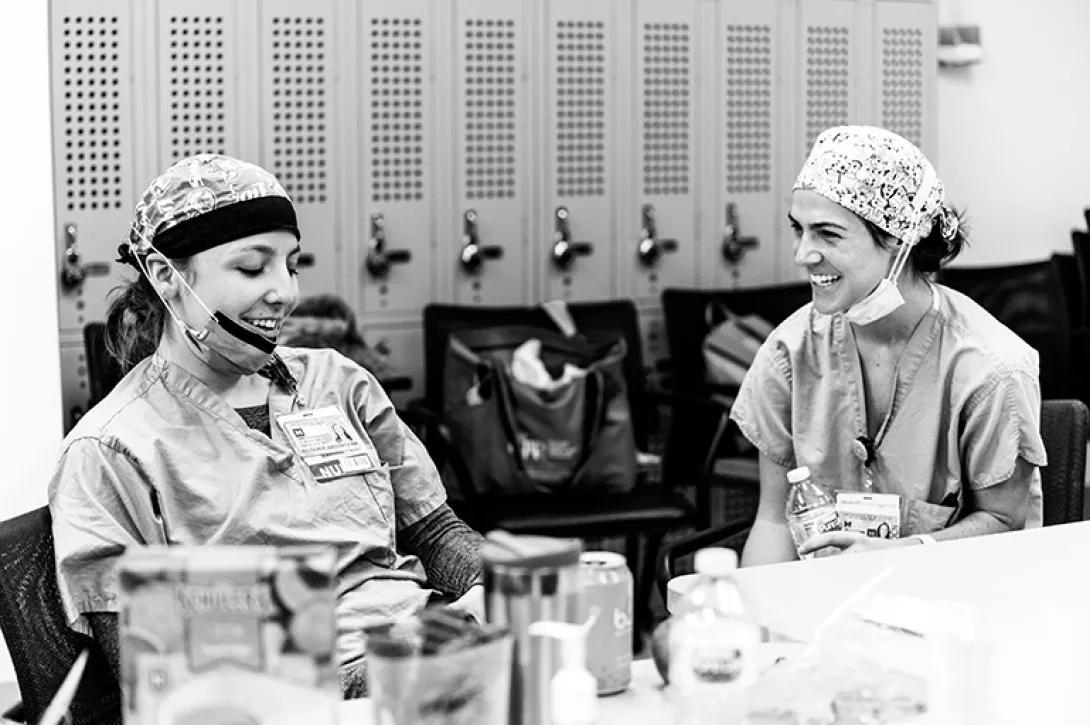
Allison Juchartz, RN, and Karen Kunkler, RN, enjoy a lighter moment on a break from treating COVID-19 patients.


Saying Goodbye

On the day photographer Steven Upton, PA, visited the RICU, physicians and nurses were preparing to take a patient off life support. Before the terminal weaning, they would contact the patient's loved ones to offer them a chance to say goodbye. The following photos show Preet Shokar, RN, and Andrew Rosenberg, M.D., working through this process.
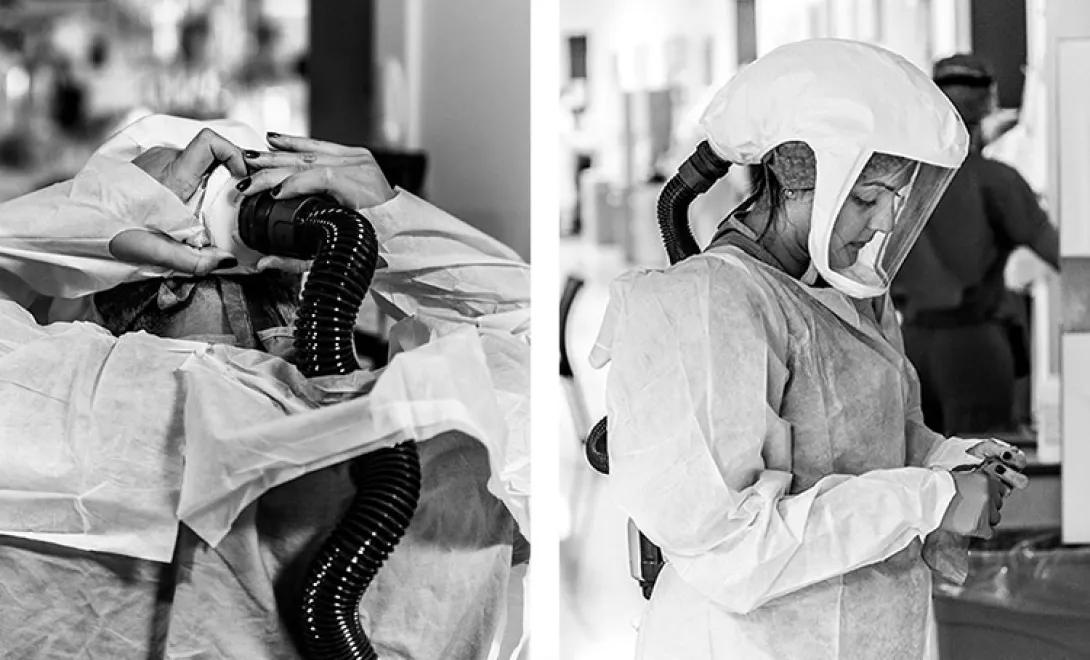
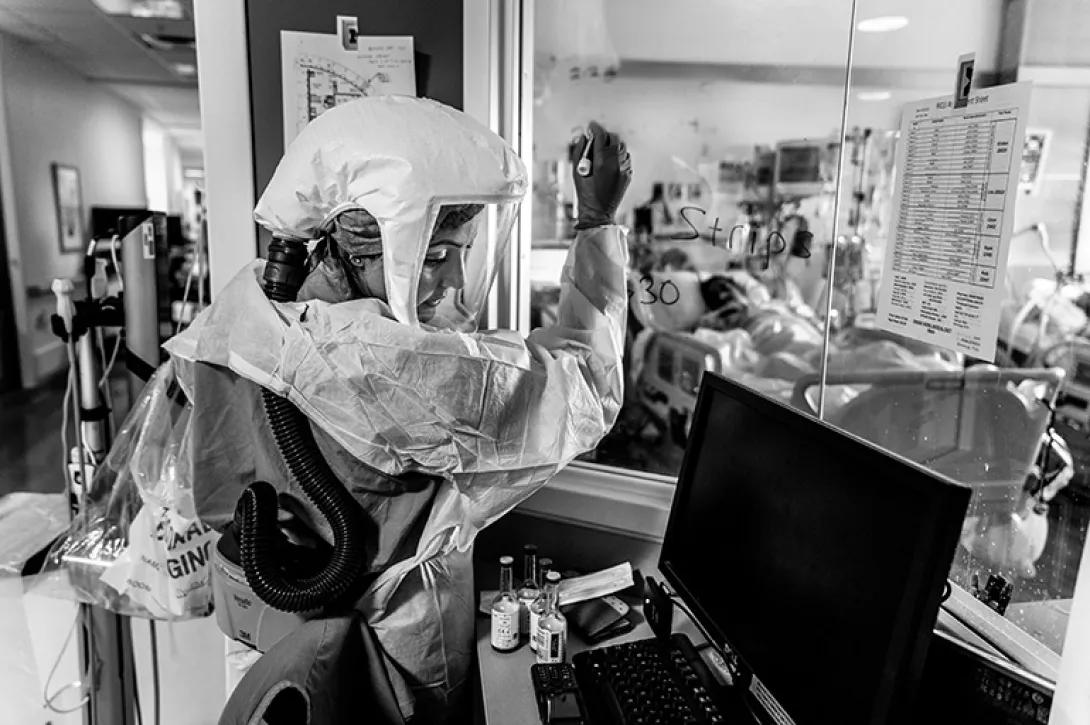
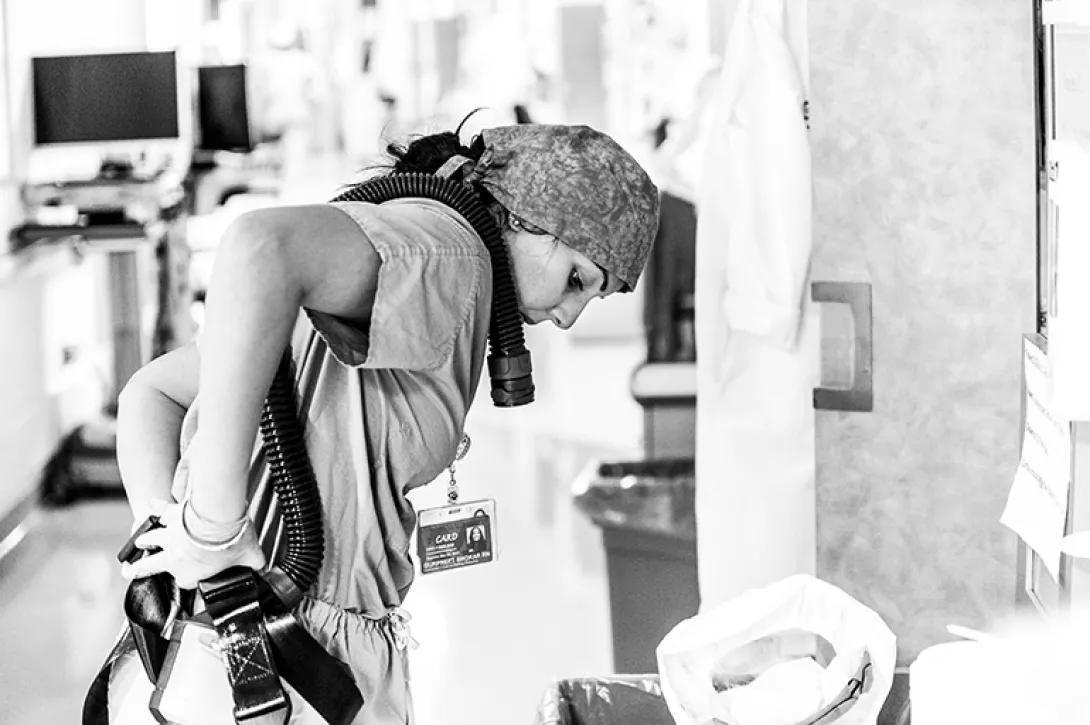
Shokar dons a powered air purifying respirator (PAPR) in preparation for entering the patient's room.
Before going in, Shokar takes a moment to write the phone numbers of the patient's loved ones on the window of his room.
Once inside the room, Rosenberg and Shokar discuss the best way to handle these heartbreaking calls. Even though the patient is unconscious, Rosenberg and Shokar use FaceTime, when possible, to allow the patient's family members to see him one last time.
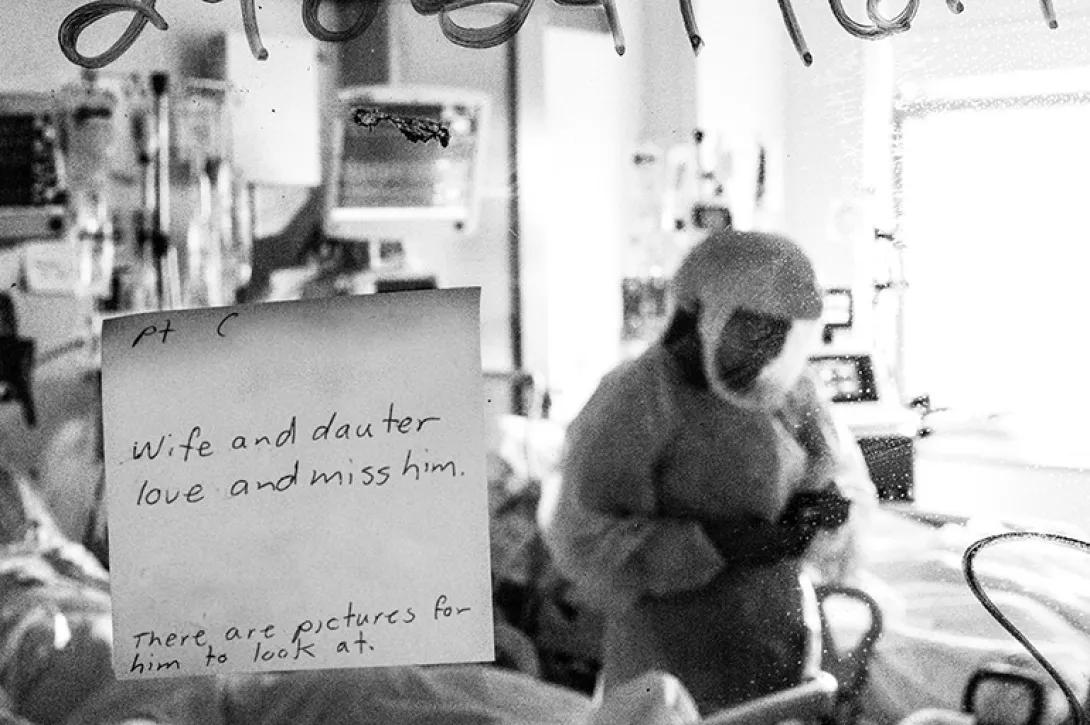
Because visitors aren't usually allowed in the RICU, sticky notes help physicians and nurses convey messages from loved ones. In the room, Shokar prepares to FaceTime with the patient's loved ones to give them a chance to say goodbye before he's weaned off life support. An exception to the no-visitors policy is made for end-of-life visits, but some family members decline because of the risk of infection.
Rosenberg talks with one of the patient's loved ones. "That's me talking to the family over the phone, and [the patient's daughter] is listening, and we're letting nature take its course," he says. "I said, 'It's really important that I get across to you that your father is completely comfortable right now. He is not struggling, and he's not suffering.' Typically, I say that to people in the room. I said, 'Normally, you and I would've gotten to know each other. We would be together. And I'm sorry we can't do it this way.'" 
After the battery on her first PAPR runs out, Shokar leaves the room to restart the arduous process of putting on a new on a new one.


More Articles About:

covid Covid-19 coronavirus pandemic hospital front line nursing Patients health care workers

Featured News & Stories

Medicine at Michigan

The Fight Against COVID-19

What it was like on the front lines at Michigan Medicine
Minding memory above a microphone on a blue background
Minding Memory

Can Your Voice Reveal Early Signs of Alzheimer’s?

In this episode, Lauren & Matt speak with Neguine Rezaii, MD, an Assistant Professor of Neurology at Harvard Medical School and a Board-Certified Neuropsychiatrist at Mass General Hospital. Dr. Rezaii’s research focuses on using natural language processing and artificial intelligence to improve the detection and classification of neurodegenerative disorders. Dr. Rezaii talks about her recent study, “Voiceprints of Cognitive Impairment: Analyzing Digital Voice for Early Detection of Alzheimer’s and Related Dementias,” which explores how artificial intelligence can analyze short speech samples to identify subtle signs of cognitive impairment. The study used speech recordings from 120 individuals and found that features such as pauses, word choice and the specificity of language can help distinguish cognitive impairment and Alzheimer’s disease. The conversation also explores how a simple 30-second speech test could potentially be used in clinical settings to support earlier detection and monitoring of cognitive impairment, as well as the challenges and ethical considerations that come with using AI to analyze something as personal as a person’s voice.
Catheterized hospital patient's leg
Health Lab

Many hospitals still don’t do enough to prevent UTIs from catheters
Urinary catheters used by hospitals can lead to UTIs, bladder infections and bloodstream infections, yet hospital infection prevention efforts lag even after 20 years of effort.
Minding Memory with a microphone and a shadow of a microphone on a blue background
Minding Memory

The Care Ecosystem: Supporting People Living with Dementia and Their Families
Welcome back to Season 6 of Minding Memory! In this episode, Lauren & Matt speak with Dr. Katherine (Kate) Possin, who holds the John Douglas French Alzheimer’s Foundation Professorship at the University of California, San Francisco Fein Memory & Aging Center. Dr. Possin talks about the Care Ecosystem, a telephone and web-based model that provides ongoing education, support, care planning, and coordination for people living with dementia and their care partners. They’ll dig into how the Care Ecosystem was developed, and what studies have shown about its impact on people living with dementia.
A collage of multiple buildings that are part of Michigan Medicine's statewide network
News Release

U-M Regents approve Michigan Medicine leadership changes
Two leadership positions for Michigan Medicine approved by U-M Board of Regents
The Fundamentals Podcast Hero Card Final 1800 x 1350
The Fundamentals

The Questions That Shape the Future of Medicine

On this episode of The Fundamentals, we talked to Dr. Thomas J. Wang, dean of the University of Michigan Medical School, about the fundamental questions that have shaped his career and continue to drive biomedical research. Dean Wang discusses his work in cardiovascular research, the enduring impact of the Framingham Heart Study, the potential of AI and emerging health data, and the importance of collaboration between academia and industry. He also shares advice for the next generation of scientists and physicians and explains why sustained investment in biomedical research is essential to improving human health.