What Kids of Different Ages Understand About Cancer
From toddlers to teens, young people process news of a parent’s cancer diagnosis differently. Learn how perceptions evolve over time — and strategies for conversation.
7:00 AM
Author |
Talking to your kids about any big topic can be a struggle. Coping with a parent's cancer diagnosis, however, might leave an adult searching for the appropriate words.
MORE FROM MICHIGAN: Sign up for our weekly newsletter
"There is a lot of anxiety around cancer and children," says Madison McTevia, a child life specialist at the University of Michigan Comprehensive Cancer Center.
And the conversation will depend on a child's age and emotional maturity.
"When a parent is diagnosed with cancer, a school-age child will need different information than a teenager," McTevia says. "They're at different developmental levels."
McTevia runs Families Facing Cancer, a program that partners with the American Cancer Society and the Cancer Support Community of Greater Ann Arbor to provide parents with information on how to talk to kids of all ages about a cancer diagnosis.
She explained how young people of different ages may interpret the news — and ways to guide the conversation:
Children's perspectives on cancer
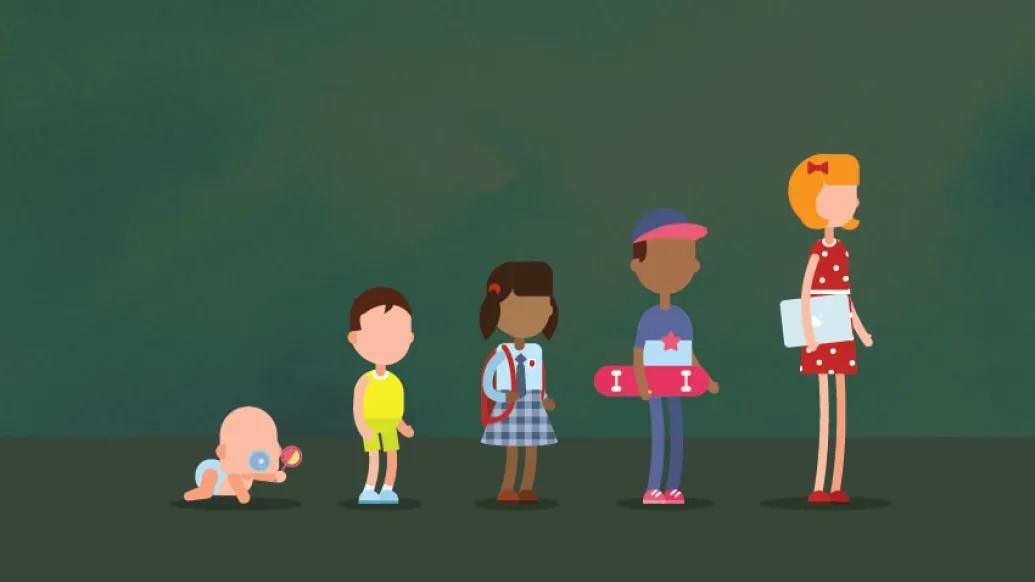
Infant (0-2 years):
- Can't comprehend an illness like cancer
- Can sense changes in routine
- Can pick up on worries, sadness or other emotions
Toddlers (2-3 years):
- May not understand serious illness
- Can only see through one perspective at a time, usually their own
- Might regress or act out as a way to process intense emotion
Preschoolers (4-5 years):
- Do understand what being sick means
- May not understand serious illness
- Can imagine the unreal (a concept known as magical thinking), such as Mom's cancer is a punishment
School age (5-11 years):
- Can understand a cold is different than a serious illness like cancer
- May have untrue information, such as cancer is contagious
- Magical thinking (Mom's cancer is because of something I did or thought)
Adolescents (12-18 years):
- Can understand cancer and its medical details
- May have untrue information, such as people with cancer all die
- May contemplate life and death or question the meaning of life
What parents can do
Bottom line: Be as open and honest about your cancer diagnosis as possible when talking to your children, McTevia says. Remember to explain how your treatment plan will affect you — and what changes in routine the family can expect.
SEE ALSO: 7 Ways to Support a Friend with a New Cancer Diagnosis
Make sure your child knows who else to turn to for support, whether it be other family members, a teacher or a trusted adult.
Observing your child at play can be a helpful way to get information about illness is being processed. Children often work through thoughts, feelings and emotions during play. This can give caregivers a chance to clear up any misconceptions.
For example, a child might pretend a doll has cancer and assume that kissing the doll means the child will become ill as a result. A caregiver can step in and explain that cancer isn't contagious.
Helping hands
Don't be afraid to ask your health care team for more ways to discuss your illness with the family.
These resources also can help guide the conversation:
- Helping Children Understand Cancer: Talking to Your Kids About Your Diagnosis, CancerCare
- Helping Children When a Family Member Has Cancer, American Cancer Society
- Frankly Speaking About Cancer: What Do I Tell the Kids?, Cancer Support Community of Greater Ann Arbor

Health Lab
Explore thousands of health news & research stories by visiting the Health Lab homepage for more.
Media Contact

Public Relations
Department of Communication at Michigan Medicine
Stay Informed
Want top health & research news weekly? Sign up for Health Lab’s newsletters today!
Featured News & Stories

4 ways to teach your teen safe driving habits
Online resources and coaching helped people seek genetic testing for cancer

U-M-led consortium to receive up to $52 million in NIH funding to study why viral respiratory infections affect children differently

‘Molecular glue’ stabilizes protein that inhibits development of non-small cell lung cancer and uterine cancer

Exceptional response to immunotherapy gives patient with liver cancer more milestones to celebrate