Is it safe to trick-or-treat this Halloween?
A pediatrician shares importance guidance around how to have a safe Halloween as the COVID pandemic continues.
9:49 AM
Author |
Since most kids are back in school, it's easy to feel like things are back to normal – but they're not.
With school back in session, more transmission of COVID is happening among kids, especially in social settings.
Halloween is a good example of this.
"We are seeing an uptick in cases locally," warned Kristen Padilla, D.O., pediatrician at C.S. Mott Children's Hospital. "Anyone can look at the Michigan COVID data and see we're in our fourth peak since the pandemic started."
Vaccines are close to rolling out for kids ages 5-11, but we're not there yet. This is a good reminder that kids are not yet protected, and are the most vulnerable, in terms of contracting COVID-19. Parents and kids still need to be careful, and aware of the added concern of them transmitting COVID to those at higher risk of getting severely ill, like grandparents or people with underlying health conditions.
Rest assured, though, Padilla says you can still enjoy Halloween this year, but with safety measures top of mind.
Top 3 tips for a COVID-safe Halloween
1. If you're unvaccinated, celebrate Halloween events outdoors
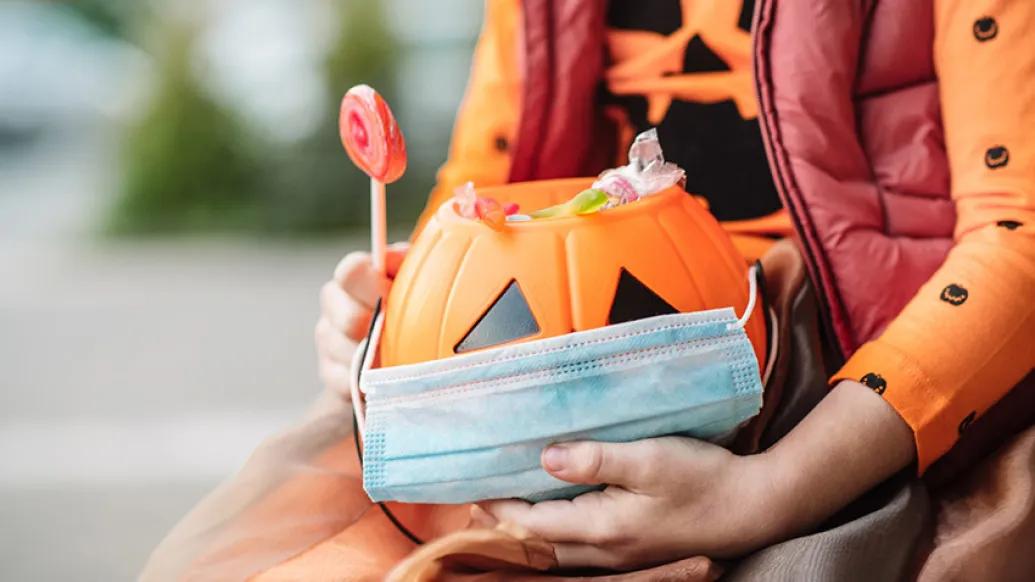
"While we're not quite back to normal, trick-or-treating can happen this year – with the right precautions," said Padilla. "I'd recommend anyone unvaccinated to keep events outdoors and still wear a mask, especially in groups with other kids gathering together on doorsteps."
While Halloween alternatives to trick-or-treating were suggested in 2020, going door-to-door in 2021 can be done safely.
"We know to contract the virus you need sustained close contact with a COVID-positive individual," said Padilla. "Stopping at someone's door briefly while masked and outdoors should be safe."
Defined by the Centers for Disease Control, sustained close contact is being less than 6 feet of an individual infected with COVID for at least 15 minutes or more over a 24-hour period.
Candy wrappers are also less of a concern this year since COVID doesn't live on surfaces like was once previously thought.
While we're not quite back to normal, trick-or-treating can happen this year – with the right precautions.Kristen Padilla, D.O.
Know that it's still recommended to avoid higher risk activities, though, such as crowded indoor Halloween parties.
"For parents with kids in school, they should think like a school. If you start to do things outside what's recommended, like being unmasked indoors, it may lead to transmission and your child can be out of school for up to 10 days," said Padilla. "We want to keep kids healthy and in school."
2. If you or your child has an underlying medical condition, be extra cautious
If your child has a complex medical condition and isn't vaccinated, that's all the reason to be more careful. Your child is at higher risk of severe illness from COVID.
"These families should take extreme caution," said Padilla. "They may opt to do more of the Halloween alternatives that were recommended from last year or, if trick-or-treating, only going to houses with tables set up outside."
3. Even if you're vaccinated, still use the multi-layered prevention approach
The delta variant is very contagious, and you can still catch it even if you're vaccinated. Vaccination is one layer among many in a multi-pronged prevention strategy, explains Padilla. It's important to continue wearing masks, keeping distance from others and washing your hands to be the safest from catching COVID.
MORE FROM MICHIGAN: Sign up for our weekly newsletter
If your child is over the age of 12 and fully vaccinated (having received their second dose within the last two weeks), they could expand their Halloween activities to indoor settings such as an indoor gathering or a haunted house, but it's still advised to do so masked and to follow the steps above.
Bottom line: Each family will still have their own individual risk tolerance to take into consideration. So go out there and have yourselves a howlin' good time this Halloween – just remember wearing masks and staying outdoors is safest for your spooky celebrations. And don't forget to keep normal Halloween safety tips in mind as well.
Like Podcasts? Add the Michigan Medicine News Break on iTunes, Google Podcasts or anywhere you listen to podcasts.

Health Lab
Explore thousands of health news & research stories by visiting the Health Lab homepage for more.
Media Contact

Public Relations
Department of Communication at Michigan Medicine
Stay Informed
Want top health & research news weekly? Sign up for Health Lab’s newsletters today!
Featured News & Stories

5 ways to manage politically induced stress

High dose oxytocin protocol linked to lower postpartum hemorrhage rates

Human Rabies Exposures Growing Across the Country
4 ways to teach your teen safe driving habits

U-M-led consortium to receive up to $52 million in NIH funding to study why viral respiratory infections affect children differently