The drive to find a bone marrow donor
Ryder Washington needs a bone marrow transplant. But the five-year-old, like many other African-Americans, doesn’t have any matches in the national bone marrow registry. His parents are out to change that.
5:00 AM
Author |
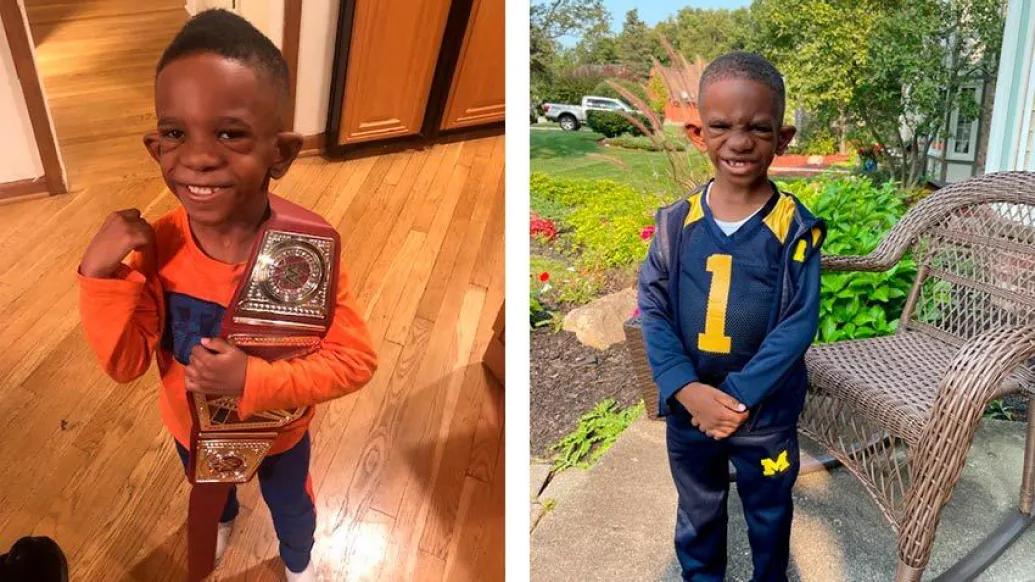
Ryder Washington loves everything rough and tough, as his mother says.
For instance: The five-year-old just got his yellow belt in taekwondo. His Friday nights are devoted to WWE SmackDown. He loves other sports, too, particularly University of Michigan football, and once booed an electrician who'd come into his house wearing a Michigan State University hat.
His nickname is "Rough Ryder."
So Ryder didn't mind when one of his loose teeth would not stop bleeding. But his parents were concerned — and so were his doctors.
"They immediately started using terms like hematology and oncology, and we knew right then and there that something was wrong," said Kimberli Washington, Ryder's mother.
Ryder was diagnosed with myelodysplastic syndrome, also known as MPS, a group of disorders that occur when bone marrow doesn't make blood cells in the normal fashion. When the condition shows up in children, it's usually associated with a predisposition toward cancer.
So, when Heard-Washington and her husband, Terrence, felt like their providers weren't operating with a sense of urgency, they sought a second opinion.
A friend of a friend recommended University of Michigan Health C.S. Mott Children's Hospital, and they were connected with Ghada Abusin, M.D., a pediatric hematologist/oncologist and clinical assistant professor at Michigan Medicine, and Jennifer Blase, M.D., Ph.D., a pediatric hematology/oncology fellow.
SEE ALSO: Unlikely Bone Marrow Donor Saves A Life
"During that first appointment, I learned more in the two hours I was there than I had all year," Washington said. "And when we went in for Ryder's bone marrow biopsy, I felt like the visits were coordinated. I said to my husband, 'They are just on it. Everything is in lockstep.'"
With the biopsy, Abusin and her team were checking to see whether Ryder's condition MPS had progressed, which would help them determine next steps. It's likely that he'll undergo a bone marrow transplant sometime in the next few months, but the decision to do so isn't straightforward: So far, Ryder has no good matches (based off of DNA markers) in the national bone marrow registry.
"We see that a lot with mixed races and African-Americans," Abusin said. "There's a lot of genetic variation within those populations and fewer donors from the same race, so they don't get as many matches."
We see this issue a lot with mixed races and African-Americans. There's a lot of genetic variation within those populations and fewer donors from the same race, so they don't get as many matches in the bone marrow registry.Ghada Abusin, M.D.
Ryder's 11-year-old brother, Tyson, may end up being his donor; he's a 50% match with Ryder. Abusin and team are used to doing these haploidentical, or half-matched, transplants, but there's a higher risk of infection and other complications, and Ryder's immune system will need to be more heavily suppressed afterward.
The Washingtons asked what they could do. The answer: Mobilize the community. "And guess what?" Abusin said. "They actually did."
The drive to find a match
Ryder's parents have organized three different drives to raise awareness of the limited number of bone marrow donors for certain ethnic groups and to sign people up for the national registry run by Be the Match, Michigan Medicine's bone marrow partner.
So far, they've recruited 313 potential bone marrow donors through these events.
The attendees have registered through QR codes or via Be the Match's website on their phones. They've answered a few questions about their medical histories and underwent swabs of the inside of their cheeks that were sent to Be the Match for processing and analysis.
Sometimes, the couple has provided lunch or incentives for those who come out to learn more and register; when friends of theirs who own a Dairy Queen held a drive, each attendee received a free treat with their swab.
But some have swabbed out of the "kindness of their hearts," Washington said, like the Bowling Green State Green football team, on which her nephew plays.
SEE ALSO: Students Promote Lifesaving Power of Organ and Tissue Donation
"The support from strangers has been amazing," Washington said.
"I was very impressed because there are not that many doers, who go ahead and do what needs to be done," Abusin said. "This family is really trying to increase the awareness."
What to expect
Most people who sign up for the registry will never be called upon to donate bone marrow. The most requested donors are those under the age of 40, particularly young men and women who have never been pregnant (research has found that the cells from these types of people lead to the most successful transplants.)
Those who are a match for someone who needs a transplant can have their bone marrow harvested through a more traditional procedure in the operating room or one that takes the cells from the vein using the same type of device that collects blood from blood donors.
Back pain can occur afterward, especially if the donor has chronic back issues or is older, but it's generally temporary; Abusin says the expected recovery time is three days.
"I think some people are afraid to donate bone marrow," Washington said. "They don't know what to expect. For me, my message is always that it's so much greater than missing a day of work or being in some pain. Being inconvenienced for a day could possibly save someone's life."
You can register to be a bone marrow donor at Be a Hero at the Big House, the University of Michigan's largest on-campus blood drive, on Nov. 21.

Health Lab
Explore thousands of health news & research stories by visiting the Health Lab homepage for more.
Media Contact

Public Relations
Department of Communication at Michigan Medicine
Stay Informed
Want top health & research news weekly? Sign up for Health Lab’s newsletters today!
Featured News & Stories
From patient to artist: A project close to her heart
Missed feedings in 10-day-old infant led to rare infantile botulism diagnosis
After 13 years of IV nutrition, teen finds freedom to just be a kid
A gift for Michigan’s most vulnerable babies
FDA approved drug slows type 1 diabetes progression in 5-year-old patient