6 Reasons Schools Need to Run AED Drills
Technology used to shock a sudden cardiac arrest victim is key in a crisis — but only if educators are prepared to act.
7:00 AM
Author |
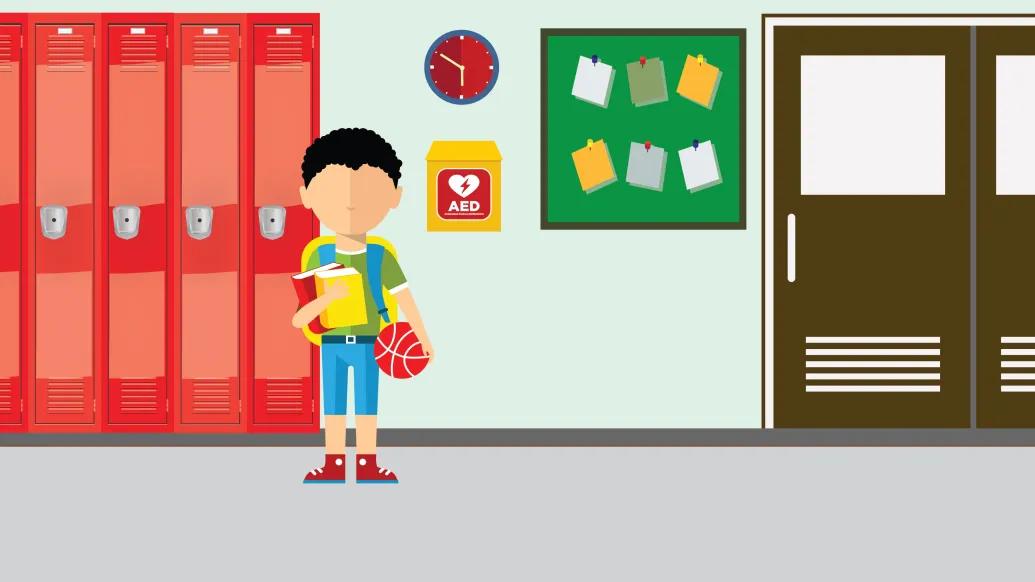
Automated external defibrillators (AEDs) can help stop a life-threatening cardiac arrest.
These portable devices — which use electrode chest pads to detect a fatal heart rhythm and, if found, deliver a shock to defibrillate or "reset" the system — are intuitive and straightforward to use.
SEE ALSO: 5 Interesting Facts About Critical Care Air Transport
Still, familiarity with the equipment is vital.
Speed matters, too: Every minute without cardiopulmonary resuscitation (CPR) and defibrillation decreases a person's chances of survival by 7 to 10 percent, according to the Sudden Cardiac Arrest Foundation.
"It's best not to simply wait until emergency medical services arrive," says Monica Goble, M.D., a pediatric cardiologist with the Congenital Heart Center at University of Michigan C.S. Mott Children's Hospital. "You need to intervene."
That's the message of the twice-yearly Michigan Schools CPR/AED Drill Week, next occurring Nov. 7-11, 2016 (and, after that, Feb. 6-10, 2017).
Educational facilities, after all, often provide a gathering place for visitors of all ages. And while it isn't common, sudden cardiac arrest can occur in children — with about 10 percent of such deaths in Michigan affecting those aged 20 and younger.
But schools, a recent U-M study found, have room to improve: All those in a survey of 30 Michigan counties owned at least one AED, but preparedness varied by school location, size and community income level.
AED drills need to be as seamless as those anticipating a fire or lockdown, says Goble, who strongly encourages pre-drill discussion and coordination with local EMS teams.
Here, she explains the benefits of being prepared.
The devices can be easily located: Seconds count in sudden cardiac arrest; they shouldn't be wasted looking for equipment. Trained staffers need to know exactly where AEDs are stored. Ideally, they should be in a public space with adequate signage. "If they're locked up or tucked away in the principal's office, that's a problem," Goble says.
SEE ALSO: Beware, Tiny Batteries Can Cause Big Injury for Kids
Roles are clearly defined: An unexpected collapse can quickly incite chaos. Beyond recognizing a cardiac arrest, performing CPR and applying an AED, educators must consider how best to maintain crowd control — along with dispatching colleagues to call 911, fetch the AED and keep watch for first responder arrival.
Wasted time is minimized: From assessing the onset of sudden cardiac arrest to handing over care to paramedics, a successful drill takes no more than five minutes to complete, Goble says. Running the scenario in advance allows school staff to time the sequence, assess any weak points and, if needed, work to speed up the response.
Responders are confident and ready: Hands-on practice could make the tools seem less intimidating. But an AED user needn't be timid: The devices will only issue a shock if a life-threatening heart rhythm is sensed. Good Samaritan laws, Goble notes, offer added protection. After all, "It's far better to do something than to do nothing," she says.
Equipment can be checked: Expiration dates of AED batteries and pads vary; Goble recommends referring to the manufacturer's instructions to verify details of routine maintenance. Periodic drills allow teams to ensure that everything is working as planned.
Fatalities might be prevented: Out-of-hospital cases of sudden cardiac arrest claim the lives of about 326,000 people annually in the United States; only 11 percent survive. But survival rates, according to the Sudden Cardiac Arrest Foundation, double or triple when bystanders intervene before emergency services arrive.
First response 101
In case of a suspected sudden cardiac arrest, the American Heart Association says to act in this order:
-
Recognize sudden cardiac arrest
-
Call 911
-
Begin CPR and have someone retrieve an AED
-
Apply the AED
-
Transition care to first responders
More resources
U-M's Project ADAM provides schools with guidance on how to minimize sudden cardiac death in school settings, including assistance with planning AED drills and establishing a cardiac emergency response plan. Schools are required to have such a plan and to carry out effective drills to earn certification from Michigan's MI HEARTSafe School Award Program, now in its fourth year.

Health Lab
Explore thousands of health news & research stories by visiting the Health Lab homepage for more.
Media Contact

Public Relations
Department of Communication at Michigan Medicine
Stay Informed
Want top health & research news weekly? Sign up for Health Lab’s newsletters today!
Featured News & Stories

Galens Tag Days celebrates 100 years of helping kids

From 20 seizures a day to more time for play: How personalized epilepsy care helped young patient
Type 1 diabetes does not mean sitting out for 10 year old

More babies with hypoplastic left heart syndrome surviving critical period between surgeries
Distance, insurance, social factors may hinder access to lifesaving heart monitoring for children