5 Things to Know About Spinal Anesthesia for Infants
The option, when appropriate, can help very young children avoid the risks associated with going under general anesthesia.
7:00 AM
Author |
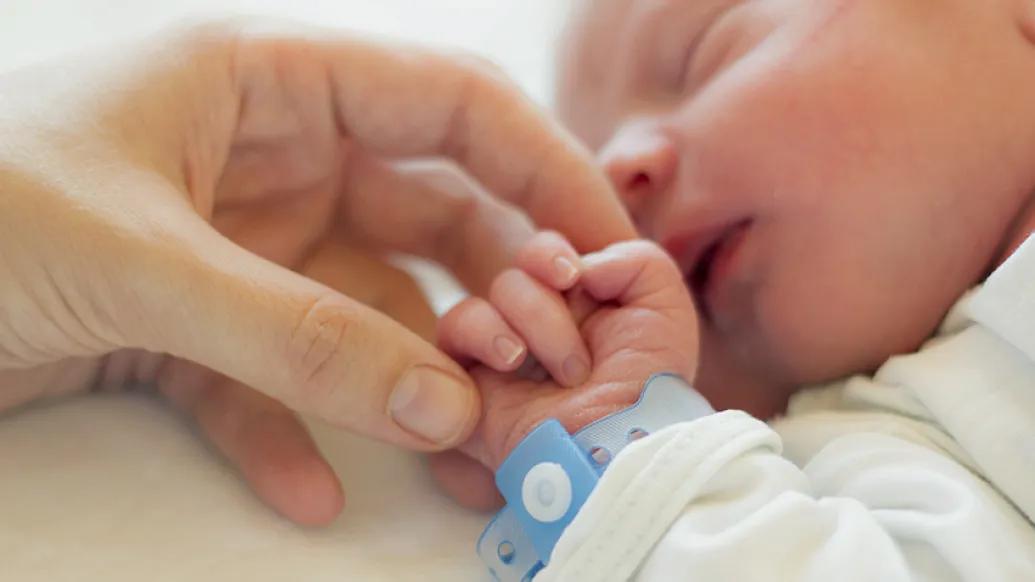
Spinal anesthesia, a needle-based procedure that provides sensory and movement block without loss of consciousness, is becoming a more common alternative to general anesthesia for infants.
That's because general anesthesia is associated with some risks, such as need for placement of a breathing tube and changes in oxygen levels, blood pressure and heart rate.
LISTEN UP: Add the new Michigan Medicine News Break to your Alexa-enabled device, or subscribe to our daily audio updates on iTunes, Google Play and Stitcher.
The Food and Drug Administration warned in 2017 that repeat or extended exposure to general anesthesia could harm developing brains, which is why doctors often advise delaying non-urgent or elective surgeries until a child is 3 years or older.
Not only does a spinal-focused approach eliminate those concerns, it may also help shorten a surgery's duration and patient recovery time.
And the approach is simple.
"Essentially, what we do is inject a little bit of numbing medicine via a tiny needle into the fluid that surrounds the spinal cord, which in turn numbs the baby from the chest down to the toes," says Ashlee Holman, M.D., a pediatric anesthesiologist and an assistant professor of anesthesiology at University of Michigan C.S. Mott Children's Hospital.
Typically reserved for adult patients, spinal anesthesia for children is offered at only a handful of specialized pediatric facilities across the United States — including Mott, where the option has been available since late September.
Holman, also the director of pediatric regional anesthesia at Mott, shared more facts that parents should know:
1. Spinal anesthesia technique isn't new
In use for more than a century, spinal anesthesia was first administered in 1898. But as general anesthesia became more commonplace — and the major dangers were reduced (but not eliminated) — the former approach fell out of favor.
MORE FROM MICHIGAN: Sign up for our weekly newsletter
"Modern general anesthesia in and of itself is quick and easy to administer as well as relatively safe compared to historically provided anesthesia," Holman says. "However, infants under the age of 1 year are a group at highest risk for complications."
Due to its benefit in avoiding general anesthesia, the spinal option is once again gaining awareness and availability.
2. It's only used for certain procedures
Spinal anesthesia lasts one to two hours and provides coverage from the chest down, so it's only suitable for shorter procedures involving those regions.
These include certain urologic surgeries such as circumcisions, repairs of hypospadias (a birth defect of the urethra) and orchidopexies (undescended testicle surgery) as well as hernia repairs and lower extremity orthopaedic procedures.
"Any procedure below the belly button that takes less than two hours is a candidate," Holman says.
We're finding that the total recovery time is shorter for these patients, and we have been seeing quicker discharges from the recovery room as well as increased parent satisfaction.Ashlee Holman, M.D.
3. Infant anesthesia patients remain awake throughout
Patients become much calmer after the numbness kicks in — a "meditative-like state" known as sensory deafferentation.
"The babies usually fall asleep naturally right after the injection," Holman says.
SEE ALSO: 10 Great Children's Books for Talking About Sickness, Surgery and Feelings
Those who don't, however, are monitored throughout. Doctors and nurses can help distract a patient by singing lullabies, giving a pacifier dipped in sugar water, or offering using an iPad for visual distraction.
4. Infant recovery and discharge times are quicker
Once surgery is complete, babies are brought to the recovery room and are returned almost immediately to their parent.
They also can feed immediately (general anesthesia, by comparison, requires waiting sometimes 30 to 60 minutes after the baby awakens).
"We're finding that the total recovery time is shorter for these patients," Holman says, "and we have been seeing quicker discharges from the recovery room as well as increased parent satisfaction."
5. General anesthesia risks are absent
Infants who undergo general anesthesia face the risk of having breathing tube and oxygen issues, blood pressure changes or an allergic reaction — issues avoided with the spinal option.
SEE ALSO: Helping Babies Thrive After Heart Surgery
They also don't face neurological risks theoretically associated with repeat or extended general anesthesia given to kids age 3 and younger.
Another positive: Recipients tend to have less pain, so opioids are generally not needed in the operating and recovery rooms.

Health Lab
Explore thousands of health news & research stories by visiting the Health Lab homepage for more.
Media Contact

Public Relations
Department of Communication at Michigan Medicine
Stay Informed
Want top health & research news weekly? Sign up for Health Lab’s newsletters today!
Featured News & Stories

After 13 years of IV nutrition, teen finds freedom to just be a kid
A gift for Michigan’s most vulnerable babies

FDA approved drug slows type 1 diabetes progression in 5-year-old patient

Galens Tag Days celebrates 100 years of helping kids
From 20 seizures a day to more time for play: How personalized epilepsy care helped young patient