3D-Printed Nasal Airways Help Medically Complex Young Patients Avoid Surgery
The simple act of breathing is crucial for growth and wellness. Here’s how custom, 3D-printed technology from Michigan Medicine helps patients thrive.
1:00 PM
Author |
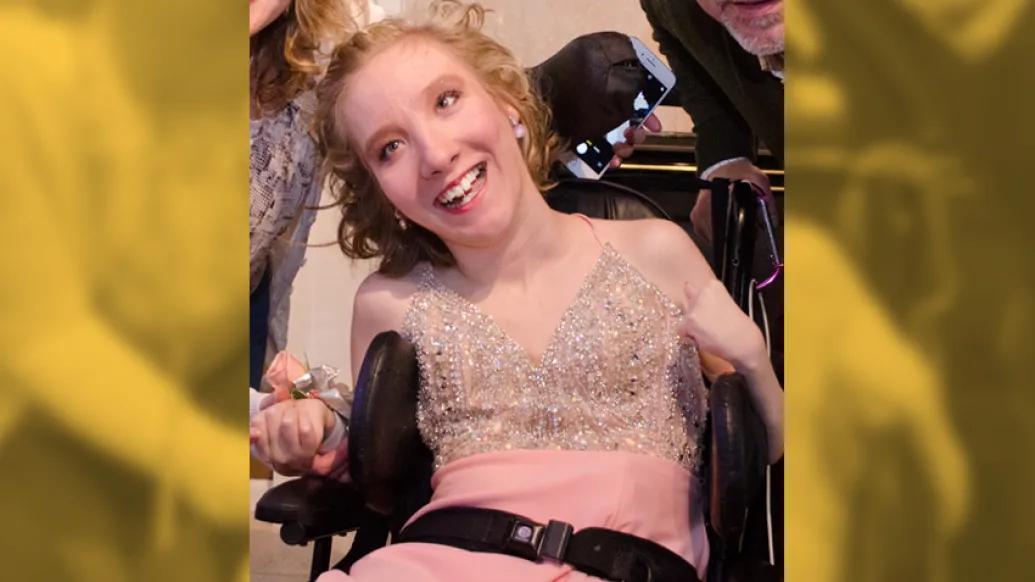
An obstructed airway would cause Madeline Maskill to stop breathing dozens of times during the night. Interruptions became so frequent that the sleepy teenager couldn't be roused from her bed each morning.
But some proposed options to treat her chronic sleep apnea were invasive and frightening: Break her jaw to open up the blockage, or perform a tracheostomy to cut a hole in her windpipe — a major ordeal for any young patient, let alone a nonverbal one who has cerebral palsy.
LISTEN UP: Add the new Michigan Medicine News Break to your Alexa-enabled device, or subscribe to our daily audio updates on iTunes, Google Play and Stitcher.
Those surgeries "would completely change her whole lifestyle," says Madeline's mom, Anne Rieder. "She's already a medically complex child."
As the family deliberated, Michigan Medicine doctors presented another course of action: a small tube that would be specially designed to fit the contours of Madeline's nasal cavity.
Secured in her nostril like an iPod earbud, the 3D-printed silicone base connects to a tiny PVC cylinder. The tube, about the width of a straw that extends just above her vocal cords, allows breathing to occur when her airway collapses — a circumstance of muscle tone from cerebral palsy.
Madeline, 18, has slept soundly since receiving the device in September.
Before, "she was struggling for every breath," recalls David Zopf, M.D., an assistant professor of otolaryngology-head and neck surgery and the provider who oversaw the effort.
"Now, she's doing fabulously."
A lot of children who can benefit from this can be fairly sick, so going to the operating room under general anesthesia can be a pretty significant risk. This medical solution can mitigate that.
3D-printed nasal airways show promise
Michigan Medicine has pioneered 3D-printed devices for patients since 2011, and the movement is growing to serve a wider range of needs.
Such printing, which occurs on-site at the University of Michigan, is particularly useful in otolaryngology.
MORE FROM MICHIGAN: Sign up for our weekly newsletter
The reason? "There's so much uniqueness in that area," says Zopf, also an affiliate professor of biomedical engineering at U-M. "If you looked at 100 different individuals' kneecaps, you might not be able to tell one from the other.
"With faces, you see the diversity from person to person."
Patients can be fitted in several ways. Doctors might use a 3D scanner to generate data for an anatomic model. Or they can design a device based around a CT scan or other visual evaluation.
Beyond offering better physical specs than a universal device that might not perfectly fit a recipient, the personalized approach may offer new hope for some fragile patients.
"A lot of children who can benefit from this can be fairly sick, so going to the operating room under general anesthesia can be a pretty significant risk," Zopf says. "This medical solution can mitigate that."
Breathing better with assistance
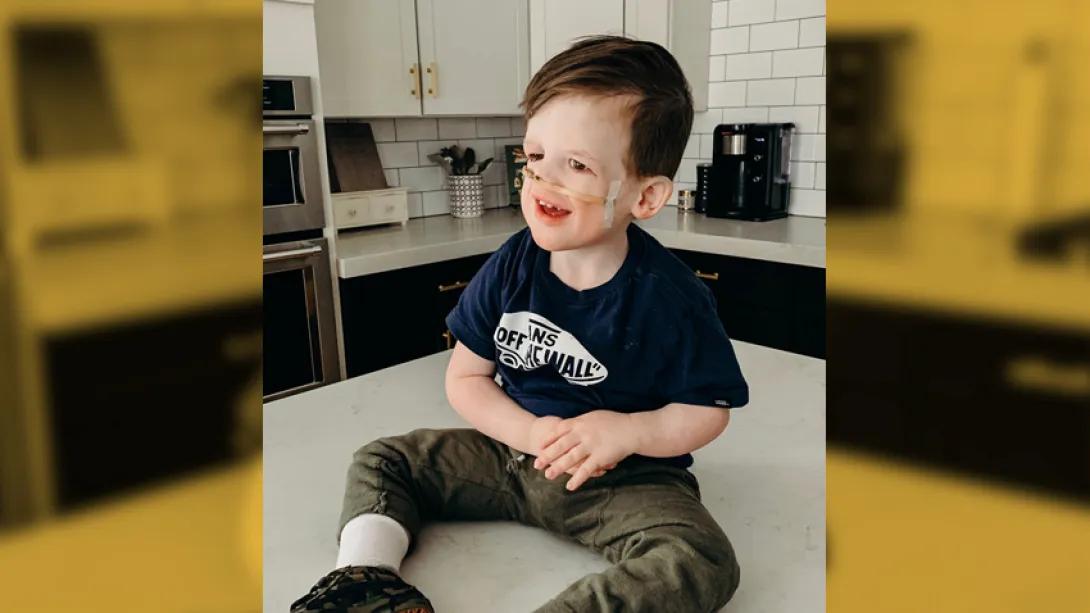
A custom, 3D-printed airway also proved beneficial for Josiah Immerfall, of Nashville, Tennessee. Born blind and with a craniofacial condition known as oculo-auriculo-vertebral spectrum, the toddler struggled to sleep.
Airway collapses would occur hundreds of times during the night — which in turn made him lethargic and unable to breathe when nursing. A failure to thrive diagnosis followed.
SEE ALSO: Beat 'Boris': 10-Year-Old Smashes His 3D-Printed Tumor
Because half of Josiah's body is smaller than the other, causing his nasal passage to compress as his body grew, doctors considered a tracheostomy — something his mother, Sarah, couldn't fathom.
"It was my No. 1 fear," she says.
The Immerfalls, formerly of Northville, Michigan, sought the help of Zopf and his Michigan Medicine team. Josiah received a 3D-printed nasal airway at 18 months during an office visit, no surgery or anesthesia required.
The tube, which can be removed and cleaned, might not be necessary one day.
"Our hope is that he will grow to a point that there will be enough room in his airway," Zopf says. "We're kind of getting him through a critical period while he's younger and his airways are smaller."

Life with a 3D-printed nasal airway
For Josiah and Madeline, the power to breathe more freely not only benefits their health, but it also gives their families peace of mind.
Josiah, now 3, has made several big strides.
"After we placed the airway, he started making huge leaps in his developments — eating better, gaining weight, becoming more vocal," his mother says. "It affected every part of his development."
SEE ALSO: Removing a Teen's Baseball-Sized Tumor a Team Effort
And Madeline's improved sleep has given her more energy to enjoy adaptive recreational activities such as biking, boating and water skiing.
A recent cause to celebrate: Madeline attending her senior prom this month in Hamburg Township, Michigan.
"You take a kid who could have possibly been heading toward a tracheostomy," Anne Rieder says. "After being faced with a critical life decision, we were thankful to have an option like this.
"It keeps her life going the way it was."

Health Lab
Explore thousands of health news & research stories by visiting the Health Lab homepage for more.
Media Contact

Public Relations
Department of Communication at Michigan Medicine
Stay Informed
Want top health & research news weekly? Sign up for Health Lab’s newsletters today!
Featured News & Stories

From 20 seizures a day to more time for play: How personalized epilepsy care helped young patient
Type 1 diabetes does not mean sitting out for 10 year old
More babies with hypoplastic left heart syndrome surviving critical period between surgeries
Distance, insurance, social factors may hinder access to lifesaving heart monitoring for children

Mobile health app improves heart failure medication use, dosing after hospitalization