Support Without a Cancer Diagnosis: Helping People at Risk Find Comfort
Those with a genetic predisposition to cancer can benefit from support groups as much as cancer patients, but options for the former group are limited. One man highlights the divide.
7:00 AM
Author |
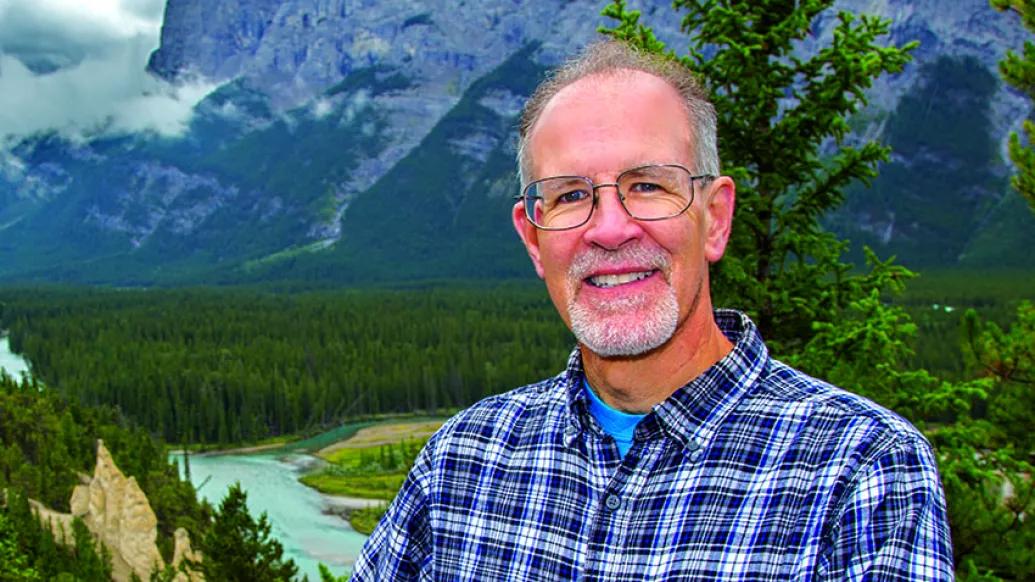
Kevin Myers is neither a cancer patient nor a cancer survivor.
Yet, in his 59 years, hardly a day has passed that hasn't been affected by the disease.
MORE FROM MICHIGAN: Sign up for our weekly newsletter
Myers was born with a genetic predisposition to colon cancer. His condition, familial adenomatous polyposis, or FAP, is one of a number of inherited colon cancer syndromes — including Lynch syndrome and MYH-associated polyposis (MAP).
About 3 percent of colon cancers are associated with these genetic syndromes, says Elena Stoffel, M.D., director of the Cancer Genetics Clinic at the University of Michigan Comprehensive Cancer Center.
"In patients with FAP, polyps develop in the colon as soon as early adolescence, numbering in the hundreds or even thousands," Stoffel says. "Without treatment, their risk of developing cancer exceeds 90 percent."
The alternative for most patients is just as overwhelming: the removal of the colon and life with an ostomy pouch.
Myers' colon was removed at age 14. Learning to live with an ileostomy — an opening in the abdominal wall made during surgery that allows digestive content to exit the body though a stoma into a pouch — made his youth especially tough.
"Although I've never been diagnosed with it, you could say my whole life has been defined by cancer," Myers says.
Still, he persevered through high school, college and graduate school, where he trained in social work and counseling — and where he met and married Brenda, his wife of 34 years.
To avoid passing on the FAP gene, the Myers pursued in vitro fertilization, giving birth to their daughter in 1995.
Strength in numbers
People living with these genetic syndromes might often feel isolated and marginalized. Resources and support groups available to cancer patients typically do not exist for people at high risk of cancer.
SEE ALSO: Collecting a Family's Cancer History: What You Should Ask
This was Myers' reality until a self-described "lightbulb moment" more than two years ago.
As he recalls, "I had enrolled in a clinical trial at the cancer center. Speaking with the study coordinator, I wondered aloud if there was such a thing as a support group for people like me."
When he found no such support network, Myers decided to take up the challenge himself that same day. It took nearly a year, but he realized his dream in May 2014 when about 20 patients and family members joined him for the first educational group meeting for people living with hereditary syndromes.
On April 20, Myers' support group will mark its second anniversary at the Cancer Support Community of Greater Ann Arbor (reservations recommended; see below for more details). He has also learned of another hereditary colorectal cancer group starting in Grand Rapids, Michigan.
The ongoing effort mirrors the founder's outlook on life.
Says Myers: "I've grown from considering my condition a curse to seeing it as an opportunity to make lemonade out of lemons."
Tips for starting your own support network
Want to form your own group? Myers offered suggestions based on his experience:
Go online: Connect with patients on social media. See what group activities are offered in other communities and find out how they got started.
Use existing resources: Myers reached out to the Hereditary Colon Cancer Foundation in Park City, Utah, for guidance — as well as the University of Michigan Rogel Cancer Center (which connected him with Stoffel) and the Cancer Support Community of Greater Ann Arbor.
Be patient: Although it didn't happen overnight for Myers, the results were worth the work and wait. "Connecting with people who really understand feels like coming home," he says. "And knowing that my experience might help someone else has made it all worthwhile."

Health Lab
Explore thousands of health news & research stories by visiting the Health Lab homepage for more.
Media Contact

Public Relations
Department of Communication at Michigan Medicine
Stay Informed
Want top health & research news weekly? Sign up for Health Lab’s newsletters today!
Featured News & Stories
Prostate cancer and hereditary risk: A doctor explains the connection
Path forward for glioblastoma treatment
Rogel research team receives $3. 2 M grant to cascade genetic testing to relatives
Study sheds light on how early pancreas lesions become cancerous
Pancreatic cancer survivor’s advice: Don’t give up on finding answers