Should You Do Self Breast Exams?
Once considered vital for early breast cancer detection, the breast self-examination is now optional for most women. A breast cancer expert explains what’s changed.
11:20 AM
Author |
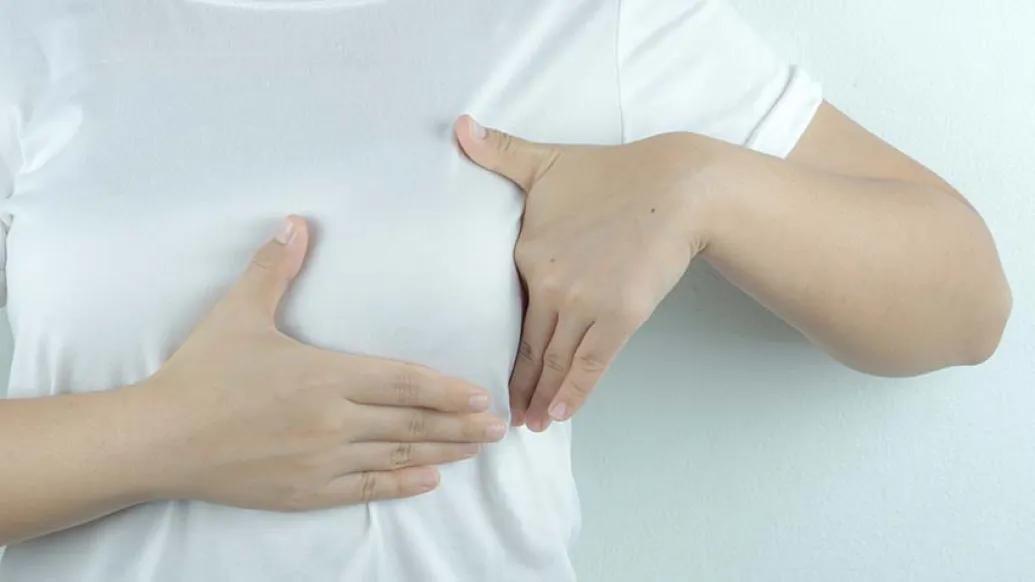
The American Cancer Center's guidance is clear: Finding breast cancer early and getting state-of-the-art cancer treatment are the most important strategies to prevent deaths from breast cancer. Breast cancer that's found early, when it's small and hasn't spread, is easier to treat successfully.
So what is the best way to find breast cancer early? Twenty years ago, a physical examination of the breast – either by a woman herself (a breast self-exam) or by a trained health care provider (a clinical breast exam) – was considered an essential early detection tool. Educational materials on how to perform self-exams were widely distributed, and women were strongly encouraged to learn the technique and perform it monthly.
Today, the role of the self-exam in early detection is less clear.
As an advanced practice nurse at the University of Michigan Rogel Cancer Center, Kimberly Hoskins, N.P., counsels patients on breast cancer risk factors and early detection strategies. Here, she tackles the who, why and when of breast self-exams.
The breast self-exam went from "essential" to "optional." What changed?
"Both research and advances in clinical practice have made us smarter about the right role for the self-exam," says Hoskins.
In 2003, the American Cancer Society revised their guidelines based on what researchers found – or rather, didn't find – about the benefits of regular physical breast exams. Studies showed very little evidence that breast self-exams and clinical breast exams were effective in finding early breast cancers in women who also get regular mammograms.
SEE ALSO: When Should You Get a First Mammogram? It's Personal
"Mammography has been proven better at finding early stage, small breast tumors than physical breast examination," she continues. "And mammography continues to improve, becoming more widely available and more technically advanced, including 3D imaging.
"Research has also shown that breast self-examinations can lead to unnecessary worry and anxiety, as well as unnecessary appointments and even breast biopsies, when a woman thinks she feels something. Some lumps a woman can feel end up being benign," Hoskins says. "Conversely, a woman who relies only on self-exams can develop a false sense of security when she doesn't feel something. She may conclude she does not need regular mammography."
MORE FROM MICHIGAN: Sign up for our weekly newsletter
So is the self-exam a thing of the past?
"No," says Hoskins. "But for women at average risk of breast cancer, we no longer consider traditional monthly self-exams to be essential for early detection."
"That doesn't mean we don't want women to be familiar with the characteristics of their breasts," she adds. "A significant number of breast cancers are still found based on something a woman saw or felt. We advise women to get to know their breasts, so they can recognize any changes that need to be checked by a provider."
ACS guidelines note that women are most likely to find a lump or other troublesome symptom while bathing or dressing than as a result of a formal self-exam.
Mammography has been proven better at finding early stage, small breast tumors than physical breast examination.Kimberly Hoskins, N.P.
What constitutes "average" and "high" risk?
"On average, a woman faces a 12% lifetime risk – a one in eight chance – of developing breast cancer over her lifetime," Hoskins explains. "That is considered 'average' risk. That risk doubles to a one in four or 25% chance if she has a first degree relative – a mother, sister or child – who has been diagnosed with breast cancer. Anything above 20% is considered 'high risk.'"
Are traditional monthly self-exams still recommended for women at high risk?
"Yes, women at high risk for breast cancer should perform regular self-exams and/or have regular clinical breast exams," Hoskins says.
SEE ALSO: 7 Ways to Help Prevent Breast Cancer [Infographic]
"And while considered 'optional' for average risk women, regular breast self-examination is also a good practice for women not scheduled for a yearly mammogram – those under the age of 45 or over the age of 55. Before menopause, women should do their breast self-exams after their monthly period ends. After menopause, they should do one on the same day each month."
What types of concerns might be discovered by a self-exam?
Hoskins recommends you call your provider if you observe any of the following:
-
Any discharge from the nipple that comes out without pressing on the nipple or breast
-
A lump or hard knot (that might feel like a pebble or rock) in the breast or under the arm
-
A change in the size or shape of a breast
-
An inversion or sinking in of the nipple
-
Puckering, dimpling (looking like orange peel) or bulges in the skin of the breast
-
A rash, sore, or peeling or flaking of skin around the nipple
-
Any change in the color of the breast, such as redness or darkening skin
-
The breast feeling warmer or hotter than usual
For questions about breast cancer or to make an appointment at the Rogel Cancer Center, call the Cancer AnswerLine nurses at 800-865-1125

Health Lab
Explore thousands of health news & research stories by visiting the Health Lab homepage for more.
Media Contact

Public Relations
Department of Communication at Michigan Medicine
Stay Informed
Want top health & research news weekly? Sign up for Health Lab’s newsletters today!
Featured News & Stories
Jalen Hurts’ blood clot diagnosis: doctors answer common questions
Could a diabetes medication be the next wonder drug?

Online resources and coaching helped people seek genetic testing for cancer
Gene editing is coming for common diseases. Are we ready?
Liver cancer can be preventable. Do you know the treatable risk factors?