How Cancer Research Gave Hope to a Patient Previously Out of Options
The story of one man with stomach cancer — and thousands more patients like him — demonstrates the lifesaving power of research and discovery.
7:00 AM
Author |

For any patient with a diagnosis of cancer, it is natural to wonder: If my treatment doesn't work, what is next for me? This is when cancer research becomes crucial, literally a matter of life or death.
MORE FROM MICHIGAN: Sign up for our weekly newsletter
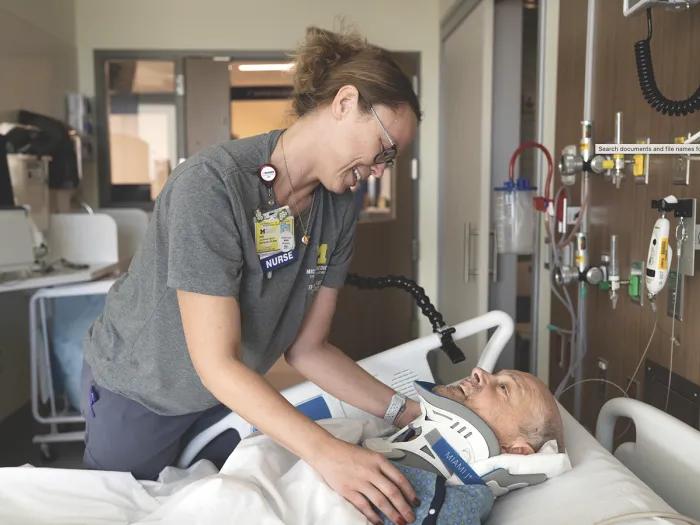
In Randy Hillard's case, his stomach cancer diagnosis in 2010 left him with few options for treatment. His prognosis was poor even after surgery. He considered not having further treatment when a small metastatic lesion was found. His illness would run its course, and he would die.
But cancer research is always being conducted behind the scenes, with the National Institutes of Health spending an estimated $6.3 billion on cancer studies in 2017. Each year, new treatments are discovered that give cancer patients hope, time and quality life.
Little did Hillard, now 67, know that a drug used to treat breast cancer for many years was on the brink of approval by the Food and Drug Administration to treat some gastric cancers. The drug was in a phase 3 clinical trial on patients. FDA approval was granted within weeks of his diagnosis.
Research equals hope
In October 2010, the FDA approved the drug Herceptin (trastuzumab), when combined with two other medications, to treat gastric cancer patients who, like Hillard, had a protein called HER2 present in their cancer.
Thanks to early research originating at UCLA and funded by NIH, Hillard suddenly had a chance to live.
"There were difficulties along the way, but his efforts have translated into a full recovery and an active and productive life," says Mark Zalupski, M.D., a medical oncologist at the University of Michigan Comprehensive Cancer Center.
In 2017, Hillard is in good health. He works at Michigan State University as a professor of psychiatry and spends time counseling hospice patients. He also advocates for cancer research, sharing his experience as a patient and participating on FDA panels, while sharing support for stomach cancer patients online through groups he has founded.
"Being a cancer patient has taken over a lot of my identity," Hillard says. "I would have been dead five years ago were it not for Herceptin. In addition to saving hundreds of thousands of lives, the drug brings billions of dollars to the United States each year in revenue and research dollars."
SEE ALSO: From the NICU to Med School: an 'Outrageous' Idea That's Saved Thousands of Babies
Today, Zalupski describes Hillard's treatment as standard therapy. And for those with other advanced disease resistant to standard treatment, new discoveries continue to be made thanks to cancer researchers and funding from NIH.
"Dr. Zalupski's comment is really telling. It is the standard treatment now for people with my diagnosis. Six years ago it was not. If I hadn't gone to a National Cancer Institute-designated cancer center like Michigan, I probably wouldn't have received it," Hillard says.

Future funding
One of Hillard's main points in advocating for cancer research is the importance of continued federal funding, which allows for the early-stage research pharmaceutical companies build upon to bring new drugs to the market. Without those drugs in the pipeline, new treatment options will decrease.
Hillard's hope is that in 20 years, patients with all cancer types will have more personalized, targeted therapy approaches. Ideally, U.S. scientists will lead discovery so our country will reap the many benefits: high-paying jobs in science and medicine, better treatment options for patients and more lives saved.

Health Lab
Explore thousands of health news & research stories by visiting the Health Lab homepage for more.
Media Contact

Public Relations
Department of Communication at Michigan Medicine
Stay Informed
Want top health & research news weekly? Sign up for Health Lab’s newsletters today!
Featured News & Stories
Prostate cancer and hereditary risk: A doctor explains the connection
Path forward for glioblastoma treatment
Study explains how colorectal cancer cells maintain high iron levels

Stopping Ewing sarcoma relapses where they start
Giving with gratitude: planned gifts support nursing, research, and patient care