Surgeon’s Annual Mission Trip Brings New Smiles to Hundreds
A Michigan Medicine surgeon has spent 20 years helping kids in Colombia — with no sign of slowing down. The effort shows U-M’s commitment to global service, he says.
7:00 AM
Author |
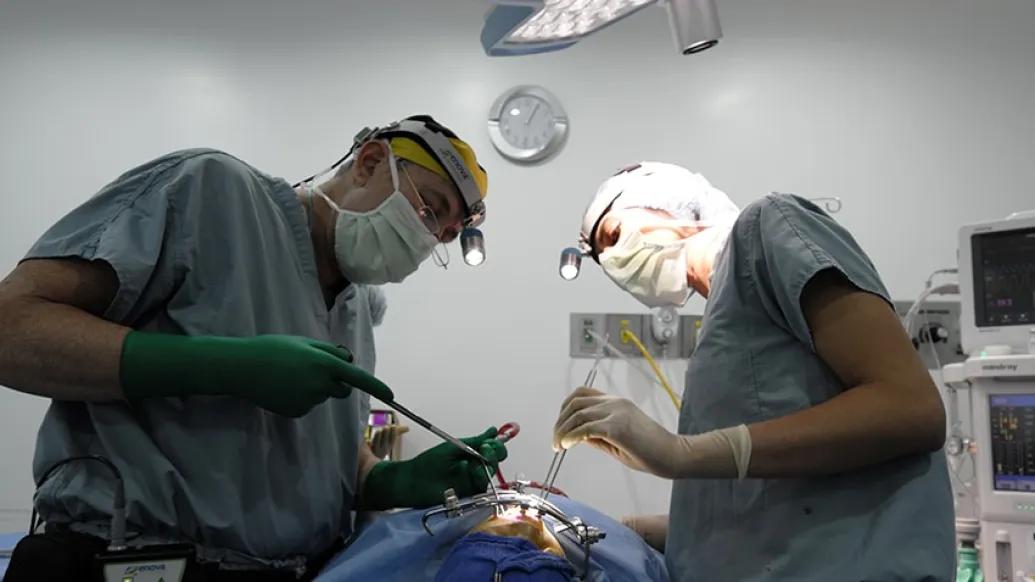
Nearly two decades have passed since Robert H. Gilman, M.D., DMD, made his first trip to Cartagena, Colombia, as part of a group performing cleft lip and palate surgeries on children in need.
But the visit remains fresh in his mind.
"When we first started coming, (the hospital) had very little," says Gilman, a clinical assistant professor of plastic surgery at the University of Michigan Medical School. "The equipment was terrible, the supplies were nonexistent, we never had reliable power."
Those setbacks motivated Gilman's annual return to Cartagena to serve the patients of Napoleon Franco Children's Hospital, where he and his team have since performed more than 1,000 surgeries. It's among many international efforts that U-M faculty members undertake each year.
And Gilman now leads the trip, which is facilitated by Healing the Children Northeast, a Connecticut-based nonprofit that works to arrange free medical, dental and surgical care for children in need.
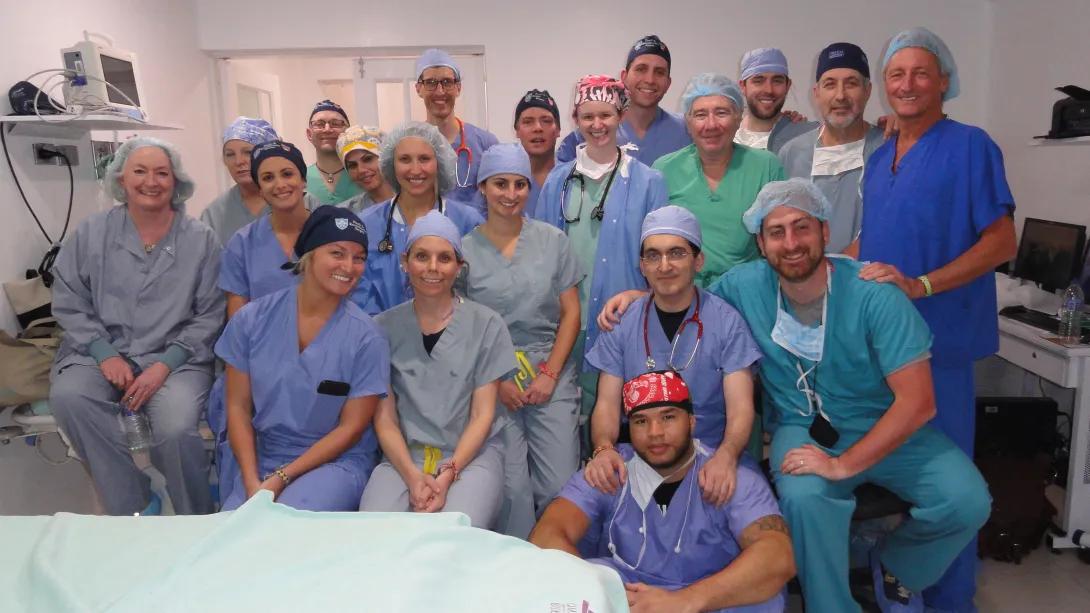
The latest mission, in February, brought a team of 20 medical professionals.
Also key: donations from generous supporters for purchasing anesthesia equipment and cauterizing machines that in turn have helped the hospital boost its profile and receive more government funding.
Still, despite those improvements, Gilman knows his work will never end in a country where standards of care and compassion differ greatly.
"In the United States, there is no child born with a cleft lip or palate who wouldn't get it cared for at an appropriate time; there is a safety net that would capture virtually every child," says Gilman. "That doesn't happen in Colombia."
Without surgical repair — typically a simple procedure connecting tissue to close an abnormal opening — affected kids can face physical challenges, plus a lifetime of social hardships and limited opportunities.
"These children are often shunned," says Gilman. "They could literally be stuck in the back room of a hut someplace and never go to school or become a productive part of society.
"The ability to do one of these repairs, which might take an hour and a half to complete, can make a life-changing difference."
The ability to do one of these repairs, which might take an hour and a half to complete, can make a life-changing difference.
A team effort
Gilman, who during his first visit was a clinical instructor in plastic surgery at Harvard Medical School and Massachusetts General Hospital, continues to partner with practitioners there, including plastic surgery chief William Austen, M.D., who serves as the group's other senior surgeon while in Colombia.
SEE ALSO: U-M'S Role in Ethiopia's First Kidney Transplant
Additional participants have come from hospitals in New York and Rhode Island, among other places.
Each traveler used to pay his or her own way, but Gilman's donor network allows full coverage of those costs. Members of a local Rotary club in Cartagena provide airport transportation, lodging and meals during the 10-day trip.
Attendees give plenty of themselves, too.
Says Gilman: "People give up vacation time, they give up work time to donate their specialized skills to help someone they don't know in a country that isn't their own, speaking a language that's not their native tongue."
Each year, a plastic surgery resident from U-M also attends — a nod to the place where Gilman completed his own residency and his desire to further students' exposure to medicine in developing countries.
Ian Sando, M.D., this year's resident on board, says the visit was a game changer.
"It has really motivated me to do more trips like this throughout my career," says Sando, who praised Gilman's work. "I think he just loves taking care of these kids and giving to this community. It's one of his life's passions."
Trusted partners
Although patients still hail from severe poverty, Gilman has noticed encouraging cultural shifts in his 19 years with the program.
First, he notes, many of his cleft lip or palate patients in Cartagena receive treatment at a younger age, mirroring care in a developed country. That's important because repairing the craniofacial anomaly — which affects between 1 in 750 and 1 in 1,000 babies — can help a child with proper speech and feeding habits, not to mention social development.
Potential patients are screened before the team's arrival, with a few others selected to receive other surgeries, such as repairs to deformities of the hands and body as well as burn reconstruction. About 60 youths are treated on each trip.
Because most cleft lip or palate surgeries require multiple follow-up procedures over many years, Gilman and his associates often build long-term relationships with their patients — even when they can't effectively communicate. Translators, typically the bilingual teenage children of the local Rotarians, volunteer to help.
Gilman and colleagues also have worked to improve the surgical process. Instead of packing their suitcases with supplies — previously, every suture, every medication, every piece of gauze — the materials now are shipped in advance or purchased in Colombia.
Lasting smiles
Amid ongoing progress, patients' smiles are the most tangible sign of success.
Sando recalled a tricky yet effective surgery that involved a bilateral cleft lip on a young girl who "never would have gotten treated otherwise."
For Gilman, the examples are too numerous to recount — though one, he notes, stands out.
During his first trip, he helped repair the cleft lip of a teen boy who, at the time, was about 15 years old. He was quiet and hadn't been to school.
Ten years later, Gilman met a young adult at a dinner party. The man was friendly and well-spoken. He had completed his schooling, held a job and was pursuing an associate's degree.
It was the same person, a reveal that brought Gilman to tears.
Such transitions, while amazing, aren't unusual. They're what compel the volunteers to maintain the mission in Cartagena.
"It's a remarkable show of humanity," says Gilman: "I'll do it for as long as I possibly can."

Health Lab
Explore thousands of health news & research stories by visiting the Health Lab homepage for more.
Media Contact

Public Relations
Department of Communication at Michigan Medicine
Stay Informed
Want top health & research news weekly? Sign up for Health Lab’s newsletters today!
Featured News & Stories

4 in 5 parents say having a baby is too expensive

What’s the latest on 7-OH and kratom availability and addiction care?
Better prenatal care data could help prevent maternal complications, experts say

Digital alerts support timely treatment decisions of critically ill cardiac patients
Nerf gun accident causes retinal detachment in pediatric patient