Could an Athlete’s Own Stem Cells Stop Arthritis Development After an ACL Tear?
Long-term consequences can happen years after an ACL injury. One Michigan Medicine researcher is investigating new therapies that could minimize those unwanted effects.
7:00 AM
Author |
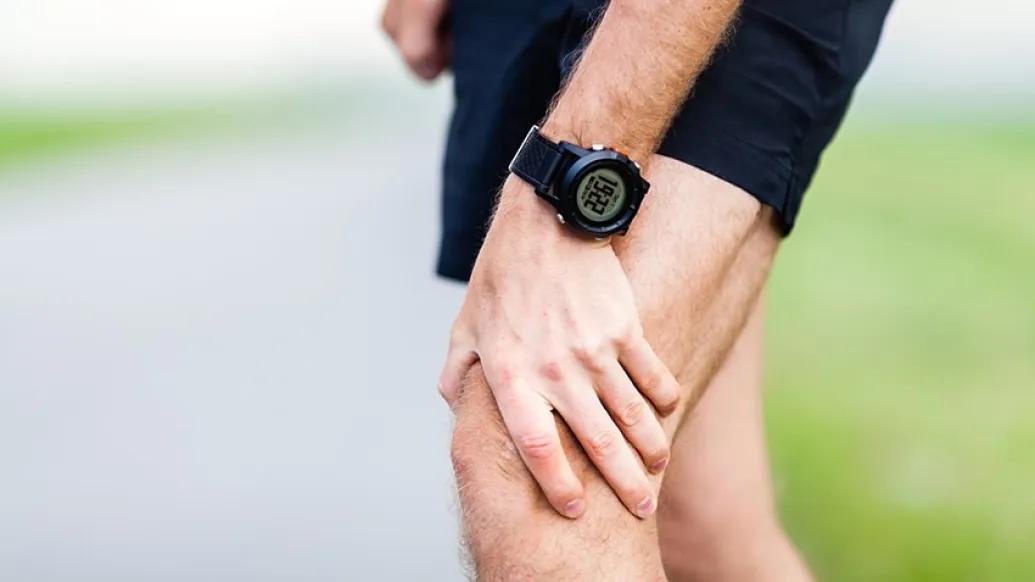
An anterior cruciate ligament injury can keep athletes of any age or skill level away from their sport for several months — and health risks may linger after activity resumes.
MORE FROM THE LAB: Subscribe to our weekly newsletter
"Many don't know there are long-term consequences of an injury, even when the athlete appears to have healed," says Tristan Maerz, Ph.D., a biomedical engineer and a research investigator in Michigan Medicine's Department of Orthopaedics Surgery.
Maerz notes that though surgical techniques and outcomes have improved, medical conditions that follow an ACL injury still occur.
It's why Maerz has been investigating pathologies of sports injuries in the hopes of improving overall healing for patients.
His latest effort: investigating stem cells and how they may react to injuries such as an ACL tear.
Maerz spoke more about the work.
What medical conditions might occur after an ACL injury has healed?
Maerz: In up to 50 to 80 percent of ACL injuries, we have found that patients are developing arthritis in the long term after the injury. These patients are exhibiting nearly full recovery, but the arthritis continues. And while technology from the implant companies continues to improve and the surgery is less invasive, they are having little to no impact on decreasing the long-term development of arthritis in the knee.
How do these patients treat the resulting arthritis in the knee?
Maerz: We unfortunately do not yet have a successful interventional treatment for arthritis. At the end stage of arthritis, many patients will consider having knee replacement surgery, which is a highly successful procedure, but at 40 or 50 years of age, a knee replacement is a big deal given the life span of current implants. Younger patients may require a revision surgery to replace the implant at the end of its life span, and with the increased incidence of sporting injuries, this problem will continue to grow.
How does your research seek to prevent the arthritis connection?
Maerz: I have published some recent research that looked at how an individual's stem cells may respond to ACL injury. We wondered if an individual's stem cells respond to the sports injury like they would after more severe injuries such as stroke or a heart attack. Furthermore, we asked whether they travel to the site of the injury and whether they do anything there to promote healing once they arrive.
SEE ALSO: Why Some ACL Surgeries Fail
Essentially, we thought, if the joint disease is developing no matter what, are the stem cells doing anything to help modulate this? Are they stopping the arthritis from developing? Or are they traveling there and not doing anything due to insufficient or incorrect biochemical cues?
My lab is investigating how we can enhance stem cell responses and what the stem cells are doing when they arrive at the injury site. Our work is currently done in rodents, and we hope to translate it to the bedside.
What have you learned so far?
Maerz: We believe that if the stem cells arrive at the injury site and are not provided with the necessary signals to participate in healing, we could perform an intervention that "tells" them what to do.
Translating this to humans, two examples of potential interventions would be a joint injection after injury or multiple injections the patients can give themselves after surgery that could improve the capabilities of the stem cells and potentially have them stop the arthritis from progressing or developing in the first place.
Stem cells are generally a controversial topic. Do you think this research is controversial?
Maerz: Certainly — all stem cell research is a bit controversial. I think there are two main issues: One is that there is so much ambiguity around what a stem cell is. Two, I think the general public hears the words "stem cell" and automatically assumes whatever research is being discussed has to do with embryonic stem cells.
This particular work has nothing to do with that type of stem cell; rather, it involves an individual's own stem cells working behind the scenes in their body. The majority of our tissues have stem cells, and we are just now learning how we could potentially exploit their capabilities.
Why should athletes and other active people care about this research?
Maerz: The amount of children and teenagers playing sports is increasing. This means that the amount of injuries is also increasing, and it's doing so rather drastically. Consequently, the amount of surgeries we do for ACL injuries is also increasing. I think the burden of these injuries will become very prevalent as time goes on.
If we can reduce the long-term disability the injury causes and reduce or stop arthritis, it could greatly benefit long-term patient outcomes.
My team and I are continuing to further research this topic. It's an exciting time for new research opportunities and potential interventions.

Health Lab
Explore thousands of health news & research stories by visiting the Health Lab homepage for more.
Media Contact

Public Relations
Department of Communication at Michigan Medicine
Stay Informed
Want top health & research news weekly? Sign up for Health Lab’s newsletters today!
Featured News & Stories

U-M Board of Regents approves construction of Nathan and Catherine Forbes Sports Medicine Institute

A concussion expert and football father discusses why he values teamwork over zero-risk
Why tendons heal so poorly and how researchers hope to fix them

A Gift to Benefit All: Bill and Sally Martin’s Visionary Support for Sports Medicine
Rethinking how clinicians learn to feel disease