
Nicole Fawcett
Director of Communications, University of Michigan Rogel Cancer
Fawcett leads a team of communicators who produce targeted, innovative communication for the Rogel Cancer Center’s research and clinical enterprises. Prior to Michigan Medicine, Fawcett was a reporter at the Detroit News and editor for a web-based community for people with disabilities.


Health Lab
Some Breast Cancer Patients Missing Out on Genetic Counseling
A new study finds only half of women who could benefit from genetic testing get it, and often not before they have surgery.

Health Lab
Why Basal Cell Tumors Return When Drug Treatment Stops
Researchers uncover a mechanism that explains why a Hedgehog inhibitor kills skin cancer, but not completely.

Health Lab
Interactive Tool Can Help Educate Cancer Patients on Their Options
Breast cancer patients who used an interactive website were more informed about options and felt better prepared to make a treatment choice.
Health Lab
Who Might Benefit from Immunotherapy? Study Suggests Possible Marker
PD-L1 in cells within the tumor microenvironment and lymph nodes may matter more than PD-L1 in tumors, researchers report in a new study.
Health Lab
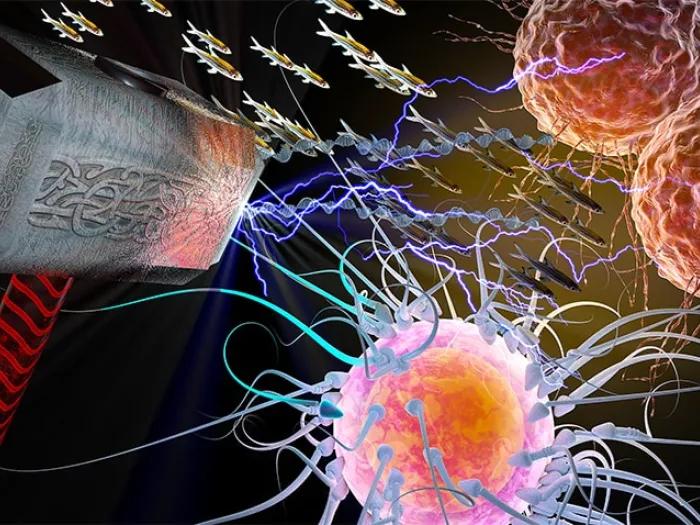
How Defeating THOR Could Bring a Hammer Down on Cancer
Researchers have identified and characterized a new type of RNA protein called THOR that plays a role in cancer development — and could serve as a target for drug development.

Health Lab
Women in Medicine Say #MeToo, Report ‘Appalling’ Experiences
As many high-profile men face national reckoning for inappropriate sexual misconduct in the workplace, women in medicine are also standing up to say #MeToo, sharing their stories of sexual harassment and discrimination.
Health Lab
How a Poorly Explored Immune Cell May Impact Cancer Immunity and Immunotherapy
Cancer can damage undifferentiated naive T cells, which keeps the fighter cells from doing their job.

Health Lab
Balancing Cancer Treatment’s Side Effects Against the Risk of Cancer’s Return
Five years of endocrine therapy or 10? As breast cancer patients weigh the benefits of long-term treatment, a new study might help.

Health Lab
Breast cancer recurrence risk lingers years after treatment ends
Steady rates of recurrence in women with estrogen receptor-positive disease could influence decisions about long-term therapy
Health Lab
Scientists Discover Surprising Immune Cell Activity That May Limit Immunotherapy
Suppressive Treg cells become even more suppressive when they die, a new study finds.

Health Lab
‘When Are We Going to Cure Cancer?’: The Bright Future of Breast Cancer Research
When will we cure breast cancer? See how breast cancer treatment has evolved since 1960 and find out what the future of breast cancer treatment and research holds.

Health Lab
Powerful Drug Combo Gangs Up to Tackle Triple-Negative Breast Cancer
Learn how a powerful combination of a new protein inhibitor and a chemotherapy drug lead to triple negative breast cancer cell death in mice.

Health Lab
Surgeons Have Major Influence on Breast Cancer Treatment Choices
Surgeon attitudes were the biggest driver of likelihood that patients receive contralateral prophylactic mastectomy, a new study finds.

Health Lab
Tiny Device Offers Insight into How Cancer Spreads
Researchers have developed a fluidic device to track over time which cancer cells lead the disease’s invasive march.

Health Lab
How Decision-Making Habits Influence the Breast Cancer Treatments Women Consider
Worry about recurrence and radiation more often lead women to weigh double mastectomy.
