
Nicole Fawcett
Director of Communications, University of Michigan Rogel Cancer
Fawcett leads a team of communicators who produce targeted, innovative communication for the Rogel Cancer Center’s research and clinical enterprises. Prior to Michigan Medicine, Fawcett was a reporter at the Detroit News and editor for a web-based community for people with disabilities.


News Release
Rogel Cancer Center adds 3 new senior leadership roles
The University of Michigan Rogel Cancer has named two new deputy directors and a new associate director to provide strategic leadership in cancer care, research and training: Michael Deininger, M.D., Ph.D.; Lesly Dossett, M.D., M.P.H.; and Samuel Kaffenberger, M.D.

Health Lab
How genetic testing impacts the whole family
Rogel Cancer Center researcher Steven J. Katz, M.D., M.P.H., on how genetic testing results impact both the cancer patient and their family.
Health Lab
Study shows how smoking drives pancreatic cancer
Why smokers have a higher chance of developing pancreatic cancer and why they tend to have worse outcomes than nonsmokers, according to a new study by University of Michigan Health Rogel Cancer Center.

Health Lab
Study sheds light on why some prostate tumors are resistant to treatment
A new study from University of Michigan Rogel Cancer Center researchers identifies a cellular signature that explains why about one-third of prostate cancers respond especially poorly to treatment.
Health Lab
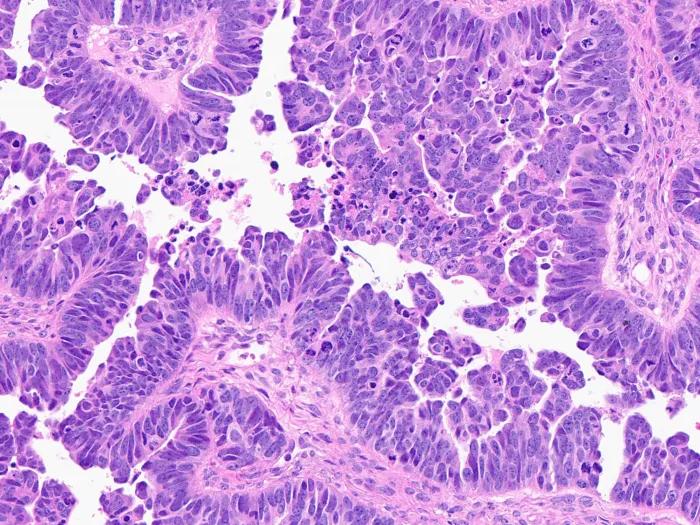
Study defines key driver of aggressive ovarian cancer
A study explains the genetic underpinnings of a rare and aggressive form of ovarian cancer – and offers a potential pathway for new treatments.

Health Lab
Patients are opting in for 10 years of breast cancer treatment
As recommendations suggest extending hormone-based breast cancer treatment to 10 years for some patients, a recent study sheds light on whether patients are opting for it.
News Release
U-M awarded prestigious NIH grant to establish national center for microsystems-based biomedical imaging
Researchers from the University of Michigan received a $6 million center grant from the National Institutes of Health to establish the new National Center for Biomedical Imaging and Bioengineering (NCBIB).
Health Lab
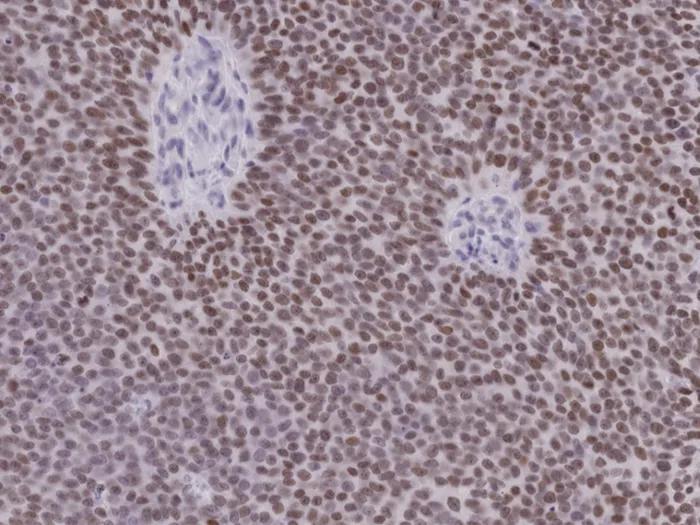
Researchers find early driver of prostate cancer aggressiveness
University of Michigan Health Rogel Cancer Center scientists identified a gene that plays a key role in prostate cancer cells that have transitioned to a more aggressive, treatment-resistant form. The gene can be indirectly targeted with an existing class of drugs, suggesting a potential treatment strategy for patients with aggressive subtypes of prostate cancer.

Medicine at Michigan
Rogel Cancer Center receives $50M to revolutionize pancreatic cancer care and research
Susan and Richard Rogel have given $50 million to create the Rogel and Blondy Center for Pancreatic Cancer at Michigan Medicine.
Health Lab
Study offers reassurance for patients with some cancer-linked genes
Research by the University of Michigan Health Rogel Cancer Center finds that patients with three of these variants face no extra risk of dying from their cancer.

Health Lab
4 exciting advances in multiple myeloma
A specialist outlines some recent advances that have him excited for the future of multiple myeloma treatment.
News Release
Rogel names 2 new clinical research leaders
Cuneo appointed associate director for clinical research; Magenau to serve in new assistant director role

Health Lab
How race impacts patients’ response to cancer immunotherapy
The first large scale analysis finds immune checkpoint inhibitors are equally effective in Black and white patients, with Black patients having fewer side effects.
Health Lab
Researchers find metabolic mechanism that blocks immune response, immunotherapy in cancer
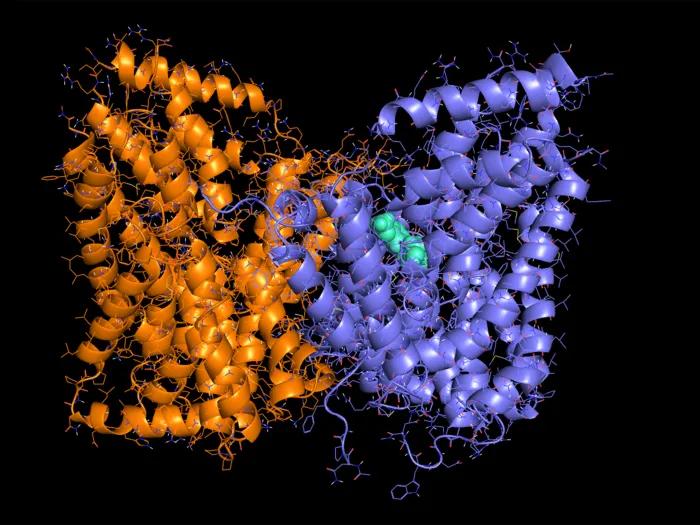
New research has discovered why some cancers don’t respond to immunotherapy treatment: A metabolite transporter within the tumor microenvironment blocks a key type of tumor cell death integral to immune response.

News Release
Rogel Cancer Center receives $50M gift to revolutionize pancreatic cancer care, research
New Rogel and Blondy Center for Pancreatic Cancer will bring together researchers and clinicians to drive forward new treatments and improve outcomes
